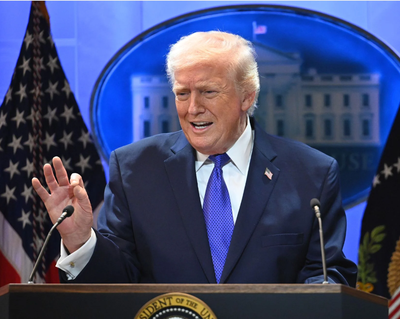
SHOCKING EMAIL LEAK! Trump releases Obama emails that could mean jail time
Trump, Obama and the Email Controversy: Could New Revelations Lead to Legal Trouble?
Washington is once again at the center of a political debate involving Donald Trump, former President Barack Obama, and allegations surrounding government records. Dramatic headlines circulating online suggest that the release of emails connected to Obama could have serious legal consequences. But what is actually known, and could the controversy lead to criminal charges?

The claims have attracted attention because the relationship between Trump and Obama has been marked by years of political conflict. From disputes over the 2016 presidential election to disagreements about intelligence investigations, the two political figures remain central to one of the most consequential rivalries in modern American politics.
However, a headline suggesting that someone could face jail time is not the same as evidence of a crime. To understand the potential implications of any newly released emails, it is necessary to examine the documents themselves, their context, and the laws governing presidential records.
The controversy over government documents is not new. Successive administrations have faced questions about the preservation, classification, disclosure, and handling of official communications. These issues can become particularly contentious when records concern political investigations or decisions made by senior government officials.

One important institution in this debate is the National Archives and Records Administration, which preserves official records from presidential administrations. Under the Presidential Records Act, presidential records generally pass into federal custody when a president leaves office and are subject to established preservation and disclosure rules.
In August 2022, the National Archives addressed claims that Obama had personally taken millions of pages of presidential records, including classified documents. The agency explained that it had assumed exclusive legal and physical custody of Obama's presidential records when he left office in January 2017.
The agency also distinguished between unclassified records stored at an archival facility in the Chicago area and classified records maintained at a separate federal facility. This distinction matters because the custody and handling of government documents cannot be accurately assessed through political slogans alone.

Another major source of tension involves the investigation into Russian interference in the 2016 presidential election. Trump and his allies have repeatedly challenged the conduct of officials involved in examining possible links between Russia and the Trump campaign.
The investigation and its aftermath produced years of political disputes, congressional inquiries, intelligence reviews, and arguments over the actions of federal law-enforcement agencies. Those disagreements continue to influence debates about government transparency and accountability.
Nevertheless, an investigation into official conduct does not automatically establish that a crime occurred. Investigators must determine whether particular actions violated the law, whether the evidence supports the allegations, and whether the legal requirements for prosecution have been met.

The special counsel investigation led by Robert Mueller documented Russian interference in the 2016 election. It did not establish that the Trump campaign conspired or coordinated with the Russian government in its election-interference activities. Subsequent reviews also examined the FBI's handling of the investigation.
These findings are important when evaluating new allegations. The existence of disputed emails or newly accessible records may shed light on how decisions were made, but their significance depends on what they actually demonstrate.
For example, an email showing that officials discussed an investigation would not, by itself, prove that the investigation was unlawful. Establishing criminal wrongdoing would require evidence connecting specific conduct to a violation of the law.
The same principle applies to classified information. Different legal standards govern classification decisions, the preservation of government records, and the unauthorized disclosure or mishandling of protected material. Each allegation must be evaluated according to the applicable law and the available evidence.

For Obama, the central legal question would be whether reliable evidence establishes that he personally engaged in conduct prohibited by federal law. The appearance of his name in correspondence or official records would not, on its own, establish criminal liability.
For Trump, the political implications could be significant if new documents provide credible information about decisions made by officials during the Obama administration. Such material could fuel demands for further investigations and intensify disputes over the conduct of intelligence agencies.
Yet political consequences and criminal consequences are two very different matters. A document release may generate congressional hearings, public criticism, or renewed scrutiny without resulting in criminal charges.

The broader issue concerns public access to government information. Presidential records can help journalists, historians, lawmakers, and ordinary citizens understand how major decisions were made. Their preservation is essential to maintaining an accurate historical record.
At the same time, not every government document can immediately be released without restrictions. National security concerns, personal privacy, and other legal protections may require certain information to be withheld or redacted.
This is why the precise contents of any purportedly released emails matter so much. Without authenticated documents and reliable reporting about their origins, it is impossible to determine whether they reveal new evidence, repeat previously known information, or have been misrepresented online.

Readers should therefore be cautious about claims that a document release will inevitably lead to arrests or prison sentences. Such predictions require substantially more evidence than a sensational headline or a social media post.
The key questions remain unanswered unless the specific records can be identified: Which emails were released? Who wrote them? What information do they contain? Have investigators identified evidence of a particular offense? And has any prosecutor or court made a finding that supports the allegations?
Until those questions are addressed with verifiable evidence, it would be premature to conclude that Obama faces imminent imprisonment because of newly released emails. The same standard should apply to every public official, regardless of political party.
The dispute ultimately reaches beyond the rivalry between two presidents. It concerns the integrity of government institutions, the responsible disclosure of public records, and the importance of applying the law consistently rather than treating political allegations as established facts.
For now, the most responsible approach is to separate what the documents demonstrably show from what political commentators claim they mean. If authentic records reveal new information, their contents should be examined carefully and their legal significance assessed by qualified investigators and courts.
The question is not simply whether the latest controversy could damage a political opponent. It is whether the evidence supports the allegations. Until that evidence is established, claims of impending jail time remain speculation rather than a confirmed legal outcome.
Comments (0)
Loading comments...
May You Like


Latest Posts




Popular Posts