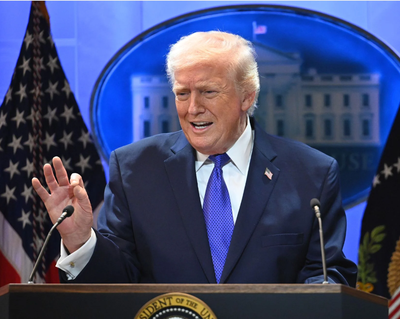
SHOCKING LEGAL RULING! Trump scores a massive court victory today. Read the story. #USPolitics
Trump Scores Major Court Victory as Judges Rule Detained Immigrants Have No Constitutional Right to Bond Hearings

A major federal appeals court ruling has delivered a significant victory for President Donald Trump’s immigration enforcement agenda, reigniting a nationwide debate over detention, constitutional protections, and the limits of presidential power. The decision centers on whether immigrants detained by federal authorities have a constitutional right to bond hearings that could allow them to seek release while their cases proceed.
The ruling was issued on October 23, 2026, by the full U.S. Court of Appeals for the Fifth Circuit. In a 10–7 decision, the court concluded that the Constitution does not require the government to provide bond hearings to the detained immigrants involved in the cases. The decision represents a substantial legal win for the Trump administration’s position on immigration detention.

The case has drawn national attention because it addresses one of the most contentious elements of Trump’s immigration crackdown: the authority of federal officials to detain people while pursuing deportation proceedings. The ruling could affect thousands of individuals seeking to challenge their continued detention, particularly in states covered by the Fifth Circuit.
At the center of the dispute is a fundamental legal question. When the federal government detains an immigrant, must it provide an opportunity for that person to appear before an immigration judge and argue that continued detention is unjustified? The Fifth Circuit’s latest decision says the Constitution does not independently guarantee the bond hearings sought in these cases.

The decision reverses an earlier ruling issued by a three-judge panel of the same appeals court in July 2026. That panel had concluded that the government could not constitutionally detain the immigrants involved for more than 90 days without providing a hearing through which they could challenge their continued confinement.
The full court subsequently reconsidered the dispute and reached the opposite conclusion. The 10–7 vote reflected a deeply divided judiciary, with judges disagreeing over how constitutional protections apply to immigrants who entered the United States without authorization and are subject to immigration detention.
The majority’s reasoning focused on the legal status of the individuals involved and the statutory framework governing immigration enforcement. The judges concluded that the Constitution does not create the broad entitlement to bond hearings that the detained immigrants were seeking.

One of the most controversial aspects of the ruling was the majority’s argument that people seeking freedom from physical detention could leave the country. Critics say this reasoning fails to adequately address the circumstances of people who wish to contest their deportation or remain in the United States through lawful proceedings.
The dissenting judges strongly challenged the majority’s approach. They warned that denying detainees a meaningful opportunity to contest their confinement raises serious concerns about individual liberty and the limits of government authority.
For the Trump administration, however, the ruling reinforces a central argument: immigration detention powers should be interpreted in a way that allows federal authorities to enforce immigration laws without constitutionally mandated bond hearings in the circumstances covered by the decision.

The Department of Homeland Security welcomed the decision as a victory for its mandatory detention policies. Administration officials have argued that stronger enforcement is necessary to ensure that immigration laws are applied consistently and that people subject to removal proceedings remain available for those proceedings.
Immigrant rights organizations have responded with sharp criticism. They argue that prolonged detention without a meaningful opportunity to seek release can impose severe consequences on individuals, their families, and their communities, particularly when cases take months or longer to resolve.
The legal dispute also reflects a broader disagreement about the relationship between immigration law and constitutional due process. The Fifth Amendment protects people against deprivation of life, liberty, or property without due process of law, but courts have disagreed about how those protections apply to particular categories of immigration detention.

The ruling applies within the Fifth Circuit’s jurisdiction, which includes Texas, Louisiana, and Mississippi. It does not automatically establish the same rule nationwide, because federal courts in other jurisdictions have reached different conclusions about similar detention policies.
That geographic limitation is especially important because immigration detention cases have produced conflicting judicial decisions across the country. The result is a complex legal landscape in which the ability of detained immigrants to challenge their confinement may depend significantly on where their cases are heard.
The Supreme Court is also preparing to consider a related dispute involving whether bond hearings are required by federal immigration law. That case raises a statutory question, which is distinct from the constitutional issue addressed in the Fifth Circuit’s October ruling.

The distinction could prove decisive. Congress can establish procedures through immigration legislation, while courts determine whether those procedures comply with the Constitution. A decision about what a statute requires does not necessarily settle whether the Constitution independently guarantees additional protections.
If the Supreme Court ultimately addresses the broader legal framework, its decision could have far-reaching consequences for immigration detention practices and the ability of detainees to challenge continued confinement. For now, the Fifth Circuit’s ruling gives the administration a significant advantage within its jurisdiction.
The political consequences are equally important. Trump has made immigration enforcement a central priority, and court decisions affecting detention policies can shape how aggressively his administration carries out that agenda. Supporters view the ruling as confirmation that federal authorities should have greater latitude to enforce immigration law.

Opponents argue that immigration enforcement must remain subject to meaningful legal safeguards. They contend that the ability to challenge detention is a fundamental protection against government overreach, especially when a person may remain confined for an extended period without an individualized hearing.
The decision therefore extends beyond a single court dispute. It raises questions about how the United States balances border enforcement, executive authority, individual liberty, and judicial oversight. Those questions are likely to remain central to immigration policy as additional cases move through the federal courts.
For detained immigrants in Texas, Louisiana, and Mississippi, the immediate implications could be substantial. The ruling weakens their ability to rely on the constitutional argument that they are entitled to bond hearings in the circumstances addressed by the court. Other legal avenues may remain available, depending on the individual case and applicable law.

Ultimately, the Fifth Circuit’s decision is a significant legal victory for Trump’s immigration agenda, but it is not the end of the national debate. The Supreme Court’s consideration of related questions, continuing litigation in other jurisdictions, and possible legislative action could all influence what happens next.
For now, the central takeaway is clear: a divided federal appeals court has ruled that the Constitution does not require the bond hearings sought by the detained immigrants in these cases. Whether that approach will survive further legal challenges remains an important question for the future of American immigration policy.
Comments (0)
Loading comments...
May You Like



Latest Posts










Popular Posts