SHOCKING LIST LEAKED! Donald Trump's name appears thousands of times. Read the story. #Trump
Epstein Files Debate: Trump’s 38,000 Mentions and Claims About Mamdani and El-Sayed
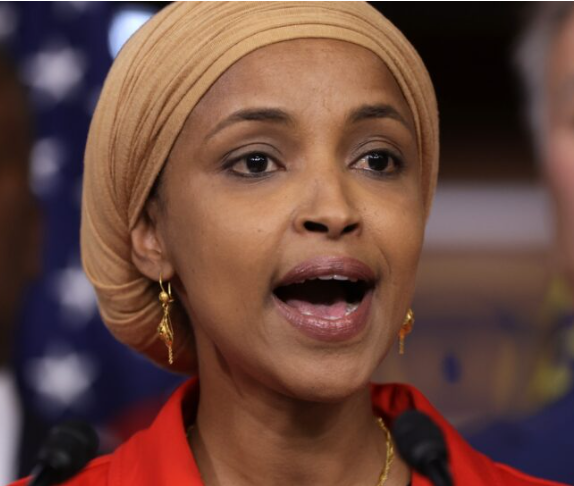
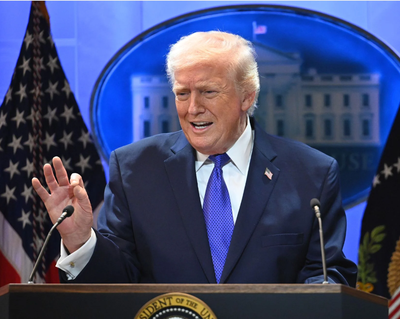
The latest debate over the release of documents connected to Jeffrey Epstein has put three political figures into the same online conversation: President Donald Trump, New York City mayoral figure Zohran Mamdani, and Michigan politician Abdul El-Sayed. A viral graphic claims that Mamdani and El-Sayed are not mentioned in the Epstein files, while Trump appears 38,000 times.
The number has a basis in published reporting, but the graphic needs important context. A New York Times review of the Justice Department’s released documents found more than 38,000 references to Trump and related search terms across more than 5,300 files. That count is not the same as 38,000 independently verified allegations or findings of wrongdoing.

The documents associated with Epstein include a wide range of material: emails, news articles, contact information, investigative records, interview notes and tips submitted to law enforcement. A person’s name can appear in very different contexts, and a raw search count does not explain why the name appears or whether a particular reference is significant.
That distinction is especially important in a case involving a convicted sex offender whose social and professional connections included numerous prominent people. Being mentioned in the records does not, by itself, establish that someone participated in Epstein’s crimes or knew about them.

Epstein was arrested on federal sex-trafficking charges in 2019 and died in jail that year while awaiting trial. His longtime associate Ghislaine Maxwell was later convicted of helping recruit and groom underage girls for sexual abuse. The subsequent release of records has generated renewed scrutiny of people who knew Epstein, appeared in his contacts or were referenced in documents linked to investigations.
Trump’s name appears in the released material in multiple contexts, according to news organizations that reviewed the records. These include news clippings, correspondence and other documents, as well as unverified tips. The presence of those materials has fueled public questions, but each item must be assessed on its own evidence rather than by counting keyword matches alone.

The claim about Mamdani is not accurate as written. Reporting by Euronews found his name appeared five times in the released Epstein files, in references connected to newspaper clippings—not evidence of wrongdoing or proof of a personal relationship with Epstein. The fact that his name appears in the archive contradicts the graphic’s blanket claim that he is not in the files.
The attention around Mamdani also followed the spread of fabricated images purporting to show him as a child alongside Epstein and other well-known figures. The Associated Press and PolitiFact found those images were generated using artificial intelligence. They were not authentic photographs documenting meetings between Mamdani and Epstein.

The graphic makes a similar assertion about Abdul El-Sayed, a Michigan politician and physician. However, the sources reviewed for this article do not establish a reliable, comprehensive search result confirming that his name is entirely absent from every released Epstein-related document. Without a verified search of the full archive, it would be misleading to present the claim of total absence as settled fact.
The U.S. Department of Justice says its public Epstein Library contains millions of pages and warns that technical limitations mean some materials—especially handwritten records—may not be electronically searchable or may return unreliable results. That caveat makes categorical statements about a person never appearing anywhere in the collection difficult to substantiate without explaining the search method and scope.

The public release was designed to make a large volume of records available, but it is not a neatly organized list of guilty and innocent people. The files include duplicates, documents collected from different investigations, and material submitted by members of the public. The Justice Department has explicitly cautioned that some submitted material may be false or sensationalist.
That is why interpreting the documents requires more than counting names. A person might appear because an email mentions them, a newspaper article discusses them, a witness refers to them, or an investigator records an unverified allegation. Those contexts are not equivalent and should not be presented as though they were.

The widely reported 38,000 figure concerning Trump also depends on how the search was conducted. The New York Times review counted references to Trump and related terms across the released batch; it was not a judicial finding that Trump committed a crime 38,000 times, nor a count of 38,000 proven allegations.
Some references reportedly involve news coverage and correspondence about Trump, while others involve investigative material and unverified tips. The Justice Department has said that some claims submitted to the FBI were unfounded. Readers therefore need to distinguish the existence of a document from the truth of what the document says.

Trump has denied wrongdoing connected to Epstein. The fact that his name appears repeatedly in the released material is relevant to understanding the scope of the records and the questions journalists have examined, but frequency alone cannot establish criminal conduct. Any specific allegation requires evidence and context beyond a search result.
Likewise, the presence of Mamdani’s name in a small number of documents does not establish misconduct. The reported references identified by Euronews were associated with newspaper clippings, and fact-checkers found no basis for treating the viral AI-generated images as genuine evidence of a personal association with Epstein.

The broader political argument surrounding the files reflects a familiar problem in the digital age: a true statistic can be paired with an unsupported conclusion, making a graphic seem more definitive than the underlying evidence. Here, the Trump mention count has a basis in published reporting, but the claim that Mamdani is absent from the records conflicts with reporting that his name appears in them.
The claim about El-Sayed requires separate verification. It should not be treated as proven merely because the graphic states it, nor should his name appearing in any document—if found—be treated as evidence of wrongdoing without examining the specific context.

A meaningful comparison would require applying the same search method to each person, checking spelling variations, reviewing the documents in context and distinguishing direct references from incidental mentions. Even then, search results may be incomplete because some records are not searchable or have been redacted.
The Justice Department’s archive remains the primary public source for released records, but its own notice acknowledges limitations in electronic search. A definitive claim that a name appears nowhere should therefore identify the dataset and search process used, rather than rely on a social media image alone.

Ultimately, the key question is not simply how many times a politician’s name appears, but what the underlying records actually show. Document counts can guide further investigation, but they cannot substitute for evidence, corroboration or legal findings.
The Epstein case deserves serious scrutiny because it involved sexual abuse and powerful social networks. That scrutiny is best served by accurate descriptions of the records—not by treating every mention as incriminating or repeating claims of absence that have not been established.
Fact-check summary: The graphic is partly misleading. The 38,000 figure is based on published reporting about references to Trump and related terms in released files, not 38,000 proven instances of wrongdoing. The claim that Mamdani is absent is contradicted by reporting that his name appeared five times in references linked to newspaper clippings. I could not verify the graphic’s categorical claim about El-Sayed from the sources reviewed.
Comments (0)
Loading comments...
May You Like


Latest Posts








Popular Posts