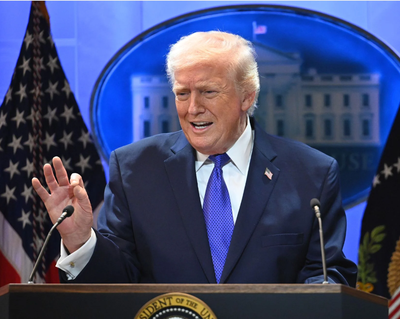
SHOCKING MEDIA EVICTION! Donald Trump hints at a massive relocation plan. Read the story. #Trump
Trump Hints White House Press Corps Could Be Moved as Debate Over Media Access Intensifies
President Donald Trump has raised the possibility of moving White House journalists to a different location, reopening a debate over where reporters work and how they cover the president. His remarks have drawn attention because the press briefing room has long been a central place for daily exchanges between the administration and the news media.
The comments came in a social media post on October 24, 2026. Trump rejected reports that he planned to remove the existing briefing room to restore an indoor swimming pool beneath it, but left open the possibility of relocating the journalists who regularly cover the White House.

Trump described the press as “Fake News” and suggested reporters could be moved to what he called a “less obnoxious location.” The language reflected his longstanding criticism of news organizations whose coverage he considers unfair, while leaving the practical details of any possible move unclear.
The president did not announce a finalized relocation plan in the October 24 post. As of the latest reports reviewed for this article, the possibility of moving the press corps remained under discussion rather than a confirmed change with a published timetable.

The room at the center of the debate is the James S. Brady Press Briefing Room, located in the White House’s West Wing. It is where press secretaries routinely answer questions and where journalists gather for briefings and other scheduled exchanges with administration officials.
The room occupies the site of an indoor swimming pool built during President Franklin D. Roosevelt’s administration in 1933. Roosevelt, who had polio, used swimming as part of his physical routine. During President Richard Nixon’s administration, the pool was covered over to create a briefing space better suited to the growing demands of televised news.

Reports about the pool resurfaced after The New York Times reported that Trump had discussed moving press conferences out of the briefing room with then-press secretary Karoline Leavitt in August. According to the reporting, that earlier proposal was not implemented during her tenure.
Trump pushed back against the account that he intended to bring the pool back. His denial, however, did not rule out relocating the press corps for other reasons, leaving two questions that had become intertwined in public discussion: what will happen to the briefing room, and where might journalists work if the administration decides to move them?

The idea of moving reporters away from their established West Wing workspace is not entirely new. During the period before Trump’s first inauguration in 2017, officials also discussed the possibility of holding briefings in another building on the White House complex. That proposal was ultimately abandoned.
A move could involve more than changing the room where briefings take place. Reporters depend on their workspaces for filing stories, coordinating with editors, preparing questions, conducting interviews and responding quickly to developments. The practical impact would depend on the location selected, the facilities provided and the access journalists retained.

The White House has not publicly outlined a detailed relocation plan in the reports cited here. It is therefore not yet clear whether any potential move would affect only the briefing room, journalists’ desks and workspaces, or the broader arrangements governing press access to the complex.
The question has emerged amid a wider series of disputes between the Trump administration and news organizations. These disagreements have involved access to White House events, participation in press pools and the administration’s criticism of particular outlets and reporters.

In September, the administration briefly restricted White House access for journalists from CNN, MS NOW and Politico. A federal judge later ruled that the restrictions were likely unconstitutional and ordered access restored while the legal dispute continued. The administration has continued to contest the ruling, according to published reports.
That legal context matters because the White House controls access to a highly restricted government complex, while journalists argue that independent reporting on the president and executive branch serves the public interest. A change in physical location would not automatically settle the separate legal and practical questions about which reporters can attend events or ask questions.

The First Amendment protects freedom of the press, but that protection does not mean every reporter has unrestricted access to every room or private facility. Disputes often turn on how access rules are designed, whether they are applied consistently and whether restrictions are imposed in retaliation for protected reporting.
For journalists, the location of the briefing room can affect how efficiently they cover the administration. A workspace inside the West Wing allows correspondents to be close to briefings and other events, although the degree of access varies by credential, event and security arrangements.

For the administration, a relocation could be presented as a way to free up space or reorganize facilities. Trump has indicated that he wants to use White House space for other needs, but public reporting has not established a final plan identifying a new location or describing how the press corps would be accommodated.
The disagreement also highlights the difference between criticizing media coverage and changing the working conditions of journalists. Presidents of both parties have clashed with reporters, but changes to access arrangements can prompt additional scrutiny when they affect specific news organizations or follow contentious exchanges.

No relocation date or confirmed replacement site has been established in the reporting reviewed for this article. Until the White House provides further details, it remains uncertain whether the press corps will move, what facilities might be offered, and whether any change would alter the way briefings are conducted.
The historic swimming pool is a separate issue. Trump explicitly denied that he intended to restore it by removing the current briefing room, despite reports that the idea had been discussed. That distinction is important: the possibility of moving journalists should not be treated as proof that the pool restoration will happen.

For now, the central development is Trump’s public suggestion that the White House press corps could be relocated. Whether the idea becomes an official policy will depend on decisions that have not yet been fully announced, including the intended destination, the facilities available and the terms of continued press access.
The next signs to watch are any formal statement from the White House, reports identifying a proposed new workspace, and clarification about whether the briefing room itself will remain in use. Until those details emerge, the potential move remains a proposal—not a completed change to White House press operations.
Comments (0)
Loading comments...
May You Like



Latest Posts







Popular Posts