Should States Lose Federal Funding If They Refuse to Report Illegal Immigrants to DHS?

The Justice Department says yes — and it's threatening to cut billions in welfare funding from states that don't comply with a sweeping new reporting mandate. But a coalition of 22 Democratic attorneys general is already fighting back in court.
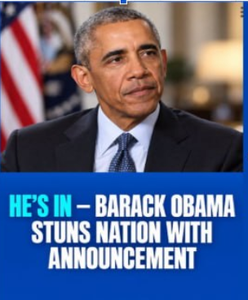
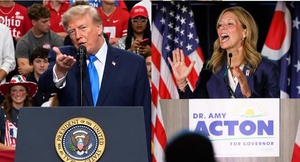
WASHINGTON – The question posed by the viral graphic — "Should states lose federal funding if they refuse to report illegal immigrants to DHS?" — is no longer hypothetical. The Trump administration has officially answered with a resounding yes.
On September 2, 2026, the Justice Department's Office of Legal Counsel issued a sweeping legal opinion that threatens to yank billions of dollars in federal welfare funding from states that fail to report all immigrants known to be in the country illegally to the Department of Homeland Security . The opinion represents a major escalation in the administration's ongoing battle with so-called "sanctuary" jurisdictions and could affect every state in the country.
The New Mandate: What States Must Do
The DOJ opinion, authored by Deputy Assistant Attorney General Joshua Craddock, dramatically expands the scope of a 1996 law requiring states to report undocumented immigrants to federal authorities .
| Before the New Opinion | After the New Opinion |
|---|---|
| Only state agencies administering TANF and SSI had to report | All state agencies must report known undocumented immigrants |
| Universities, DMVs, and other agencies were exempt | Universities, DMVs, and all state agencies are now covered |
| Narrow interpretation of "State" | "State" means the entire government, not just one agency |
The opinion formally withdraws a 1998 Clinton-era interpretation that limited the reporting requirement to agencies that administer the Temporary Assistance for Needy Families (TANF) and Supplemental Security Income (SSI) programs . Now, every agency in a state government — including universities, departments of motor vehicles, and health departments — must report individuals known to be in the country illegally.
"Failure to comply may lead to serious consequences, including loss of program funding," Craddock said in a statement .
The numbers at stake are massive:
-
TANF grants exceed $16.5 billion annually
SSI federal benefits exceed $60 billion annually
All 50 states and D.C. receive funding from both programs
The Administration's Argument
Assistant Attorney General T. Elliot Gaiser framed the move as a matter of common sense and fiscal responsibility.
"Congress wrote this requirement plainly," Gaiser said in a statement. "When a state chooses to participate in TANF, it accepts the obligation to report illegal aliens in the United States. Tax dollars intended to help vulnerable Americans should not perversely encourage illegal entry into the United States, but rather should reinforce our laws and our borders" .
The administration's logic rests on a simple premise: states receiving federal money must help enforce federal immigration law. Craddock's opinion argues that the 1998 interpretation "wrongly narrowed" the scope of the 1996 Personal Responsibility and Work Opportunity Reconciliation Act .
The Legal and Practical Challenges
Implementing the new mandate raises significant questions. How does a state "know" someone is in the country illegally? Who makes that determination, and based on what evidence?
Craddock addressed this in a footnote, arguing that a state may "know" someone is illegally present if DHS provides notification, an agency has records indicating unlawful presence, or the person simply admits it. He explicitly rejected a stricter standard that would require a formal adjudication .
"Conversely, an agency cannot avoid acquiring knowledge of unlawful status by deliberately refusing to consider readily available information or by insisting on a formal adjudication that the statute nowhere requires," Craddock concluded .
The practical implications are enormous. At least 19 states and Washington, D.C., allow immigrants without legal status to obtain driver's licenses. Many state universities also admit such students. States could now be required to report millions of individuals to federal authorities — or risk losing funding .
The Democratic Pushback
Democratic-led states are already preparing to fight back. On August 20, 2026, a coalition of 22 attorneys general and the Commonwealth of Pennsylvania filed an amended lawsuit challenging the administration's efforts to impose immigration conditions on federal public safety grants .
The coalition argues that the administration's actions are unconstitutional and violate the separation of powers and federalism.
"These grants provide critical resources to help Nevada law enforcement fight crime and keep our communities safe," said Nevada Attorney General Aaron D. Ford. "The federal government should not be allowed to jeopardize public safety funding to force states to carry out the destructive excesses of its immigration agenda" .
The lawsuit specifically targets grants under the Victims of Crime Act (VOCA) and the Edward Byrne Memorial Justice Assistance Grant Program — named after a New York City police officer killed in the line of duty in 1988 .
Broader Context: The Carrot and the Stick
The DOJ opinion is part of a two-pronged strategy. In addition to threatening to withhold funding from non-compliant states, the administration is offering financial incentives to states that cooperate with federal immigration enforcement.
The "BIDEN" program — named ironically after former President Joe Biden — makes up to $3 billion available to state and local governments that agree to participate in 287(g) agreements with ICE . These agreements give local law enforcement the authority to carry out certain immigration enforcement functions under federal supervision.
As of February 2026, the administration had signed 1,379 active agreements in 40 states, up from just 134 in 2025 .
Meanwhile, Tennessee has become the first state to pass a law requiring all counties to participate in 287(g) agreements — or lose state funding . The bill passed the House 71-25 and is now awaiting the governor's signature .
What Happens Next
The new OLC opinion won't immediately change the day-to-day practicalities of immigration enforcement. Other agencies will need to determine how to enforce the new interpretation, and those efforts will likely result in a new wave of legal battles .
Notably, the Justice Department said the new conclusion would only apply to future pots of federal funding. The administration "cannot retroactively alter agreements" that were premised on the previous interpretation, Craddock wrote . But the message is clear: going forward, states that want federal money must cooperate with federal immigration enforcement — or risk losing billions.
The courts have already struck down previous efforts to force states' hands. A federal judge in San Francisco blocked the administration from withholding funding from 16 sanctuary jurisdictions in April 2025 . Whether this new approach survives judicial scrutiny remains to be seen.
The Bottom Line
| What the graphic asks | What the administration is doing |
|---|---|
| Should states lose federal funding if they refuse to report illegal immigrants? | The DOJ says yes — and is threatening to cut billions in TANF and SSI funding |
| Is this new? | The September 2026 opinion reverses a 1998 interpretation |
| Can states fight back? | 22 states are already in court challenging the policy |
| What's the incentive to cooperate? | Up to $3 billion in grants available to compliant jurisdictions |
The question posed in the graphic is no longer just a talking point. It is now a matter of federal policy — and the subject of a legal battle that could determine the future of federal-state cooperation on immigration enforcement for years to come.
Comments (0)
Loading comments...
May You Like
Shocking news from Ohio: an unexpected development ahead of Trump's rally
Shocking news from Ohio: an unexpected development ahead of Trump's rally

Russian Drone Strikes Kyiv Bridge as German Chancellor Arrives in Ukraine