Supreme Court Allows Trump Administration to Resume Deportations
Supreme Court Allows Trump Administration to Resume Third-Country Deportations for Now
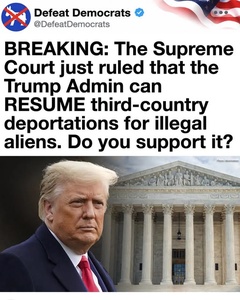
The U.S. Supreme Court has temporarily cleared the way for the Trump administration to resume deporting migrants to countries other than their countries of citizenship while the justices consider the policy’s legality.
The September 29 order does not represent a final ruling that the policy is lawful. Instead, the Court paused a lower-court judgment while agreeing to review the underlying legal dispute later this year.
The case, Department of Homeland Security v. D.V.D., concerns the administration’s use of third-country removals for migrants who have final deportation orders but cannot readily be returned to their home countries.
Under the policy, migrants can be sent to countries where they are neither citizens nor permanent residents. The administration says such removals are necessary when home countries refuse to accept deportees or other legal barriers apply.
Federal officials have described third-country deportations as an important immigration-enforcement tool, particularly for people with final removal orders who cannot be returned directly to their countries of origin.
The policy has already been used extensively. According to court records and news reports, more than 25,000 migrants have been sent to more than two dozen countries since the administration began implementing the program.
Mexico has received the largest share of those deportees, while other destinations have included countries in Africa, Latin America and the Caribbean, according to reporting on the program.
The legal dispute centers heavily on whether migrants must receive adequate notice and an opportunity to explain why removal to a particular third country could expose them to persecution or torture.
A federal district judge in Massachusetts previously ruled against the administration’s approach, finding that the deportation process did not provide migrants with sufficient procedural protections before removal to third countries.
The U.S. Court of Appeals for the First Circuit later upheld major portions of that ruling, concluding that the government’s procedures failed to satisfy requirements involving notice and opportunities to raise protection-based claims.
The appeals court’s decision threatened to halt a program that had become an important part of the administration’s broader immigration-enforcement strategy, prompting the Justice Department to seek emergency intervention from the Supreme Court.
The Supreme Court’s September order temporarily paused the lower-court judgment, allowing removals to resume while the justices prepare to consider the case on an expedited schedule.
The Court has scheduled arguments for its December 2026 session. The justices will consider several questions, including whether the lower court had authority to issue broad relief and whether the government’s guidance violates federal immigration law.
The justices will also examine arguments involving the Due Process Clause and protections established under the Convention Against Torture and its implementing regulations.
The administration argues that receiving countries provide assurances that deportees will not be persecuted or tortured, and officials say the policy is necessary when conventional removal options are unavailable.
Immigration attorneys challenging the policy dispute those assurances and argue that some migrants could face imprisonment, persecution or other serious dangers after being transported to unfamiliar countries.
The controversy is particularly significant for migrants who have protection against removal to their home countries because authorities believe they could face persecution or torture there.
The Supreme Court’s order therefore changes the immediate legal situation without resolving the larger constitutional and statutory questions surrounding third-country deportations. The policy remains subject to the Court’s eventual decision.
The ruling also comes as the Supreme Court considers several other major immigration disputes involving the Trump administration, placing the judiciary at the center of continuing legal challenges to federal immigration policy.
For now, the practical effect is clear: the administration can resume third-country deportations while the Supreme Court prepares to hear the case. The final legal status of the policy remains unresolved.

Comments (0)
Loading comments...
May You Like

Obama Steps Back Into the Political Spotlight as Democrats Target Trump’s

Jack Smith Defends His Integrity as Trump Investigations Face Renewed Political Firestorm