
Supreme Court paves the way for the Trump administration on the voter issue
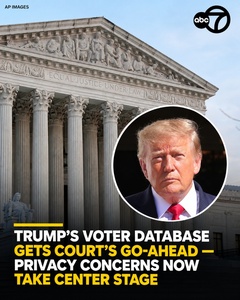
WASHINGTON — The Supreme Court on September 25 allowed the Trump administration to resume using an expanded federal database to help states verify the citizenship status of registered voters.
A Temporary Green Light
The 6-3 emergency order temporarily blocked a lower-court ruling that had halted the revised Systematic Alien Verification for Entitlements, known as SAVE, before November’s midterm elections.
The administration says the database will help identify noncitizens who may be registered to vote, while opponents argue inaccurate government records could wrongly flag eligible citizens and create additional voting burdens.
The dispute centers on SAVE, a federal system created decades ago to verify immigration and citizenship information, which the administration expanded by connecting it with Social Security records.
According to the Supreme Court’s order, federal law likely permits the Department of Homeland Security to request and receive citizenship and immigration information from other government agencies.
The majority said the lower court’s restrictions interfered with federal efforts to assist state and local election officials, and concluded that the administration was likely to prevail in its appeal.
Concerns Over Accuracy
Three justices — Ketanji Brown Jackson, Sonia Sotomayor and Elena Kagan — dissented, arguing that the expanded system raises serious concerns about privacy, data accuracy and eligible voters’ ability to remain registered.
The revised system can use Social Security numbers and other identifying information to compare voter records with federal databases, potentially producing cases that election officials must investigate individually.
Critics say federal records may not always reflect a person’s current citizenship status, particularly for naturalized citizens whose records could have changed after their original Social Security information was created.
Election officials and voting-rights organizations have also raised concerns about names, dates of birth and other records producing false matches, potentially requiring eligible voters to provide additional documentation.
Limits Before Election Day
The Supreme Court’s order does not authorize states to ignore existing federal election rules, including restrictions under the National Voter Registration Act concerning voter-roll removals close to federal elections.
reported that the ruling may therefore have limited immediate effects, because states generally cannot systematically remove voters from registration lists during the 90-day period before an election.
Still, the decision permits individualized inquiries using the modified SAVE system, meaning election officials can investigate particular voter records even while broader purging activities remain restricted.
The administration has argued that preventing access to federal citizenship information would make it harder for states to identify noncitizens who might appear on voter-registration lists.
Voting-rights groups counter that noncitizen voting is relatively rare and that inaccurate database matches could impose costs on citizens who must prove eligibility despite having a legal right to vote.
Broader Election Dispute
The case is part of a broader effort by the Trump administration to increase federal involvement in election administration, an area where states traditionally exercise substantial authority.
Trump signed an executive order in 2025 directing federal agencies to develop systems allowing state and local officials to verify citizenship information for people registering to vote.
The Supreme Court emphasized that Friday’s decision is temporary, allowing the revised program to operate while litigation continues through the federal appeals process and potentially returns to the justices.
The ruling could become more consequential in future elections depending on how courts ultimately resolve questions about federal authority, privacy protections, database accuracy and the scope of state election powers.
What Happens Next?
For now, the immediate effect is that states can again use the expanded federal system for voter-verification inquiries, but existing election laws continue to limit how registrations can be removed.
Comments (0)
Loading comments...
May You Like


South Korea–Ukraine Rift Deepens Over North Korean POW Transfer as PURL Draws New Scrutiny

Obama Steps Back Into the Political Spotlight as Democrats Target Trump’s Senate Majority












