Supreme Court’s 6–3 Ruling Was a Major Blow to Trump — But the Viral Graphic Needs Context

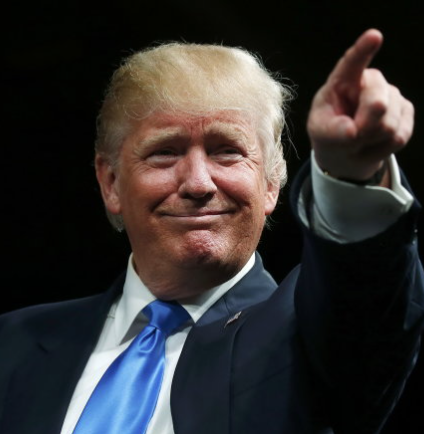
A viral graphic declares, “DENIED! Supreme Court Delivers Jaw-Dropping 6–3 Ruling… Get Ready!!” alongside an image of Donald Trump at the Supreme Court.
The headline is referring to a real 6–3 Supreme Court decision, but it is missing crucial context. The ruling was issued on June 30, 2026, not September, and it rejected one of President Donald Trump’s central attempts to restrict birthright citizenship.
The Court held that children born in the United States generally remain U.S. citizens even when their parents are undocumented immigrants or are in the country temporarily.
The Supreme Court Rejected Trump’s Birthright Citizenship Order
The case was Trump v. Barbara, concerning Trump's January 2025 executive order that attempted to prevent federal agencies from recognizing U.S. citizenship for certain children born in the United States.
The Supreme Court ruled 6–3 against the administration.
Chief Justice John Roberts wrote the majority opinion. Justices Sonia Sotomayor, Elena Kagan, Amy Coney Barrett and Ketanji Brown Jackson joined the relevant majority portion of the opinion.
The dissenters were Justices Clarence Thomas, Samuel Alito and Neil Gorsuch.
The decision reaffirmed the longstanding understanding of the 14th Amendment's Citizenship Clause.
What the 6–3 Decision Actually Means
The ruling means the Trump administration cannot simply use the challenged executive order to deny citizenship to children born in the United States based on their parents' immigration status.
The Court relied heavily on the constitutional language guaranteeing citizenship to people born in the United States who are “subject to the jurisdiction” of the country, as well as the historical understanding of that provision.
The decision was particularly significant because the Court's conservative majority includes three justices appointed by Trump himself.
That made the 6–3 defeat politically striking: the justices did not simply divide along the lines Trump might have expected.
But There Is an Important Twist: 6–3 Was Not the Whole Story
The viral graphic makes the ruling sound completely straightforward, but the actual decision was more complicated.
While the Court's overall judgment was 6–3, the constitutional question at the center of the case had a somewhat narrower alignment. Five justices agreed on the core conclusion that the executive order could not eliminate birthright citizenship under the circumstances presented.
Justice Brett Kavanaugh took a more complicated position in parts of the case, which is why some contemporary coverage described the underlying constitutional reasoning as effectively 5–4 rather than simply 6–3.
That distinction matters when interpreting claims that the Supreme Court issued a sweeping, final 6–3 ruling on every aspect of birthright citizenship.
Trump Was Not Removed From Office — and the Court Did Not End the Immigration Fight
The word “DENIED!” in the graphic is technically pointing to Trump's loss in this particular legal battle, but it can give the impression that the Supreme Court somehow rejected Trump's presidency or issued an extraordinary punishment against him.
It did not.
The Court rejected the administration's attempt to restrict birthright citizenship through the challenged executive order.
Trump responded by criticizing the ruling and indicating that he would look for other ways to pursue his immigration objectives. CNN reported that he called the decision bad for the country and turned attention toward Congress.
And the issue has not disappeared.
Trump Tried a Narrower Approach Later
The administration subsequently issued new executive orders on August 6, 2026, taking a narrower approach to birthright citizenship.
Those orders targeted specific categories, including certain children whose parents fall into particular immigration or diplomatic classifications.
But that strategy has also faced immediate legal challenges.
On September 2, federal Judge Deborah Boardman blocked Trump's latest order, finding that it likely conflicted with existing Supreme Court precedent. Reuters reported that the ruling followed the Supreme Court's June decision in Trump v. Barbara.
That is an important reason the issue is appearing in political headlines again in September.
The Viral Graphic May Make an Old Ruling Look New
This is perhaps the most important point for anyone seeing the graphic today.
The 6–3 Supreme Court ruling itself is real, but it happened on June 30, more than two months before the current date.
It should not be presented as though the Supreme Court has just issued a new 6–3 decision today.
There have been other major Supreme Court actions since then, including an August 24 emergency ruling allowing portions of Trump's election-related executive order to proceed while litigation continues. That ruling was also described as a 6–3 decision, but it concerned election administration and mail voting—not birthright citizenship.
And on September 4, the Court issued another election-related order involving discounted political advertising rates. That case involved Republican campaign committees and was separate from the birthright-citizenship dispute.
So simply seeing “Supreme Court,” “6–3” and Trump together does not establish that the graphic describes the latest Court action.
What the Graphic Gets Right
Correct:
- The Supreme Court issued a 6–3 ruling against Trump's birthright-citizenship policy.
- The decision came on June 30, 2026.
- The ruling preserved the broad constitutional principle of birthright citizenship.
- Trump's administration suffered a significant legal defeat on one of its major immigration priorities.
Misleading or incomplete:
- It is not a new September ruling.
- The case was more legally nuanced than the graphic suggests.
- The decision did not end Trump's broader immigration agenda.
- The administration subsequently tried a narrower birthright-citizenship strategy.
- The image's dramatic wording — “Jaw-Dropping,” “Get Ready!!” — is commentary, not a description of the Court's legal holding.
The Bigger Picture
The June decision was nevertheless a substantial constitutional defeat for Trump.
The administration had sought to alter a principle that had been embedded in American citizenship law for more than a century. The Supreme Court instead reaffirmed the broad interpretation of the 14th Amendment.
But the subsequent August executive orders and September litigation demonstrate that the legal battle has continued.
That makes the viral graphic partly accurate but potentially deceptive in timing: it is based on a genuine and consequential Supreme Court ruling, but it can easily be mistaken for a brand-new decision.
Bottom Line
Yes, the Supreme Court really did issue a 6–3 ruling rejecting Trump's attempt to restrict birthright citizenship. But it happened on June 30, 2026 — not today.
The Court's decision was a major setback for Trump's immigration agenda, while the administration has continued looking for narrower ways to pursue similar objectives. The viral graphic captures the political drama, but not the full legal story.
Comments (0)
Loading comments...
May You Like
TRUMP’S OHIO WARNING UNDER THE SPOTLIGHT
gfnhgmnghnmfgnbvvvvvvvvv