
TALARICO DESTROYS TRUMP
Trump Said James Talarico Insulted Jesus — His Response Turned Faith Into a Political Battlefield
A March 2026 exchange between the president and a Texas Senate candidate reignited arguments over health care, immigration, Iran and the Epstein records.
Asharp exchange between President Donald Trump and Texas Democrat James Talarico became a much larger argument about religion, politics and the responsibilities of elected leaders. After Trump accused Talarico of being insulting to Jesus, the Democratic Senate candidate responded with a forceful message that placed health care, immigration, the war in Iran and the Jeffrey Epstein files at the center of the debate.
The remarks circulating online are authentic in substance, but their timing matters. Talarico shared the response in March 2026, during a contentious campaign season in Texas. The video should not be confused with a new statement delivered on Election Day in November. Its renewed circulation illustrates how an emotionally charged political moment can continue reaching new audiences months after the original exchange.
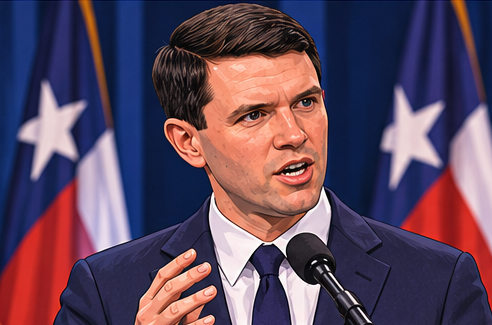
The dispute began when Trump criticized Talarico's positions and public statements about faith and gender. In an interview in mid-March, Trump described the Democrat as far outside the political mainstream and accused him of disrespecting Jesus. The allegation was part of a broader Republican effort to portray the Texas candidate as too progressive for a traditionally conservative electorate.
Talarico chose not to respond by defending a single theological statement. Instead, he challenged what he viewed as a contradiction between the president's professed moral concerns and the consequences of federal policy. In the speech, he asked what truly offends the teachings of Jesus and then pointed to people he believed had been harmed or placed at risk by government decisions.
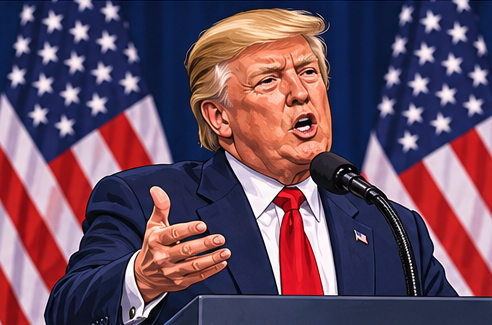
His response began with access to medical care. Talarico argued that limiting coverage for sick people while delivering tax benefits to wealthier Americans was inconsistent with a faith centered on caring for neighbors. That was his political and moral interpretation, not an objective ruling on the religious beliefs of Trump or those who support his policies.
Health care has been a recurring battleground in American politics for years. Republicans generally argue that their proposals can reduce costs, prevent misuse of public programs and give states or patients more flexibility. Democrats warn that restrictions on public coverage and changes to eligibility rules may leave vulnerable people unable to afford treatment. The competing claims involve real policy tradeoffs that cannot be resolved by a single sound bite.
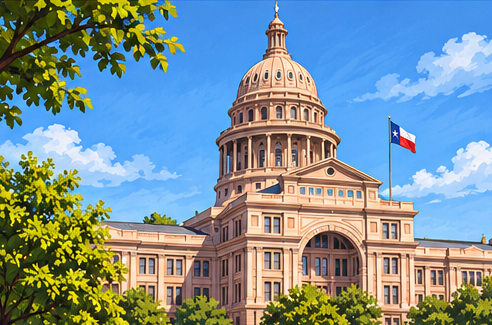
Talarico's next criticism concerned immigration enforcement. He invoked parents, children and families facing separation or removal, linking the treatment of migrants to biblical teachings about welcoming strangers. His message was designed to reach people who see faith as a public responsibility, even when they disagree over how immigration law should be enforced.
The Trump administration and its allies have defended stricter immigration measures as necessary for border security and the enforcement of existing law. Opponents have raised humanitarian and due-process concerns about detention, deportation and the effects of enforcement on families. Those disagreements are both legal and moral; the circumstances of individual cases can differ significantly.

The most disturbing portion of Talarico's speech concerned the war in Iran. He condemned the deaths of schoolchildren and criticized the prospect of a prolonged conflict. His statement followed the February 28 strike on a girls' school in Minab, an incident that prompted international concern and a U.S. military investigation.
Reporting in March said U.S. investigators considered American responsibility for that strike likely, although the investigation had not reached a final public conclusion at that time. Officials said the incident was being examined, and the administration denied deliberately targeting civilians. A reported preliminary assessment is not the same thing as a final determination of who was responsible or whether any violation of the laws of war occurred.

The reference to schoolchildren gave Talarico's argument a humanitarian focus that went beyond domestic party politics. Images and reports of civilian casualties can provoke intense public reactions, especially when children are involved. Yet determining the facts of a military strike requires evidence, independent scrutiny and care not to turn disputed questions of responsibility into settled claims.
Talarico also referred to the Epstein files, accusing the administration of concealing information connected to the late financier and convicted sex offender Jeffrey Epstein. That was an allegation made in the course of political criticism; it is not, by itself, proof of a cover-up or evidence that any particular person committed a crime.

The Justice Department had released millions of pages of Epstein-related records by early 2026, while disputes continued over missing material, redactions and whether the public had received a sufficiently complete accounting. The department said it had released records under the transparency law and applied protections for victims and other legally sensitive information. Critics continued to press for fuller disclosure and independent oversight.
The exchange also revealed Talarico's distinctive political identity. A former public-school teacher and Presbyterian seminarian, he has frequently explained his progressive policy positions through Christian themes such as compassion, dignity and service. That approach sets him apart in an era when religion is often presented as a reliable marker of conservative political identity.

Conservative critics have challenged his interpretations of scripture, particularly his past comments about gender and the way religious institutions should treat LGBTQ people. Some view his comments as inconsistent with traditional Christian teachings. Supporters counter that his emphasis on inclusion and care for the marginalized comes from central elements of the Gospel tradition.
The disagreement, then, is not simply about whether faith belongs in politics. Both sides invoke religious values, but they draw different conclusions about what those values demand from leaders. Trump and many of his supporters have emphasized religious liberty, social conservatism and judicial appointments; Talarico emphasizes the moral consequences of public policy for people with limited power.

The dispute unfolded as Talarico pursued a U.S. Senate seat in Texas after winning the Democratic primary. He faced a difficult general-election environment in a state where Republicans have held statewide offices for decades. National attention to the exchange gave both his supporters and his critics a vivid example of the arguments that defined his candidacy.
For Democrats, the video offered a way to challenge conservative claims to religious authority without abandoning the vocabulary of faith. For Republicans, it reinforced concerns that Talarico's approach to Christianity was a political reinterpretation of scripture. Neither reaction can be treated as representing all Christians or all voters in Texas.
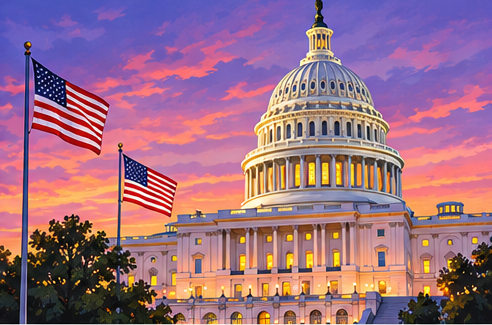
Social-media graphics often compress the remarks into a single dramatic quotation. In doing so, they can strip away the original interview, the timing of the response and the difference between verifiable events and partisan allegations. The image circulating with the quote captures the intensity of Talarico's criticism, but readers need that missing context to understand what actually happened.
The lasting importance of the Trump–Talarico clash may be the larger question it exposed: when political leaders appeal to religion, should voters judge them by stated beliefs, personal conduct, policy outcomes or some combination of all three? The two politicians offer sharply different answers, and the argument shows why faith remains one of the most contested languages in American public life.
Comments (0)
Loading comments...
May You Like

NYC EMERGENCY—MILLIONS FACE EVACUATION RISKS, MACY'S GIANT BALLOONS REMOVED FOR SAFETY!

BANGCHAK REFINERY DISASTER IN THAILAND—120,000 BARRELS A DAY SHUT DOWN, U.S. OIL PRICES SURGE 10%!

CAIRO INFERNO — CAR CARRYING SENIOR U.S. OFFICIAL SLAMS INTO FUEL TANKER, 31 DEAD, 21 INJURED!

Latest Posts







Popular Posts




