Ted Cruz Escalates Culture War at GOP Convention: ‘Sharia Law Has No Place in America’
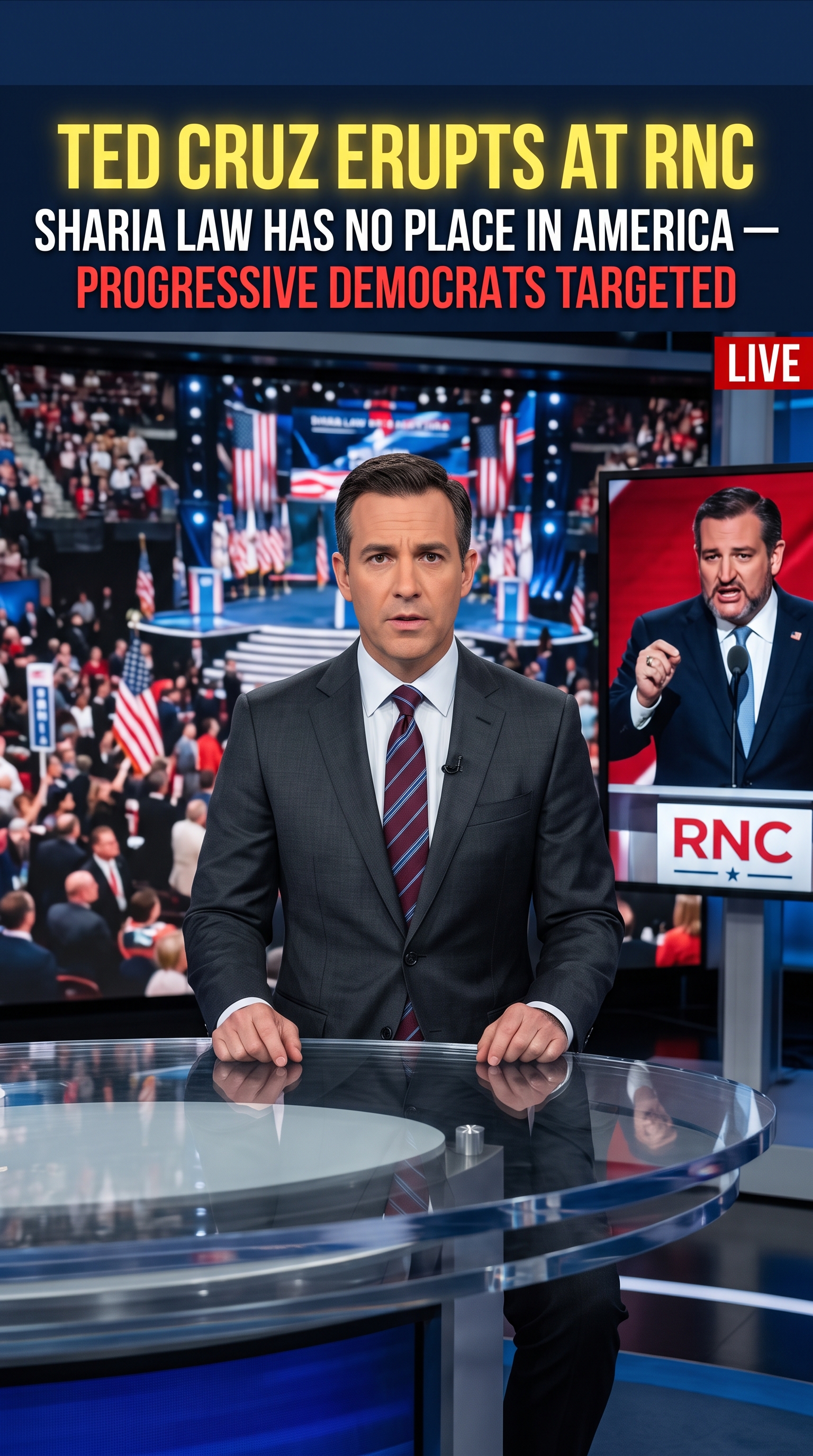
DALLAS — Sen. Ted Cruz used the Republican Party’s unusual 2026 midterm convention in Dallas to deliver one of the clearest cultural warnings of the GOP campaign so far, declaring that “Sharia law has no place in America” while targeting Democrats he portrayed as part of a growing Islamist and far-left movement.
Speaking as Republicans gathered to rally their base ahead of the November midterm elections, the Texas senator connected the debate over Islam, national security and American constitutional values to Democratic candidates including Michigan Senate nominee Abdul El-Sayed and New York City Mayor Zohran Mamdani.
Cruz’s remarks came as Republicans increasingly make Muslim candidates and Islam-related issues part of their national campaign message. Reuters reported this week that several prominent Republicans, including Vice President JD Vance and Texas Gov. Greg Abbott, have also focused heavily on Muslim candidates and communities during the 2026 campaign.
Cruz Draws a Sharp Line Over Sharia
Cruz has repeatedly argued that Islamic faith and Islamist political ideology should not be treated as the same thing.
In a speech earlier this year, he said that Sharia law should never become part of the legal system of the United States. PBS NewsHour also documented Cruz making a similar statement, saying Sharia law “shall never be allowed” in the United States.
At the Dallas convention, Cruz again placed the issue at the center of his criticism of Democrats.
His message was aimed in particular at El-Sayed, who won the Democratic nomination for the U.S. Senate in Michigan and would become one of the most prominent Muslim candidates on the 2026 ballot.
Cruz has also repeatedly singled out Mamdani, the Democratic mayor of New York City, portraying him as part of what Cruz calls an alliance between Islamists and the Democratic socialist movement.
The senator previously made similar claims at a campaign event in Iowa, where he described Mamdani as one of the most powerful Democrats in the country and linked him with what he called an Islamist and socialist movement.
But Critics Say Republicans Are Blurring Important Distinctions
The Republican rhetoric has generated a sharp response from critics who argue that the campaign is conflating Islam, Islamism and legitimate political disagreement.
That distinction matters.
Sharia is a broad body of Islamic religious principles and jurisprudence, interpreted differently across Muslim communities and countries. It is not itself a U.S. legal system, and the Constitution establishes federal law and constitutional protections rather than religious law as the governing legal framework of the country.
Fact-checkers have also pushed back against claims that Mamdani intends to introduce Sharia law in New York. PolitiFact previously found no evidence that Mamdani was attempting to bring Sharia law to America.
That does not mean Cruz’s broader political argument is disappearing. Instead, the dispute is becoming increasingly central to the 2026 campaign.
El-Sayed Becomes a National Republican Target
El-Sayed’s Senate campaign has made him one of the Democrats most frequently targeted by Republicans over his religion and past comments.
Cruz has specifically cited El-Sayed’s previous discussions of Sharia and his political associations.
C-SPAN documented Cruz linking El-Sayed to the Muslim Brotherhood during a Senate-related event, while Fox News has separately reported on resurfaced comments from El-Sayed concerning Sharia law.
El-Sayed, meanwhile, has become a major figure in Michigan’s Senate race and one of the most closely watched Muslim Democratic candidates in the country.
The political fight surrounding him illustrates how quickly a state-level Senate race can become part of a national debate over religion, immigration, terrorism and American identity.
The 2026 Midterms Are Raising the Stakes
Cruz’s remarks came during an extraordinary Republican gathering.
Unlike a traditional presidential-year Republican National Convention, the Dallas event was organized specifically to energize the party ahead of the 2026 midterms and put President Donald Trump at the center of the Republican campaign.
Reuters described the convention as an unprecedented effort to rally Republican voters and counter the historical tendency of the president’s party to lose seats during midterm elections.
The event has been dominated by Trump, but cultural issues have played a major role as Republican leaders seek to draw a sharp contrast with Democrats.
The strategy is clear: portray the 2026 election not simply as a contest over taxes, inflation or congressional control, but as a choice over the direction and identity of the country.
A Message Arriving on the Eve of 9/11
The timing of Cruz’s comments adds another layer to the political debate.
The Republican convention took place immediately before the 25th anniversary of the September 11 attacks, an anniversary that continues to shape American discussions about terrorism, national security and Islamist extremism.
For Republicans, the anniversary provides a powerful reminder of the security threats that followed the attacks.
For critics, however, using the anniversary to focus heavily on Muslim political candidates risks turning a remembrance of terrorism into a broader debate about Muslim Americans and their place in American public life.
That tension is likely to intensify as the midterm campaign accelerates.
The Bigger Question
Cruz’s declaration that “Sharia law has no place in America” is unlikely to remain a one-day convention sound bite.
With Muslim candidates gaining visibility in major races, Republicans are increasingly making Islamism and national security part of their campaign strategy.
Democrats and civil-rights advocates, meanwhile, argue that Americans can oppose terrorism and defend the Constitution without treating Muslim political participation as inherently threatening.
The November elections will show how voters respond to that argument.
For now, one thing is clear: the debate over Islam, Sharia, national security and the meaning of American identity has become one of the most explosive cultural issues of the 2026 midterm campaign.
Comments (0)
Loading comments...
May You Like
Obama Steps Back Into the Political Spotlight as Democrats Target Trump’s Senate Majority
OBAMA STUNS ON INSTAGRAM: MESSAGE MARKING 34-YEAR MILESTONE SPARKS A BUZZ
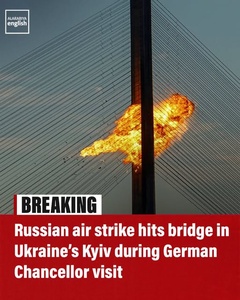
Russian Drone Strikes Kyiv Bridge as German Chancellor Arrives in Ukraine