The $24.3 Billion Shield: Trump Administration Clears Potential F-35 Sale to Saudi Arabia as Iran Conflict Escalates
The Trump administration has taken a major step toward supplying Saudi Arabia with one of the world's most advanced fighter aircraft, approving a potential $24.3 billion sale of 48 F-35 Lightning II jets to Riyadh.
The decision, announced by the U.S. State Department on September 17, 2026, comes as Saudi Arabia faces escalating attacks from Iran-backed Houthi forces in Yemen and as the broader U.S.-Iran conflict continues to affect the Middle East. The proposed sale still requires congressional approval before it can be finalized.
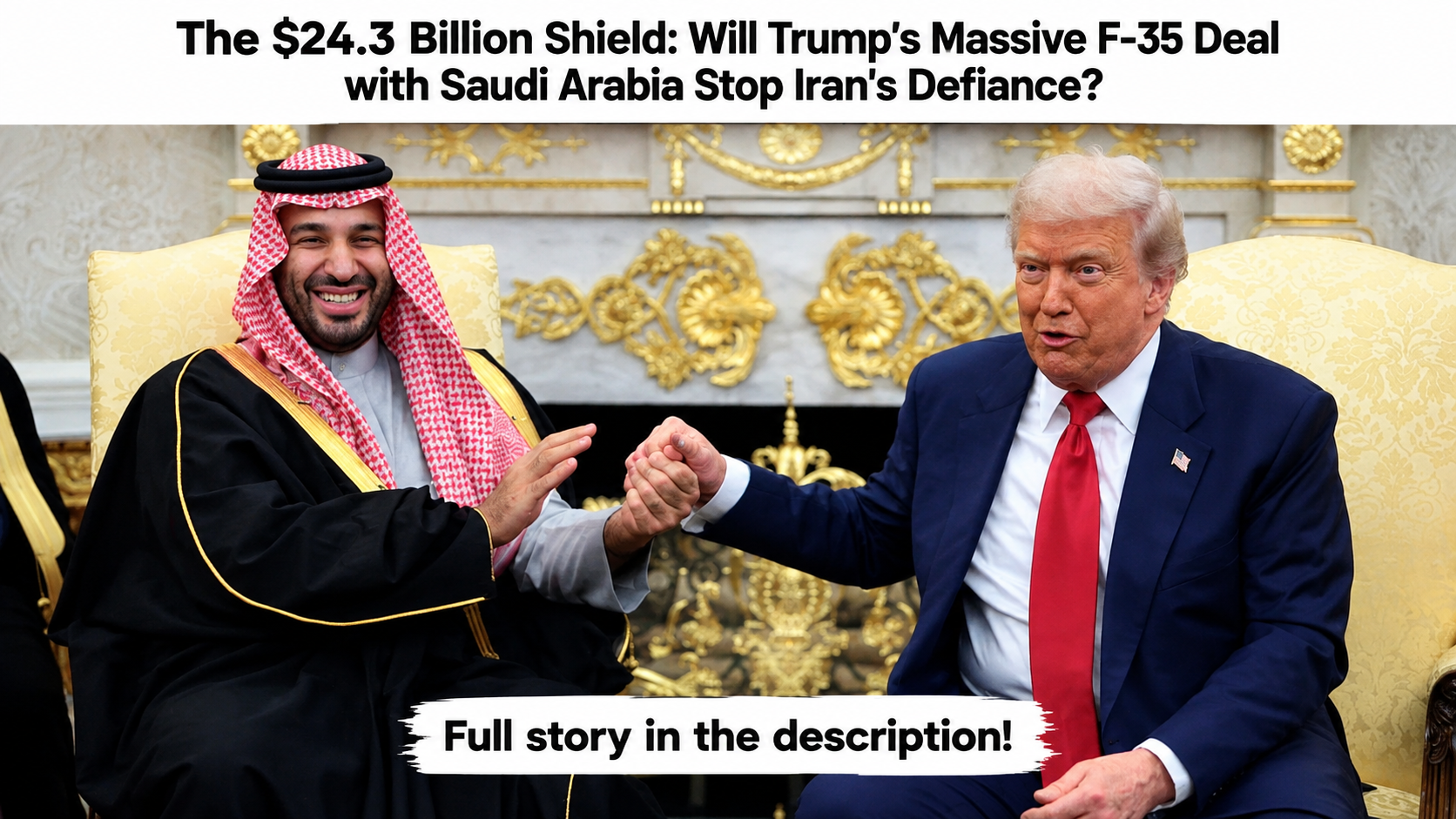
The image accompanying this story shows President Donald Trump alongside Saudi Crown Prince Mohammed bin Salman, framing the deal as part of a broader U.S.-Saudi security relationship. The actual State Department notification, however, describes the transaction as a potential foreign military sale, not a completed delivery of aircraft.


What Exactly Is in the $24.3 Billion Package?
According to the State Department's congressional notification, Saudi Arabia has requested:
- 48 F-35 Lightning II fighter aircraft
- 49 Pratt & Whitney F135 engines, including one spare
- Secure communications equipment
- Precision-navigation and cryptographic systems
- Electronic-warfare support
- Spare parts and maintenance equipment
- Training and simulators
- Classified and unclassified software
- Technical documentation
- Logistics and other support services
The estimated value of the entire package is $24.3 billion. The figure therefore does not represent simply the purchase price of 48 aircraft; it also covers engines, training, software, maintenance and extensive support.
The notification does not include munitions or missiles for the aircraft. Those would be subject to separate approvals.
The Deal Is Not Final Yet
One of the most important details behind the headline is that Washington has approved the potential sale, rather than completed the sale.
The State Department has formally notified Congress, beginning the congressional review process. Congress can attempt to block a proposed arms sale through a joint resolution, although overcoming a presidential veto would require a two-thirds majority in both chambers.
That means several steps remain before Saudi Arabia actually receives an F-35.
And even if the deal ultimately moves forward, the aircraft would not suddenly appear in Saudi service during the current conflict. F-35 production and delivery occur over years, making the transaction more significant as a long-term change in Saudi military capability than as an immediate battlefield response.
Why Is Saudi Arabia Seeking the F-35?
Saudi Arabia has been interested in the aircraft for years.
In November 2025, Trump publicly said the United States would sell F-35s to Saudi Arabia. During an Oval Office exchange with reporters, Trump said Riyadh would purchase the aircraft from Lockheed Martin.
At the time, Reuters reported that Saudi Arabia had requested as many as 48 aircraft and that the proposed sale represented a potentially significant shift in U.S. defense policy.
The latest State Department approval now turns that earlier political commitment into a formal proposed foreign military sale.
The Timing Is Significant: Saudi Arabia Is Under Attack
The decision comes as Saudi Arabia is being drawn deeper into the regional conflict.
On September 17, Reuters reported that Saudi Arabia and Iran-backed Houthi forces exchanged fresh strikes across their border.
Saudi civil defense said debris from an intercepted Houthi drone killed a Yemeni resident in Taif and injured two other people. Reuters reported that it was the first death announced by Saudi authorities this month from the intensified Houthi attacks.
The conflict has also threatened Saudi energy infrastructure.
Reuters reported that three pumping stations along the kingdom's critical East-West oil pipeline were damaged in a drone attack, forcing a temporary shutdown. The pipeline has the capacity to transport roughly 4 million to 5 million barrels of oil per day, making it an important route for Saudi exports when the Strait of Hormuz is disrupted.
That gives the F-35 decision a much broader strategic context than simply another arms sale.
Could the F-35 Help Saudi Arabia Counter Iran?
The F-35 is designed to combine stealth, sensors and advanced networking with air-to-air and air-to-ground capabilities.
The State Department says the proposed sale would improve Saudi Arabia's ability to deter current and future threats, strengthen homeland defense and improve interoperability with U.S. and allied forces.
That could matter in a regional environment where Saudi Arabia faces missile and drone threats and where Iranian influence extends through regional partners, including the Houthis in Yemen.
But the timing matters.
The proposed aircraft would not provide Saudi Arabia with an immediate new F-35 capability during the current fighting. The transaction would instead build a future capability that could alter Saudi Arabia's air-defense and strike options once the aircraft are delivered and operational.
So the question raised by the image — whether the deal could “stop Iran's defiance” — is ultimately broader than what the aircraft sale itself can establish.
The sale is a long-term military investment, not an immediate mechanism for ending the current conflict.


Israel's Military Edge Is a Major Issue
The proposed sale also raises an important question about Israel.
Israel is currently the only country in the Middle East operating the F-35. If the Saudi purchase is completed, Saudi Arabia would become the first Arab country to operate the aircraft.
For decades, U.S. policy has sought to preserve Israel's qualitative military edge, meaning Israel is intended to retain a technological and military advantage over potential regional adversaries.
The State Department nevertheless said in its notification that the proposed Saudi sale “will not alter the military balance in the region.”
Reuters described the transaction as a test of how Washington defines that longstanding commitment to Israel's military advantage.
The issue is therefore not simply whether Saudi Arabia receives the same aircraft. Configuration, weapons, software, support, training and operational integration can all affect the capabilities associated with a weapons system.
Another Concern: China and F-35 Technology
A second issue involves Saudi Arabia's relationship with China.
The New York Times reported that U.S. intelligence officials had raised concerns about the possibility of sensitive F-35 technology being compromised because of Saudi military and technological ties with Beijing. One Pentagon intelligence assessment reportedly questioned whether F-35-related facilities and technology could be sufficiently protected.
The concern is particularly significant because the F-35 incorporates highly sensitive technologies involving stealth, sensors, electronic warfare and communications.
The State Department has nevertheless concluded that the proposed transaction supports U.S. national-security objectives.
Axios reported that a State Department official said defense sales undergo legal and strategic reviews designed to protect U.S. military technological superiority.
Saudi Arabia's F-35 Would Not Be the Same as Israel's Strategic Position
The phrase “F-35” can make the transaction sound simpler than it is.
An aircraft's capabilities depend on more than the name printed on the fuselage. Weapons integration, mission systems, software, intelligence networks, maintenance arrangements and operational doctrine all influence how effectively a fighter can be used.
The State Department's notification also does not include weapons in the package.
Consequently, the $24.3 billion figure should not be interpreted as Saudi Arabia suddenly receiving an identical combat capability to Israel's F-35 fleet.
Why Trump Has Prioritized the Saudi Relationship
The F-35 announcement is part of a much larger U.S.-Saudi relationship.
During Trump's November 2025 meeting with Mohammed bin Salman, the two governments discussed defense, investment, energy, nuclear cooperation and other strategic issues. Reuters reported that the broader Saudi commitments discussed during that period reached extremely large totals, while the defense relationship included major purchases of U.S. equipment.
Trump had also publicly linked Saudi Arabia's interest in F-35s to the wider security situation involving Iran.
That makes the fighter sale both a military transaction and a component of Washington's broader effort to strengthen its relationship with Riyadh.
The Iran Question Is Bigger Than the F-35
The image asks whether Trump's massive F-35 deal can “stop Iran's defiance.”
The current evidence points to a more complicated answer.
Iran-related tensions extend across several theaters:
The Persian Gulf:
The Strait of Hormuz remains a critical energy route amid the wider conflict.
Yemen:
Iran-backed Houthi forces have intensified attacks against Saudi Arabia and regional shipping.
Saudi energy infrastructure:
Recent attacks have damaged infrastructure that is important to global oil flows.
Air power:
The F-35 would eventually give Saudi Arabia another advanced tool for surveillance, deterrence and combat operations.
But none of those developments means that purchasing F-35s alone would resolve the political, military and nuclear disputes involving Iran.
A $24.3 Billion Signal to the Region
The significance of the agreement therefore extends beyond the aircraft themselves.
Washington is signaling that Saudi Arabia remains a major U.S. security partner at a moment when the kingdom is facing direct military pressure.
Riyadh, meanwhile, would gain access to an aircraft that has previously been restricted in the Middle East to Israel.
And Israel, Congress and U.S. intelligence agencies will have reasons to scrutinize how the deal affects regional military technology and security.
The State Department's position is that the sale strengthens Saudi defense capabilities while supporting broader U.S. security interests and does not alter the regional military balance.
Other reporting highlights unresolved concerns about Israel's military edge, Chinese access to sensitive technology and the political debate surrounding Saudi Arabia's defense relationship with Washington.
What the Viral Image Gets Right — and What It Leaves Out
The headline in the image says:
“The $24.3 Billion Shield: Will Trump's Massive F-35 Deal with Saudi Arabia Stop Iran's Defiance?”
Several elements are grounded in current events:
- The proposed package is valued at $24.3 billion.
- It involves 48 F-35 aircraft.
- The Trump administration has approved the potential sale.
- Saudi Arabia is facing intensified attacks from Iran-backed Houthi forces.
- Iran remains central to the wider regional conflict.
- Trump and Mohammed bin Salman have developed a major defense relationship.
But the image also turns a complex military transaction into a forward-looking question.
There is no evidence that the F-35 deal itself will “stop” Iran. The aircraft have not yet been delivered, the sale still requires congressional review, and the regional conflict involves much more than air power.
The more immediate significance is that Washington has formally moved the proposed Saudi F-35 purchase into the congressional approval process at a moment of unusually high military tension across the Middle East.


What Happens Next?
Three developments will determine whether the headline becomes a reality.
First, Congress must review the proposed sale.
The State Department's notification does not constitute final delivery.
Second, Washington must address technology-security concerns.
Questions surrounding China's relationship with Saudi Arabia and protection of F-35 technology are likely to remain part of the debate.
Third, the regional security environment will continue to evolve.
Saudi Arabia is currently dealing with Houthi attacks while the wider U.S.-Iran conflict continues to affect shipping, energy infrastructure and regional alliances.
If the sale ultimately proceeds, Saudi Arabia would become the second Middle Eastern country and the first Arab country to operate the F-35.
That would represent a major development in the region's military landscape — but it would be a long-term change rather than an immediate solution to the current Iran-related conflict.
Comments (0)
Loading comments...
May You Like

Russian Drone Strikes Kyiv Bridge as German Chancellor Arrives in Ukraine

OBAMA STUNS ON INSTAGRAM: MESSAGE MARKING 34-YEAR MILESTONE SPARKS A BUZZ

South Korea–Ukraine Rift Deepens Over North Korean POW Transfer as PURL Draws New Scrutiny