
The Money Is Moving — and Two Senate Races Are Suddenly in a Different Place
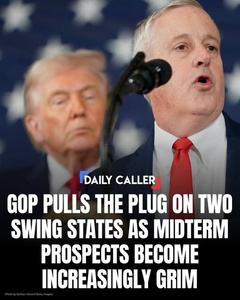
WASHINGTON — With the 2026 midterm elections approaching, Republican-aligned political groups are reshuffling millions of dollars between Senate contests, pulling back resources in Georgia and North Carolina while increasing spending elsewhere.
A Sudden Shift in Republican Spending
The Senate Leadership Fund, a major Republican-aligned super PAC, paused additional advertising in North Carolina on Oct. 2 after previously committing tens of millions of dollars to the race.
The group had initially announced a $71 million investment to support Republican nominee Michael Whatley in North Carolina's open Senate race. More than $30 million had already been spent.
The decision came as Whatley, a former Republican National Committee chairman, continued to trail former Democratic Gov. Roy Cooper in public polling.
The Washington Post reported that the group was redirecting money toward Kansas, where Republican Sen. Roger Marshall has faced an unexpectedly competitive challenge from Democrat Adam Hamilton.
The move does not formally end Republican efforts in North Carolina. Whatley's campaign said it remained confident and expected undecided voters to play an important role before Election Day.
Georgia Is Also Seeing Less Republican Spending
Georgia has emerged as another state where Republican-aligned groups have reduced planned advertising as the campaign enters its final weeks.
Republican Rep. Mike Collins is challenging Democratic Sen. Jon Ossoff, and the race has attracted substantial spending from both parties.
The Daily Caller reported that the National Republican Senatorial Committee was not currently airing television advertisements supporting Collins, despite having spent millions of dollars in Georgia earlier in the cycle.
Trump-aligned groups have also adjusted their plans in Georgia, with the No Going Back PAC reportedly planning to spend less than $90,000 there during the week beginning Oct. 5.
The changes come as Ossoff's campaign has accumulated a considerably larger advertising reservation for the closing stretch, according to spending data cited by the Daily Caller.
North Carolina Tells a Bigger Story
North Carolina has traditionally been competitive in presidential politics, but Republicans have maintained significant strength in statewide federal elections.
The Senate seat is open because Republican Sen. Thom Tillis is retiring, creating an unusually important contest for both parties.
Republican strategists initially treated the race as one requiring major investment. The Senate Leadership Fund's April announcement described its $71 million commitment as its first reservation of the 2026 cycle.
By October, however, the organization had already spent more than $30 million and decided to redirect remaining resources elsewhere.
The Washington Post reported that the group had spent more than $32 million in North Carolina before pausing additional advertising and shifting money toward Kansas.
The Polling Behind the Decisions
Public polling has provided one explanation for the change, although individual surveys vary and do not determine the eventual result.
Recent surveys have shown Cooper holding leads over Whatley in North Carolina, while Ossoff and Collins remain engaged in a competitive Georgia contest.
WRAL reported that an Elon University poll released around the time of the Republican spending decision showed Cooper ahead of Whatley by 11 percentage points.
The Daily Caller also cited RealClearPolling averages showing Democratic candidates ahead in both North Carolina and Georgia at the time of its report.
Why Kansas Is Suddenly Receiving Attention
Kansas is normally considered a Republican stronghold, but the Senate race has become competitive enough to attract national Republican money.
Sen. Roger Marshall is seeking another term against Democratic nominee Adam Hamilton, a pastor who has presented himself as a moderate candidate focused heavily on economic concerns.
The Senate Leadership Fund has now launched a new advertising effort in Kansas, redirecting resources that had previously been reserved for North Carolina.
The shift illustrates how Republican campaign organizations are having to allocate resources across a broader group of states than initially expected.
A Wider Republican Defensive Strategy
Reuters reported Oct. 1 that Democrats had become competitive in a number of states Donald Trump carried by double digits in 2024, prompting Republicans to reconsider where their money is most urgently needed.
Republican groups have consequently increased spending in states such as Texas, Iowa and Alaska while maintaining major investments in Ohio and other Senate contests.
The strategy reflects a basic campaign calculation: outside groups have limited funds, and spending decisions made in October can determine which races receive television advertising, direct mail and voter-contact operations.
The shift is therefore not simply about abandoning one state. It is also about deciding which contests require additional resources during the final weeks.
Trump Is Taking a Different Approach
President Donald Trump has meanwhile stepped up his own campaign appearances, holding rallies in several Republican-leaning states as he seeks to support candidates ahead of the November elections.
The Washington Post reported that Trump planned to hold multiple rallies each week during October, including appearances in states that are not traditionally considered competitive.
On Oct. 2, Trump campaigned in Alabama for Republican candidates, while also signaling plans to return to the campaign trail repeatedly before Election Day. AP
His campaign activity provides a different form of party support from the advertising decisions being made by political action committees.
What Happens Next?
The Republican spending changes are occurring roughly one month before Election Day, when campaigns traditionally concentrate their largest advertising and voter-contact efforts.
In North Carolina, Whatley will continue campaigning against Cooper despite the Senate Leadership Fund's decision to pause additional advertising.
In Georgia, Collins and Ossoff remain locked in a closely watched contest, with both campaigns continuing to raise and spend money as voters prepare to cast ballots.
Meanwhile, Republican organizations are directing new resources toward states such as Kansas, Iowa, Alaska and Texas, where contests that once appeared less competitive have attracted increased attention.
Comments (0)
Loading comments...
May You Like

Barack Obama Draws Attention With New Literary Podcast
Jack Smith Defends His Integrity as Trump Investigations Face Renewed Political Firestorm

Shocking news from Ohio: an unexpected development ahead of Trump's rally













