The Obama–Vance Clash: What the “Blood and Soil” Fight Is Really About
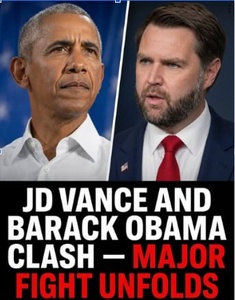
The conflict between Barack Obama and JD Vance is not about policy details. It is about the definition of American nationhood itself.
What Obama Actually Said
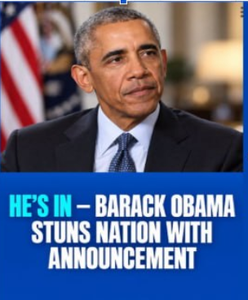
In July 2026, former President Barack Obama made a rare, direct criticism of Vice President JD Vance during a podcast interview with author Malcolm Gladwell.
Obama’s exact words:
“When you have the vice president — the current vice president — making a speech that is basically a blood and soil version of ‘We the People’ — that it matters who your parents were, how long they’ve been here — despite him being married to a daughter of an immigrant himself — that echoes, then, ideas about who can be a citizen, who belongs, who gets to make decisions.”
“Blood and soil” (Blut und Boden) is a phrase popularized by Nazi Germany and associated with white nationalism. For a former president to apply it to a sitting vice president is an extraordinary charge.
What Vance Actually Said
Obama was referring to a pattern of statements Vance has made defining America not as a set of ideas, but as a particular people with a shared heritage.
At the 2024 Republican National Convention, Vance declared:
“America is not just an idea. It is a group of people with a shared history. … That is a homeland. That is our homeland. People will not fight for abstractions, but they will fight for their home.”
He spoke at length about a cemetery in Eastern Kentucky where generations of his family are buried, describing it as the concrete reality of what America means to him.
At the Claremont Institute in 2025, Vance went further:
“I think the people whose ancestors fought in the Civil War have a hell of a lot more claim over America than the people who say they don’t belong.”
“America is not just an idea. We’re a particular place, with a particular people, and a particular set of beliefs and way of life.”
“You cannot swap 10 million people from anywhere in the world and expect America to remain unchanged.”
The Core Divergence
| Question | Obama’s Answer | Vance’s Answer |
|---|---|---|
| What makes someone American? | Citizenship, shared commitment to founding principles | Ancestry, heritage, length of time here |
| Is America an idea or a people? | An idea — “all men are created equal” | A people — bound by blood and shared history |
| What is the basis of belonging? | Civic participation | Familial claim to the land |
The Hypocrisy Point
Obama’s most pointed critique was personal. Vance is married to Usha Vance, the daughter of Indian immigrants.
Obama noted the irony: Vance promotes a nativist vision of America while his own wife — a descendant of immigrants — would be excluded from the “We the People” he describes.
Gladwell described this as a shift “from malice to hypocrisy.” Obama agreed but framed it as progress:
“Hypocrisy is progress. Because it means that you feel guilty enough to either lie to yourself or others. And that is better than not even thinking about the idea that maybe you’re doing something wrong.”
Why This Is More Than a Rhetorical Fight
The stakes extend beyond words. Vance has been a leading advocate for restricting birthright citizenship, calling a Supreme Court decision upholding the constitutional right a “huge mistake.”
When Trump posted a video depicting the Obamas as apes in February 2026, Vance dismissed it: “It’s not a real controversy. We have much, much more real problems to focus on.”
The Fundamental Question
Vance’s vision, as articulated in his own words, is of an America where ancestral connection to the soil is the primary source of national belonging — where those whose forebears have been here longest have a superior claim, and where mass immigration threatens the very fabric of the nation.
Obama’s response is that this vision is a betrayal of the nation’s founding creed — that America is defined by its ideals, not its bloodlines, and that anyone who commits to those ideals can be equally American.
That is what the fight is about. Not immigration policy. Not border security. But who gets to call themselves an American, and on what basis.
Comments (0)
Loading comments...
May You Like
South Korea–Ukraine Rift Deepens Over North Korean POW Transfer as PURL Draws New Scrutiny

Jack Smith Defends His Integrity as Trump Investigations Face Renewed Political Firestorm