The Photograph That Tells the Real Story of Trump’s Iran Strategy
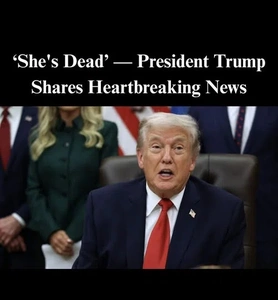
A single image of President Donald Trump in the Oval Office, hands raised in explanation, is being shared across social media with the simple caption: “NBC News.” But the photograph itself — and the context behind it — tells a far more complicated story about the state of American foreign policy and the war with Iran.
The image shows Trump seated in his leather chair, wearing a dark suit, white shirt, and red tie. His hands are raised, palms open, in a gesture of explanation or frustration. To his left and right, the dark suits of aides and officials frame him. In the bottom left corner, the NBC News logo is overlaid. The photograph is not from a single, identifiable moment — it is a scene that could have come from any number of briefings or announcements during a period of intense crisis.
But the context surrounding this image is anything but routine.
The Real Context: War with Iran
By mid-2026, President Trump’s foreign policy had been defined by a series of abrupt shifts in the U.S. approach to Iran. In April, Trump accused Iran of violating a ceasefire after attacks on vessels in the Strait of Hormuz, warning that the U.S. could carry out large-scale military action if Tehran did not accept a deal . He described the offer as a “last chance” and threatened to target Iran’s critical infrastructure, including power plants and roads .
By July, those warnings had swung to the opposite extreme. At the NATO summit in Ankara, Trump praised Iran’s leaders as “strong,” “smart,” and “not radical,” saying they were “easy to work with” . Three weeks later, he declared the ceasefire “over” and accused Tehran of attacking three ships in the southern Strait of Hormuz. He ordered airstrikes resumed and revoked sanctions waivers that had allowed Iran to sell oil .
The Pattern of “Whiplash”
That same unpredictability extended to the Strait of Hormuz itself. In one July moment, Trump proposed charging commercial ships 20% of their cargo value to pass through the strait — a “protection fee” — only to retract the idea 24 hours later after Gulf leaders called to dissuade him .
The pattern repeated with Ukraine. After a tense Oval Office confrontation with President Volodymyr Zelensky in 2025 that led to a suspension of U.S. military aid, Trump met with Zelensky again at the NATO summit and praised him as doing an “extraordinary job,” even agreeing to license production of Patriot air defense missiles in Ukraine .
Analysts described these shifts not as coherent strategy but as improvisation. Veteran Washington Post analyst Max Boot noted it was difficult to know where Trump’s sudden turns would lead, given his reputation for changing positions .
The Domestic Political Pressure
The photograph’s real significance may lie in what it does not show: the domestic calculations behind the foreign policy swings.
According to Boot, Trump clearly did not want to re-ignite a full-scale war with Iran immediately before the midterm elections. If the conflict escalated, the economic consequences could be severe — particularly with the U.S. Strategic Petroleum Reserve at its lowest level since 1983 .
At the same time, Iran has shown it is willing to accept risk to maintain control over the Strait of Hormuz, which Boot described as a “weapon of mass economic destruction” . The likely outcome, he predicted, was a low-intensity conflict rather than a full war.
Comments (0)
Loading comments...
May You Like

TRUMP’S OHIO WARNING UNDER THE SPOTLIGHT

Shocking news from Ohio: an unexpected development ahead of Trump's rally
Jack Smith Defends His Integrity as Trump Investigations Face Renewed Political Firestorm