The Split-Screen That Defines a Rivalry: Trump and Obama at War Over America's Future
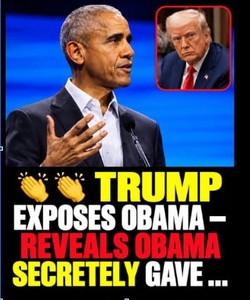
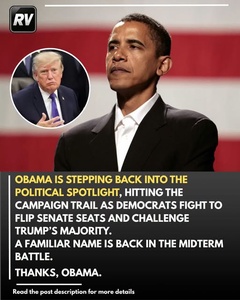
A viral image showing President Donald Trump and former President Barack Obama at separate podiums has become a visual shorthand for the most consequential political rivalry of the modern era — one defined by personal animosity, ideological warfare, and a battle over America's identity that shows no signs of ending.
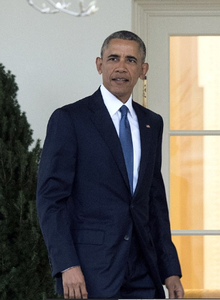
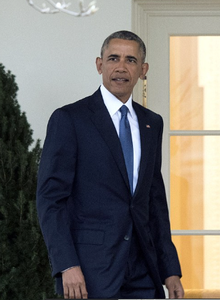
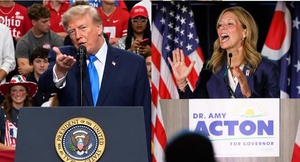
The split-screen photograph captures each man in his element: Trump in a dark suit and signature red tie, mouth open mid-speech; Obama in a dark suit and blue tie, hand raised in a gesture of explanation. It is a portrait of two presidents whose paths have crossed in ways neither could have predicted — from Obama's White House Correspondents' Dinner mockery in 2011 to Trump's years-long "birther" campaign to the systematic dismantling of Obama's legacy during Trump's first term.
A Rivalry Forged in Public
The roots of the Trump-Obama feud run deep. Trump rose to political prominence in part by questioning Obama's legitimacy as president, leading the "birther" movement that falsely claimed Obama was not born in the United States. Obama, in turn, publicly mocked Trump at the 2011 White House Correspondents' Dinner — a moment widely believed to have motivated Trump's eventual presidential run.
Since then, the two have clashed on virtually every major issue: healthcare, immigration, foreign policy, and the very meaning of American democracy. The rivalry is not merely political; it is personal, and both men have made that clear.
The Recent Flashpoints
In recent months, the conflict has intensified on multiple fronts.
In late 2025, a video depicting Obama and former First Lady Michelle Obama as monkeys surfaced online. Obama condemned the video, calling it part of a "clown show" of political discourse and warning that such rhetoric could hurt Republicans in upcoming elections .
Trump, for his part, has continued to attack Obama's signature foreign policy achievement. In a recent statement, he ripped the Iran nuclear deal as "stupid" and claimed he "thought he could bribe them" . This came as the Trump administration navigated its own complex relationship with Iran, including military strikes and subsequent diplomatic openings.
The irony was not lost on observers: the man who criticized Obama for being weak on Iran had ordered airstrikes on Iranian nuclear sites, then sought a diplomatic resolution.
Moments of Unexpected Camaraderie
Yet the relationship has not been uniformly hostile.
Following the funeral of former President Jimmy Carter in January 2025, Trump told reporters that he and Obama "probably do" like each other . The comment surprised many, given the years of acrimony between them. At the same event, the two men were seen conversing and even sharing a laugh — a moment that social media users described as surreal given their history.
"We have a lot of contention," Trump acknowledged. "But I think we probably do like each other" .
Whether that sentiment was genuine or merely a function of the solemnity of the occasion remains an open question. But it highlighted a paradox at the heart of their relationship: two men who have defined themselves in opposition to each other, yet who share the unique experience of having held the highest office in the land.
Two Visions of America
Beyond the personal drama, the Trump-Obama rivalry represents something larger: a clash between two competing visions of American identity.
Obama's presidency was defined by a message of hope, inclusion, and the belief that America's diversity is its greatest strength. Trump's political movement, by contrast, has been built on a narrative of decline and restoration — the promise to return America to a perceived golden age.
These visions cannot coexist without friction. And the friction between them has shaped American politics for more than a decade.
Comments (0)
Loading comments...
May You Like
Shocking news from Ohio: an unexpected development ahead of Trump's rally
FIGHT OVER OBAMA’S IRAN POLICY
TRUMP HIT WITH 26 ARTICLES OF IMPEACHMENT