
Thomas Massie Names 14 Alleged Epstein Co-Conspirators on House Floor as Transparency Fight Escalates
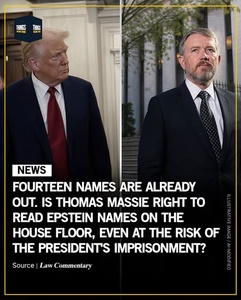
The Kentucky Republican is using his final months in Congress to demand further investigation of people appearing in Epstein-related records, but naming someone is not equivalent to establishing criminal guilt.
WASHINGTON — Rep. Thomas Massie has intensified his campaign over the Jeffrey Epstein files by publicly naming 14 people on the House floor whom he said should face investigation and possible prosecution.
Massie delivered the names on August 31, escalating a transparency campaign that has repeatedly placed the Kentucky Republican at odds with President Donald Trump, Attorney General Pam Bondi and House Republican leadership.
PBS reported that Massie described the 14 individuals as Epstein “co-conspirators,” language representing Massie’s characterization rather than a finding that all 14 have been convicted—or even charged—with Epstein-related crimes.
That distinction is crucial because government investigative files can contain names for numerous reasons, and inclusion in an Epstein-related document does not independently demonstrate participation in sexual abuse, trafficking or another crime.
Massie’s willingness to use the House floor has been developing for more than a year. In September 2025, he publicly discussed helping Epstein survivors disclose names through congressional proceedings.
He explained that survivors attempting to publish allegations themselves could face lawsuits, threats and potentially devastating financial consequences, while lawmakers possess significant constitutional protections for legislative speech.
Massie specifically invoked the Constitution’s Speech or Debate Clause, saying it would allow lawmakers to read survivor-provided names during House proceedings without facing the same legal exposure outside Congress.
His objective, he said, was to allow information into the public record while leaving investigators and the public to distinguish between people with innocent associations and individuals potentially connected to wrongdoing.
The disclosure campaign eventually produced a major congressional victory. In November 2025, Massie and Democratic Rep. Ro Khanna successfully forced legislation concerning the Epstein files onto the House floor through a discharge petition.
The House subsequently approved the disclosure legislation by an extraordinary 427–1 vote, with Republican Rep. Clay Higgins of Louisiana casting the only vote against it.
Trump had previously criticized the continuing Epstein controversy, but changed course before that vote and called on House Republicans to support releasing the records.
Massie nevertheless portrayed passage as a victory achieved despite resistance from powerful officials, saying he and Khanna had fought the president, attorney general, FBI director and congressional leadership before securing action.
The dispute did not end when documents began appearing publicly. Massie subsequently accused the Justice Department of withholding records and using redactions more extensively than the transparency law permits.
Earlier this year, Massie personally reviewed a selection of unredacted DOJ documents and said he discovered names identified within FBI material as Epstein co-conspirators that had been concealed from publicly released versions.
Massie highlighted Les Wexner as one example, arguing that investigators should explain why particular individuals appearing in investigative material were not prosecuted. Wexner has not been convicted of an Epstein-related crime.
Massie and Khanna also examined records containing six names redacted from publicly available versions. PBS reported that the lawmakers said those names could potentially be incriminating, although they initially declined to identify them.
Their argument increasingly shifted from simply demanding documents toward demanding explanations of prosecutorial decisions—why investigators pursued certain people, declined to pursue others or withheld information from public releases.
Massie said the transparency legislation specifically requires disclosure of internal government materials concerning decisions about whether to investigate or prosecute people connected to Epstein.
Attorney General Bondi has disputed Massie’s broader accusations and maintained that DOJ complied with disclosure requirements while making legally required redactions involving victims and other protected information.
Their disagreement became especially heated during a congressional hearing when Massie accused Bondi of improperly redacting Wexner’s name from a document before DOJ restored it.
The political confrontation has also become personal. Trump repeatedly attacked Massie and supported a Republican primary challenger against him while Massie continued challenging the administration over Epstein transparency and other policies.
Massie ultimately lost his Republican primary in May 2026, meaning he will leave Congress in January. His August Epstein speech therefore occurred after his primary defeat, during his remaining months in office.
He has shown no indication of abandoning the issue. This month, Massie criticized Speaker Mike Johnson for sending the House home early while additional Epstein-related legislation remained unfinished.
That continuing confrontation explains the political significance of the 14-name speech: Massie is attempting to use the institutional protections and investigative powers available to him before his congressional term expires.
But the graphic introduces Trump into the story in a way requiring substantial caution. Reading Epstein-related names on the House floor cannot itself send a president—or anyone else—to prison.
Congress can investigate, hold hearings, issue subpoenas, publish information and make criminal referrals. Federal and state prosecutors separately decide whether available evidence legally supports criminal charges.
A criminal prosecution would then require evidence supporting particular offenses, while conviction would require the government to prove its case through the judicial process and satisfy the applicable burden of proof.
The same principle applies to every prominent person appearing somewhere in Epstein-related material: association, a photograph, correspondence, a flight record or another documentary reference is not by itself proof of participation in Epstein’s crimes.
Trump and Epstein were socially acquainted decades ago, a relationship documented publicly through photographs, video and other records. That historical association alone does not establish criminal conduct by Trump.
Likewise, nothing about Massie’s August 31 floor speech constitutes a judicial finding that Trump committed an Epstein-related offense or creates an automatic path toward presidential imprisonment.
The more immediate issue is whether Massie and Khanna can force further disclosures and whether newly available records provide investigators with evidence warranting additional criminal inquiries.
That fight remains active. The House is currently recessed, while Massie continues criticizing Republican leadership over unfinished Epstein-related legislation before lawmakers return following the midterm elections.
Comments (0)
Loading comments...
May You Like

gfnhgmnghnmfgnbvvvvvvvvv

Russian Drone Strikes Kyiv Bridge as German Chancellor Arrives in Ukraine













