
Thomas Massie Names Alleged Epstein Co-Conspirators — But His House Floor Speech Did Not Name Trump
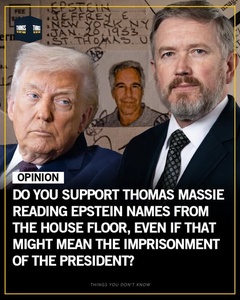
The Kentucky Republican is intensifying his push for additional Epstein disclosures, but the public record does not show that his August 31 speech established criminal conduct by President Donald Trump.
WASHINGTON — Rep. Thomas Massie has escalated his campaign for greater transparency surrounding Jeffrey Epstein by publicly naming 14 people he believes should face further investigation and possible prosecution.
Massie delivered the names on the House floor August 31 while promoting the Epstein Files Transparency Act II, legislation intended to force additional disclosure of material he says the Justice Department continues withholding.
The Kentucky Republican said his objective was to obtain accountability for survivors and provide state prosecutors, victims and members of Congress additional tools to challenge federal redactions and withheld records.
His speech immediately attracted attention because congressional remarks receive significant constitutional protection, allowing lawmakers to raise allegations on the House floor without the ordinary defamation exposure faced outside legislative proceedings.
Massie named figures including former banking executive Jes Staley, financier Leon Black, retail magnate Les Wexner, entertainer David Copperfield and several other people with documented connections of varying kinds to Epstein.
He also named Andrew Mountbatten-Windsor, formerly Prince Andrew, and Lesley Groff, a former Epstein employee, while calling for investigations into individuals he described collectively as Epstein co-conspirators.
Those statements were Massie’s allegations, not criminal verdicts. Several of the people he named have never been charged with Epstein-related crimes, and appearing in investigative records does not itself establish guilt.
That distinction is particularly important because the massive Epstein archive contains names for many reasons, including emails, contact records, photographs, witness statements, press clippings and investigative leads.
The Justice Department itself warns that the Epstein Library contains an enormous range of material and notes that search results can be unreliable because some records are handwritten or stored in difficult formats.
Massie has repeatedly argued that the government has redacted names too aggressively and has withheld records beyond what Congress intended when the original Epstein transparency legislation was enacted.
Earlier this year, Massie and Democratic Rep. Ro Khanna were permitted to inspect some unredacted Epstein material that was unavailable in the public version of the records.
The lawmakers said they discovered names of men that had been concealed in publicly released documents and questioned whether the Justice Department had legitimate grounds for keeping those identities secret.
During a subsequent press exchange, a reporter directly asked Massie whether Donald Trump appeared on the particular list he had reviewed. Massie replied: “No, I didn’t see him on that.”
That answer does not mean Trump’s name never appears anywhere in the vast Epstein archive. It means Massie said Trump was not on the specific unredacted list being discussed at that moment.
Trump and Epstein were socially acquainted during the 1990s and early 2000s, a relationship documented through photographs, video and other public records long before the latest document releases.
But social association is legally distinct from participation in Epstein’s crimes, and the existence of photographs, contacts or mentions cannot by itself demonstrate criminal conduct by Trump or anyone else.
The latest public disclosures have generated numerous investigations and political disputes, but the Washington Post reported this month that no U.S. criminal charges have resulted from the release of the Epstein files.
That makes the viral graphic’s reference to possible presidential imprisonment especially speculative. Imprisonment would require a criminal case involving admissible evidence, charges, due process and ultimately a conviction or guilty plea.
A congressman reading names on the House floor has no direct power to imprison anyone. Congress can investigate, subpoena witnesses, expose information and refer potential criminal matters to prosecutors.
Federal or state prosecutors would then have to independently determine whether evidence supports criminal charges, while courts—not Congress—would decide guilt or innocence through the judicial process.
Massie’s current effort is focused primarily on disclosure and investigative access, not on announcing a criminal case against Trump. His proposed legislation would create additional avenues to obtain withheld Epstein-related material.
The House Republican has also accused the Justice Department of protecting politically connected or wealthy individuals by withholding names and internal decisions about why certain people were not investigated or prosecuted.
Khanna has made a similar argument but emphasized that the goal should be accountability rather than partisan retaliation, saying the records potentially implicate influential people across politics, finance, technology and other institutions.
That bipartisan framing matters because Epstein had relationships across multiple social and political circles, making the disclosures difficult to reduce to a single party or presidential administration.
Massie’s clash with Trump predates his August floor speech. Trump campaigned against the Kentucky congressman during his Republican primary, attacking him over several disputes, including Epstein transparency and foreign policy.
Massie lost that primary earlier in 2026, but he has continued pushing Epstein-related legislation during his remaining months in Congress rather than abandoning the issue after his defeat.
This week, Massie also criticized Speaker Mike Johnson for adjourning the House before lawmakers could finish several measures, including additional efforts involving Epstein records.
The broader disclosure fight remains unresolved. DOJ’s official Epstein Library says it will continue to be updated if additional responsive documents are identified for public release.
Massie argues that more than three million files remain withheld, while the Justice Department maintains that it has complied with applicable disclosure requirements and must protect victims and legally sensitive information.
That dispute is likely to continue through congressional oversight, court litigation and possible state-level investigations, particularly if lawmakers succeed in expanding access to unredacted government records.
For Trump specifically, the currently available evidence supports a much narrower conclusion than the graphic implies: he has documented past social ties to Epstein, but Massie’s August 31 list did not include him.
Nothing in Massie’s House-floor speech established that Trump committed an Epstein-related crime, nor did the speech create a legal process capable of sending the president directly to prison.
Future documents could produce new information about any number of people, including politically prominent figures, but allegations would still need independent verification and prosecutors would have to meet ordinary criminal-law standards.
That is why simply asking whether Massie should “read Epstein names even if it means imprisonment of the president” combines two very different questions: transparency about records and proof of criminal guilt.
Comments (0)
Loading comments...
May You Like

Jack Smith Defends His Integrity as Trump Investigations Face Renewed Political Firestorm

Obama Steps Back Into the Political Spotlight as Democrats Target Trump’s Senate Majority














