
TILLIS FACES BACKLASH AFTER SWITCHING SIDES ON LATEST IRAN WAR VOTE
WASHINGTON — NOV 20, 2026 — Senator Thom Tillis’s vote on an Iran war powers measure has drawn attention to a broader congressional dispute over how lawmakers can influence military operations and the funding that sustains them.
The North Carolina Republican has previously questioned aspects of the administration’s handling of the conflict, while the Senate has repeatedly debated the limits of presidential authority during the war.
The latest vote puts his record under scrutiny as lawmakers consider whether another resolution, a funding restriction or a different form of legislation would be the more effective response.

The United States and Israel began military operations against Iran on Feb 28, and the ensuing conflict has prompted repeated congressional debates over authorization, military objectives and costs.
The Constitution gives Congress the authority to declare war and identifies the president as commander in chief, leaving lawmakers and administrations to dispute how those powers apply in particular operations.
Under the War Powers Resolution of 1973, Congress has procedures for considering measures concerning U.S. forces engaged in hostilities, alongside reporting requirements that apply to the president in specified circumstances.
Democratic Senator Tim Kaine has led repeated efforts to bring Iran war powers measures to a vote, arguing that Congress must take responsibility for decisions involving American troops.
Many Republicans have supported the administration’s ability to continue military action, while several have joined Democrats on particular votes or called for greater oversight of the conflict.
Tillis, who is not seeking reelection, has asked the administration to explain its military objectives and strategy, according to comments he made earlier in the war.
He also has taken different positions on individual Iran measures over the course of the conflict, making the dates and forms of those proposals important when comparing his record.

On Sep 24, Tillis voted for H Con Res 89, a House-passed concurrent resolution directing the removal of U.S. forces from hostilities with Iran, which failed 49 to 50.
On Nov 19, the Senate considered a separate House-passed concurrent resolution, H Con Res 93, addressing the same general question of removing American forces from hostilities with Iran.
The November measure failed by 48 votes to 51, with Tillis voting against it and Connecticut Democrat Chris Murphy recorded as not voting, according to the Senate’s daily record.
Republicans Susan Collins, Lisa Murkowski and Rand Paul voted in favor, while Pennsylvania’s John Fetterman was the only Democrat to vote against the measure.
A switch by Tillis alone would have produced a 49 to 50 result, so his vote was significant to the tally but was not the sole vote needed for passage.
The resolution was not a bill sent to the president for signature, and its practical ability to compel withdrawal faced constitutional questions concerning congressional actions that bypass presidential approval.
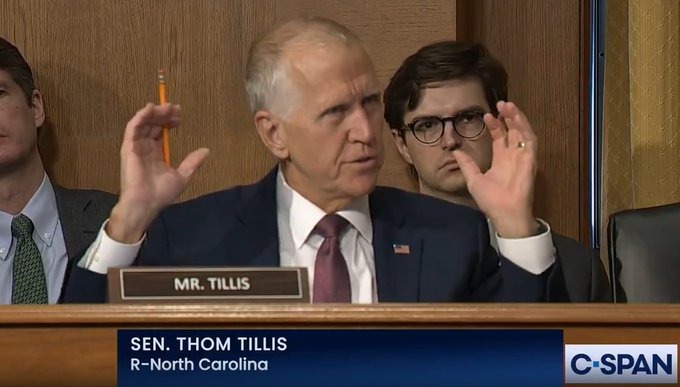
Explaining his November vote, Tillis told reporters that this measure would not reach the president and amounted to a congressional statement he believed he had already made.
He also told a reporter that he intended to address the issue through action on war funding, indicating support for efforts to remove funds from the conflict.
His explanation leaves a distinction unresolved: the September measure he supported was also a concurrent resolution that would not have gone to the president for a signature.
The public record therefore shows a change in his vote and his stated preference for a funding fight, but it does not establish that presidential or party pressure caused the switch.
Comments (0)
Loading comments...
May You Like

IOWA ENVIRONMENTAL DISASTER: 5-TON WASTE BLAST DISPLACES 3,000 FAMILIES!

FIVE-STAR LUXURY RESORT FOR SENIORS — UPSCALE RETIREMENT LIVING WITHOUT THE PRICE TAG?

WARNING: OVER 1 MILLION COULD LOSE POWER AND NEARLY 2 MILLION FACE WATER ALERTS ON THANKSGIVING!









Popular Posts



