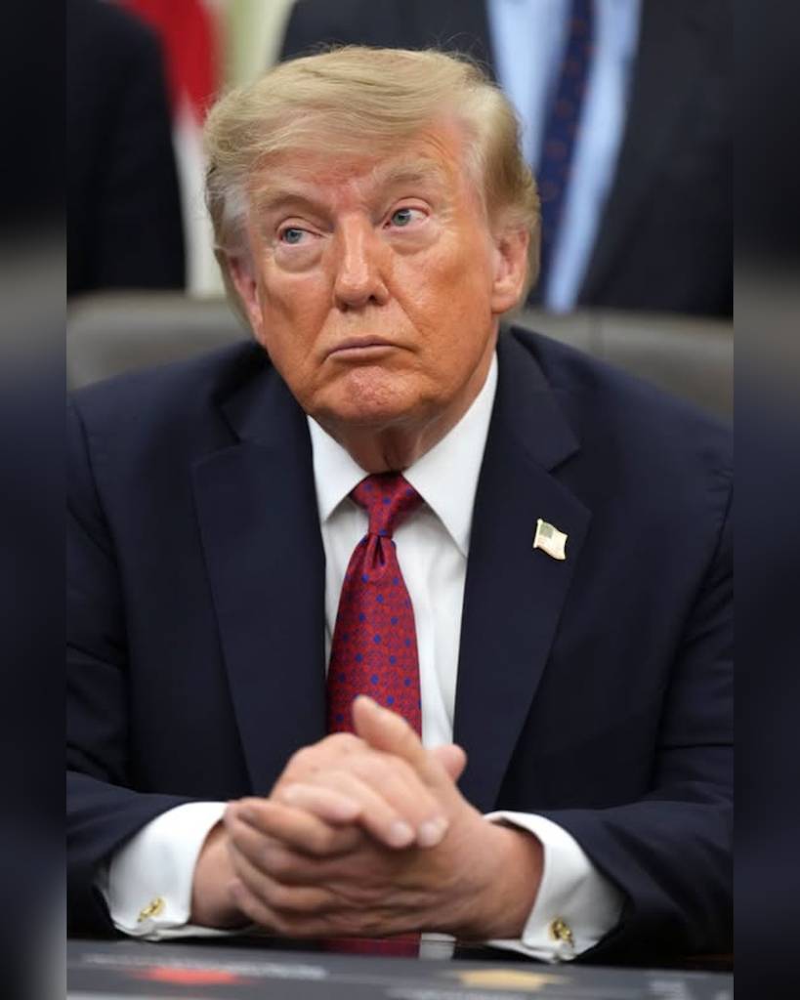
"TOTAL ANNIHILATION"... TRUMP'S FINAL WARNING TO IRAN!
“TOTAL ANNIHILATION” — TRUMP’S FINAL WARNING TO IRAN AS MILITARY OPTIONS LOOM


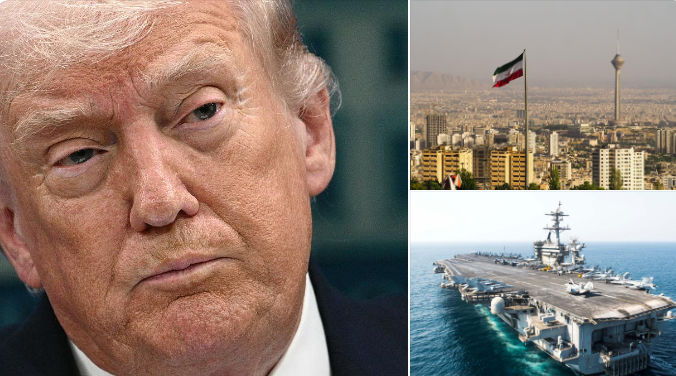
President Donald Trump has issued one of his starkest warnings yet to Iran, raising the possibility of devastating military action if Tehran refuses to reach an agreement with Washington to end the conflict.
Speaking before the United Nations General Assembly on September 22, Trump presented Iran with what he described as a decisive choice: negotiate a settlement that allows the country to rebuild, or face the possibility of annihilation.
“I have a big decision to make,” Trump told world leaders, before asking whether he should pursue a deal or “annihilate the Islamic Republic” quickly.
The remarks immediately intensified international concern about the direction of the conflict, which has disrupted regional security, threatened commercial shipping and sent shock waves through global energy markets.
Trump argued that preventing Iran from acquiring a nuclear weapon remained his central objective. He maintained that military pressure was necessary because previous diplomatic efforts had failed to deliver the outcome Washington wanted.
The president also insisted that Iran could secure a more prosperous future through an agreement, suggesting that a negotiated settlement remained possible despite his increasingly severe rhetoric.
Trump predicted that a deal could emerge after the November midterm elections. However, he provided no detailed timetable or publicly confirmed terms that would guarantee an agreement.
The speech came as American and Iranian representatives were pursuing diplomatic contacts through intermediaries. Trump said his envoys had held a productive meeting with Iranian officials, although he offered few details about the discussions.
Iranian leaders responded by rejecting Washington’s threats and warning that intimidation would not force the country to surrender. President Masoud Pezeshkian said Tehran remained open to diplomacy but would not accept negotiations conducted under military coercion.
Iran’s armed forces also dismissed Trump’s remarks as propaganda and threatened a forceful response to further attacks. The exchange underscored how far apart the two governments remained despite continuing diplomatic contacts.
At the center of the dispute is Iran’s nuclear program. Washington says it will not allow Tehran to develop a nuclear weapon, while Iranian officials insist that the country has a right to peaceful nuclear technology.
The International Atomic Energy Agency has warned that it cannot fully verify the status of Iran’s highly enriched uranium stockpile because inspectors have lacked access to key facilities. That uncertainty remains a major obstacle to assessing the program’s current condition.
The agency’s director-general said on October 28 that there was no evidence Iran had attempted to repair or reconstruct nuclear facilities damaged by American and Israeli strikes. However, the lack of access means inspectors cannot independently verify the complete status of Iran’s nuclear material.
The Strait of Hormuz is another major flashpoint. The narrow waterway carries a substantial share of global oil and liquefied natural gas shipments, making any prolonged disruption a serious concern for energy-importing countries.
Iran has used its position near the strait as strategic leverage, while Washington has demanded secure passage for commercial vessels. Any renewed military confrontation could further threaten shipping and push energy costs higher.
The consequences would extend beyond the Middle East. Higher fuel prices could increase transportation and manufacturing costs, adding pressure to households and businesses already dealing with economic uncertainty.
Meanwhile, reports on October 28 indicated that the United States had warned Gulf countries to prepare for the possibility of another concentrated military campaign against Iran after the midterm elections. The reports said Trump had not made a final decision on whether to authorize further strikes.
Military preparations do not necessarily mean an attack is inevitable. The administration continues to face a strategic choice between escalating pressure and pursuing an agreement that could address nuclear concerns and reduce the risk of further fighting.
Iran, for its part, has threatened retaliation if American forces launch new attacks. Such a response could expand the conflict, endanger military personnel and civilians, and draw additional countries into the confrontation.
Diplomats are therefore confronting a difficult challenge: finding terms that can be verified and enforced while preventing further escalation. Any lasting agreement would likely need to address nuclear monitoring, sanctions, shipping security and guarantees against renewed attacks.
Trump’s “annihilation” warning has placed the stakes of that decision in unusually stark terms. But the central question remains unanswered: will Washington and Tehran reach an agreement, or will military action widen a conflict whose economic and human consequences are already significant?
Comments (0)
Loading comments...
May You Like
RAPE ACCUSATION AGAINST TRUMP! ★ THE 1993 CLAIM THAT TRIGGERED A FEDERAL DEMAND..
Latest Posts

Popular Posts