
Mark Carney Says He Spoke With Trump About Ukraine and Iran — But One Part Remains Unclear
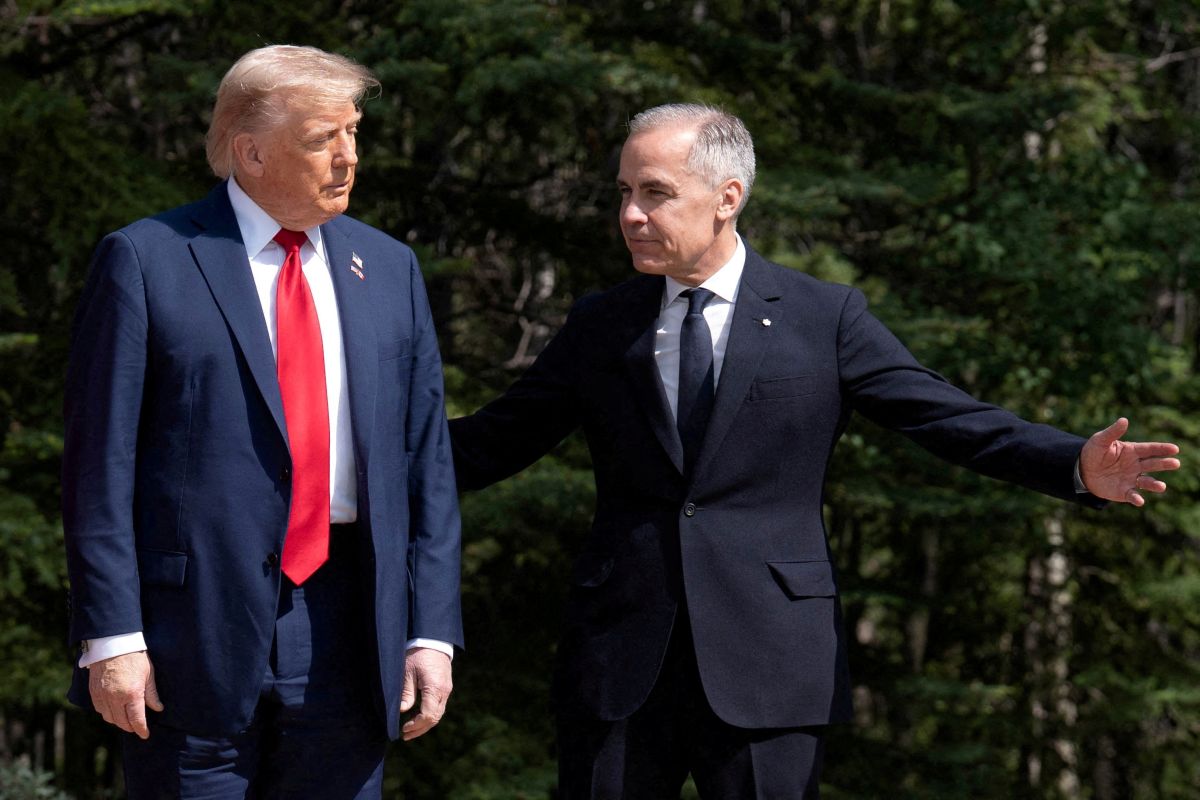


The Canadian prime minister confirmed several recent conversations with President Donald Trump as Ottawa dealt with Ukraine, Iran and a separate trade dispute with Washington. What the two leaders actually agreed on, however, was left largely undisclosed.
Canadian Prime Minister Mark Carney offered a brief glimpse into his recent contacts with U.S. President Donald Trump, confirming that the two leaders had spoken several times in a matter of days about some of the world’s most closely watched conflicts.
The subjects included the war in Ukraine, issues connected to Iran and other international developments. But while Carney confirmed that the conversations happened, he stopped short of explaining exactly what was discussed or whether the calls produced any new agreement.
That distinction is what makes the remarks more significant than a simple confirmation that two neighboring leaders remain in contact.
Carney Confirmed the Calls — But Not Much More
Carney said he remained in regular communication with Trump and had spoken with him “a couple of times” in recent days.
He framed those conversations as part of the responsibility that comes with governing two countries whose security and economic interests remain closely connected, even when their governments are at odds on other issues.
The prime minister also made clear that Canada and the United States were capable of separating one dispute from another.
“We can compartmentalize across this,” Carney said while discussing the broader relationship between the two countries.
That provided the first clear answer: communication between Carney and Trump was continuing despite serious disagreements between Ottawa and Washington.
But it immediately opened another question.
What, exactly, were they trying to accomplish on Ukraine and Iran?
Carney did not say.
Ukraine Was Already at the Center of the Day
The timing of Carney’s comments was important.
On September 10, Ukrainian President Volodymyr Zelenskyy was in Calgary for meetings with Carney as Canada announced a new series of military, energy and industrial initiatives involving Ukraine.
Canada announced approximately C$350 million for critical air-defense interceptors that would be obtained through a U.S.-linked mechanism designed to help allies supply Ukraine more quickly.
The package came as Ukraine continued seeking additional defenses against Russian missile and drone attacks.
Carney and Zelenskyy also moved forward with a much broader effort focused on drone production.
Canada said it wanted to build the domestic capacity to manufacture millions of drones over the following two years, while deepening cooperation with Ukrainian companies and drawing on Ukraine’s experience with rapidly changing battlefield technology.
The two governments also signed a declaration outlining what they called a 100-year partnership, covering areas including defense, reconstruction, economic cooperation and long-term security.
Those announcements gave Carney’s reference to Trump a much larger diplomatic backdrop.
The U.S. Still Has a Central Role
Canada can provide military assistance, financing and political support to Ukraine, but many of the systems Ukraine is seeking involve the United States directly or indirectly.
The C$350 million air-defense commitment announced by Canada, for example, was tied to a U.S. mechanism for delivering equipment.
That helps explain why communication with Washington remains relevant to Ottawa’s Ukraine policy even when Canada and the United States are dealing with major disagreements elsewhere.
Carney said the United States could play an important role in efforts surrounding the war.
But there was no announcement that his conversations with Trump had produced a new peace initiative, a new ceasefire proposal or a specific diplomatic breakthrough.
The existence of the calls was confirmed. Their outcome was not.
Iran Was Mentioned, but the Details Were Even Thinner
Carney also said his conversations with Trump involved issues related to Iran.
Here, the public information was even more limited.
He did not describe a Canadian proposal, identify a particular negotiating track or say whether Canada had been asked to take on a new diplomatic role.
No detailed official account of the Iran portion of the conversations was released alongside his comments.
That makes it important not to read more into the statement than Carney actually disclosed.
What can be said with confidence is that Iran was among the international issues discussed between the two leaders.
What cannot yet be established from Carney’s remarks is exactly what proposals, requests or possible next steps were raised.
Another Dispute Was Happening at the Same Time
The conversations were taking place against a very different backdrop in the Canada-U.S. relationship: trade.
Ottawa and Washington were already involved in an escalating dispute, with both governments imposing or considering measures affecting cross-border commerce.
Carney was publicly weighing how Canada should respond to additional U.S. actions while continuing to argue that a mutually beneficial trade arrangement remained possible.
That created an unusual situation.
Canada could be confronting the Trump administration on trade while continuing to coordinate with Washington on security, Ukraine and other international questions.
Carney’s use of the word “compartmentalize” captured that approach.
It also clarified something the brief reports about his Trump calls could easily obscure: there was no indication that the Ukraine and Iran conversations meant the wider Canada-U.S. trade dispute had suddenly been resolved.
The Context Most Readers May Have Missed
The same day Carney discussed his contact with Trump, Canada and Ukraine were announcing measures that extended well beyond a single military aid package.
Ottawa said it would provide nearly C$435 million in new loan guarantees through the European Bank for Reconstruction and Development to support Ukrainian energy security, including preparations for winter.
Canada also announced additional financing connected to reconstruction and energy infrastructure.
At the same time, the two countries were expanding cooperation on drones, counter-drone technology and defense manufacturing.
That broader context changes how the Carney-Trump conversations should be understood.
They were not taking place in isolation.
Carney was speaking with the U.S. president while his government was simultaneously making concrete decisions involving Ukraine, American-linked defense channels and Canada’s own long-term security strategy.
Why the Lack of Detail Matters
Conversations between national leaders do not always produce a public readout, particularly when diplomacy is still developing.
But limited disclosure also means there are clear boundaries around what is currently known.
Carney confirmed contact.
He identified Ukraine, Iran and other international developments as subjects.
He said Canada and the United States still had responsibilities that required cooperation.
Beyond that, many of the most interesting questions remain unanswered.
There was no publicly disclosed list of proposals. No detailed account of Trump’s response was provided. And Carney did not announce that the conversations had resulted in a new agreement on either Ukraine or Iran.
That may change if either government releases more information.
For now, the most concrete developments remain the actions Canada announced publicly alongside Ukraine.
What Happens Next
The Canada-Ukraine agreements announced in Calgary now move toward implementation, including air-defense support, energy financing and expanded defense-industrial cooperation.
Canada is also pursuing a major expansion of its domestic drone capacity while developing longer-term production arrangements with Ukraine.
Meanwhile, Carney has indicated that communication with Trump will continue even as disagreements remain between their governments.
The unanswered part is whether those private conversations eventually lead to something that can be measured publicly — a coordinated policy, a diplomatic initiative or simply continued communication during a period of overlapping crises.
For now, Carney has confirmed the talks.
What happened inside them remains the part of the story that has not yet been fully explained.
Comments (0)
Loading comments...
May You Like
OBAMA STEPS BACK INTO THE POLITICAL SPOTLIGHT

Obama Steps Back Into the Political Spotlight as Democrats Target Trump’s














