Trump Administration Again Denies Visas to Mahmoud Abbas and Palestinian Delegation Ahead of UN Assembly

The United States has blocked Palestinian Authority President Mahmoud Abbas and other senior officials from traveling to New York for the second consecutive UN General Assembly, reviving a dispute over diplomacy, U.S. law and host-country obligations.


The Trump administration has denied visas to Palestinian Authority President Mahmoud Abbas and other senior Palestinian officials, preventing the high-level delegation from traveling to New York for the United Nations General Assembly.
The State Department said the decision reflects what it described as continued Palestinian failures to meet commitments related to peace with Israel and reforms expected under longstanding U.S. law.
Washington specifically pointed to Palestinian legal efforts involving Israel at the International Criminal Court and International Court of Justice, along with continued stipend payments connected to Palestinian prisoners and their families.
The department said it would extend visa sanctions affecting members of the Palestine Liberation Organization and Palestinian Authority officials, framing the restrictions as a response to actions it believes undermine prospects for peace.
The move comes just days before the 81st United Nations General Assembly's general debate, scheduled for September 22 through September 28 at the organization's headquarters in New York.
Despite the visa denials, Palestinian representation at the United Nations will continue because accredited diplomats already based in New York remain able to participate in meetings and official diplomatic activity.
Abbas is also expected to have the option of addressing the General Assembly remotely, although the exact arrangements for this year's appearance have not yet been formally announced.
The dispute closely resembles what happened in 2025, when the United States also denied visas to Abbas and other Palestinian representatives ahead of the 80th General Assembly session.
Last year, the General Assembly responded by approving virtual participation for Palestine, allowing Abbas to deliver a prerecorded address after Washington's visa decision prevented him from appearing in person.
That 2025 resolution passed by 145 votes to five, with six abstentions, and explicitly expressed regret over the U.S. decision while allowing Palestinian representatives to participate remotely.
The latest denial again raises questions about the United States' responsibilities as host country for the United Nations, whose headquarters agreement is intended to facilitate access for officials conducting UN business.
United Nations officials have previously said they expect the host country to fulfill those obligations, while Washington maintains that domestic law and national-security authorities can govern individual visa decisions.
The controversy also comes amid broader U.S.-Palestinian tensions over Gaza, international recognition of Palestinian statehood, legal proceedings involving Israel, and the Palestinian Authority's policies regarding prisoners and their families.
The Trump administration has strongly opposed International Criminal Court actions involving Israeli and American personnel, while Israel and the United States are not members of the treaty establishing the court.
Palestinian representatives have defended diplomatic and legal avenues as legitimate ways to pursue their political objectives and have challenged Washington's contention that such international efforts undermine prospects for negotiations.
Supporters of Washington's restrictions argue that the United States is enforcing existing conditions and applying pressure for reforms, rather than excluding Palestinians entirely from United Nations diplomacy.
Critics counter that denying entry to senior representatives of a UN observer state undermines broad diplomatic access and places the host country's interpretation of its obligations under renewed scrutiny.
The practical impact is narrower than some social-media headlines suggest: the Palestinian delegation is not expelled from the United Nations, and its accredited diplomatic mission in New York remains operational.
However, barring Abbas and other senior officials from traveling removes opportunities for face-to-face meetings with numerous world leaders during one of the busiest international diplomatic gatherings of the year.
For now, the central issue is not whether Palestine will have a voice at the General Assembly, but whether that voice will again be delivered remotely because its top leadership cannot enter the United States.
Comments (0)
Loading comments...
May You Like

TRUMP’S OHIO WARNING UNDER THE SPOTLIGHT
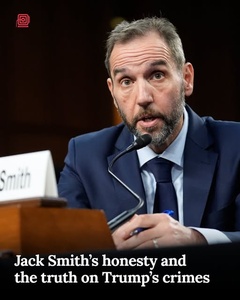
Jack Smith Defends His Integrity as Trump Investigations Face Renewed Political Firestorm

Shocking news from Ohio: an unexpected development ahead of Trump's rally