Trump Administration Approves Visas for Iran’s Top Leaders to Attend U.N. Meetings in New York
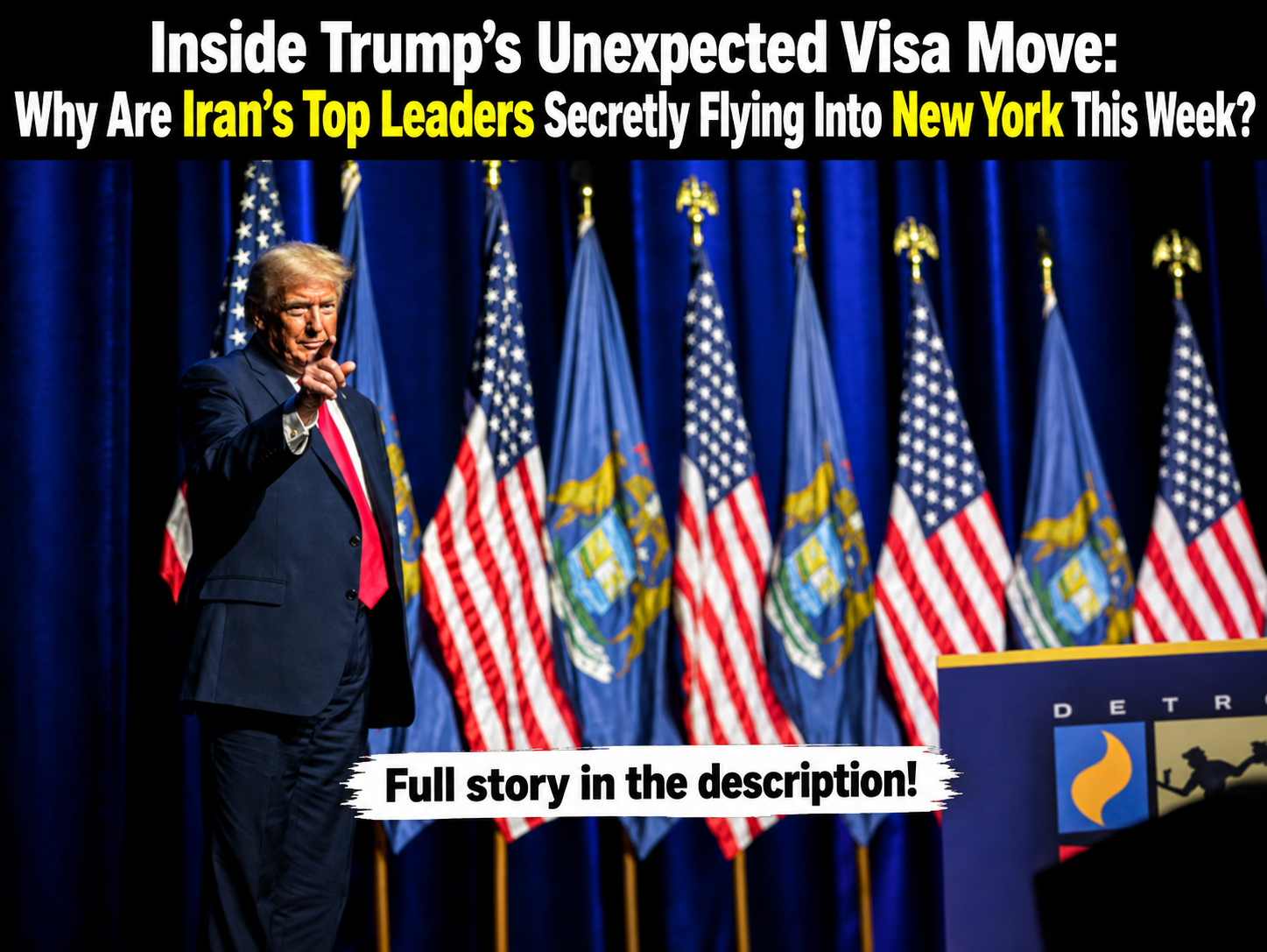
Iranian President Masoud Pezeshkian and Foreign Minister Abbas Araghchi are expected to travel to New York next week despite the ongoing U.S.-Iran war. The decision reflects Washington’s obligations as host of the United Nations while keeping strict restrictions on the Iranian delegation.
The Trump administration has approved visas for Iran’s president and foreign minister to attend the United Nations General Assembly in New York next week, creating an unusual diplomatic opening while the United States and Iran remain engaged in a months-long war.
Iranian President Masoud Pezeshkian and Foreign Minister Abbas Araghchi, along with essential members of their delegation, are expected to attend the U.N. General Assembly’s high-level meetings, according to U.S. officials and reporting from Reuters and the Associated Press.
The decision does not mean Washington and Tehran have reached a peace agreement or that diplomatic relations have been restored. Instead, the State Department said the authorization was consistent with the United States’ responsibilities as the host country of U.N. headquarters.
At the same time, Washington is imposing travel and purchasing restrictions on the Iranian delegation.


Why Is Iran’s Leadership Coming to New York?
The Iranian delegation is traveling for the 81st session of the U.N. General Assembly, whose high-level general debate is scheduled for September 22–28, 2026.
The United Nations says nearly 130 heads of state and government are expected to attend the high-level week in person. The official theme is “Restoring trust, managing transformation: A United Nations that delivers for all.”
Pezeshkian is scheduled to address the General Assembly on Wednesday, September 23, according to the Washington Post's reporting on his planned appearance.
That gives Iran an international platform to present its position on the war, U.S. military operations, sanctions, nuclear policy and regional security directly to representatives of other countries.
For Washington, allowing the delegation into New York also preserves the formal diplomatic channel that exists through the United Nations, even while the two countries remain military adversaries.
The U.S. Decision Is More Complicated Than a Normal Visa Approval
The State Department described the arrangement as being consistent with U.S. obligations as the host of the United Nations.
Under the 1947 U.N. Headquarters Agreement, the United States and the United Nations established rules governing access to the U.N. headquarters district in New York. The agreement remains the legal framework underlying the headquarters arrangement.
Reuters reported that the State Department said the Iranian delegation would be smaller than last year and would remain subject to travel restrictions and prohibitions on purchases of luxury and other goods.
So while Pezeshkian and Araghchi can come to New York for official U.N. business, they are not receiving unrestricted access to the United States.
The distinction is important.
This is a U.N.-related diplomatic exception rather than a broad relaxation of Washington's policy toward Iran.
What Restrictions Will Iran’s Delegation Face?
The United States has previously imposed unusually strict movement controls on Iranian representatives attending U.N. meetings.
During an earlier U.S. administration, Iranian diplomats were restricted largely to travel between the U.N. headquarters, Iran's U.N. mission, the residence of Iran's permanent representative and John F. Kennedy International Airport. The State Department has also previously imposed restrictions on where Iranian officials could shop while in New York.
For this year's delegation, the State Department said restrictions will remain in place and that the group will face prohibitions on purchasing luxury and other goods. The delegation will also be smaller than last year's.
That means the visa decision should not be interpreted as a conventional diplomatic thaw.
It is better understood as limited access for U.N. diplomacy under strict conditions.
Why Is the Timing So Significant?
The decision comes as the U.S.-Iran conflict enters its seventh month.
The war began on February 28, 2026, when the United States and Israel launched military action against Iran. Tehran subsequently carried out retaliatory attacks against Israel and Gulf countries hosting U.S. military bases.
The conflict has also affected energy markets and shipping routes, particularly around the Persian Gulf and the Strait of Hormuz.
At the same time, Trump said on September 16 that he hoped the conflict was approaching its end. Reuters reported that Trump was expected to meet leaders from Saudi Arabia, the United Arab Emirates, Qatar, Bahrain, Kuwait and Oman around the U.N. meetings to discuss the situation and potential postwar arrangements.
That makes the arrival of Iran's senior diplomatic leadership in New York potentially important even though no breakthrough has been announced.
Are Washington and Tehran Still Talking?
Yes.
Reuters reported that the Trump administration and Iran have maintained intermittent talks aimed at ending the conflict, even while military hostilities continue.
The existence of those talks does not mean the two sides have resolved their core disagreements.
Major issues include Iran's nuclear program, sanctions, military activity, regional security and the future of the conflict.
The U.N. gathering therefore provides something both sides rarely have during wartime: an opportunity for senior officials to be physically present in the same international diplomatic environment.
Whether that produces direct U.S.-Iran negotiations remains uncertain.
Pezeshkian's U.N. Appearance Could Become a Major Diplomatic Moment
Pezeshkian's planned appearance comes at a particularly sensitive time for Iran.
He is expected to address an audience representing virtually the entire international community while his country remains under extensive U.S. sanctions and engaged in an active military confrontation with Washington.
Iran can use the General Assembly platform to make its case about the war, civilian casualties, sanctions and international law.
The United States, meanwhile, can present its own account of the conflict and its objectives.
The General Assembly itself does not function as a court that can determine whether one side has legally “won” a war. Its importance here is primarily diplomatic and political: governments can make public statements, hold bilateral meetings and negotiate with other countries on the sidelines.


Why the Image Says “Secretly Flying” — and What the Evidence Shows
The image accompanying this story uses the phrase “secretly flying” to describe the Iranian leaders' trip.
That wording needs some qualification.
The visa decision itself was not secret once announced. The State Department publicly confirmed that the Iranian delegation would be allowed to attend the General Assembly, and major news organizations subsequently reported that Pezeshkian and Araghchi were among the officials receiving visas.
The more accurate description is that the administration made an unexpected and closely watched visa decision while the two countries remain at war.
There is also no evidence in the reporting reviewed for this article that the Iranian leaders are entering New York secretly or outside the established U.N. diplomatic process.
A Striking Contrast With the Palestinian Visa Decision
The Iran decision has drawn additional attention because it came immediately after Washington announced that Palestinian President Mahmoud Abbas and his delegation would not receive visas to attend the General Assembly.
The State Department said the Palestinian Authority had taken actions Washington objected to, including pursuing cases involving Israel through international courts. Palestinian officials rejected the U.S. rationale and argued that the restrictions undermine diplomatic efforts.
The contrasting decisions have therefore become part of the broader debate over how the Trump administration is applying U.S. rules to foreign officials seeking to attend the U.N.
The cases are not legally identical, however. Iran is a U.N. member state, while the Palestinian Authority has observer-related status at the United Nations rather than membership as a full U.N. member state.
Does This Mean a U.S.-Iran Peace Deal Is Coming?
Not based on the visa decision alone.
The authorization allows Iranian officials to attend the U.N. General Assembly. It does not announce a ceasefire, sanctions agreement, nuclear agreement or restoration of diplomatic relations.
However, the timing gives both governments an additional opportunity for diplomacy.
Trump has publicly indicated that he hopes the war is nearing an end, while Reuters has reported continuing intermittent talks between Washington and Tehran.
The presence of Pezeshkian and Araghchi in New York could therefore create opportunities for meetings with other governments and potentially additional contacts involving U.S. officials.
But whether those contacts lead to a concrete agreement will depend on the unresolved substantive issues between the two countries.
What Happens Next?
The immediate focus will be on the U.N. General Assembly's high-level week beginning September 22.
Pezeshkian's expected address on September 23 will be closely watched, particularly for his government's description of the war and its position on negotiations.
The broader diplomatic picture will also depend on whether the Trump administration's separate discussions with Gulf governments produce movement toward ending the conflict.
For now, the clearest fact is that Washington has chosen to allow Iran's senior diplomatic leadership into New York while maintaining significant restrictions on their activities.
That combination — access for diplomacy alongside continued pressure — illustrates the unusual position of U.S.-Iran relations in September 2026.
What the Viral Image Gets Right — and What It Leaves Out
What it gets right:
- The Trump administration has approved visas for Iran's senior leadership to attend the U.N. General Assembly.
- President Masoud Pezeshkian and Foreign Minister Abbas Araghchi are expected to be part of the delegation.
- The decision comes while the United States and Iran remain at war.
- The Iranian delegation will face travel and purchasing restrictions.
What needs context:
- The visit is not secret; the U.S. government publicly announced the visa decision.
- The visas are connected to attendance at the U.N. General Assembly, not unrestricted entry into the United States.
- The move does not itself constitute a peace agreement or diplomatic normalization.
- U.S.-Iran talks are continuing intermittently, but major disagreements remain unresolved.
Bottom Line
The Trump administration's decision to permit Iran's president and foreign minister to attend the U.N. General Assembly is unusual because it comes during an active U.S.-Iran war.
But the decision has a specific diplomatic and legal context. As host of the United Nations, Washington has obligations concerning access to the U.N. headquarters, while retaining the ability to impose restrictions on Iranian officials.
The result is an unusual combination: Iran's top diplomats will be able to appear on the world stage in New York, but under significant U.S. restrictions.
With the war still unresolved and intermittent talks continuing, their presence at the United Nations could provide another venue for diplomacy — but the visa decision itself does not establish that a broader U.S.-Iran breakthrough is imminent.
Comments (0)
Loading comments...
May You Like
Jack Smith Defends His Integrity as Trump Investigations Face Renewed Political Firestorm

Shocking news from Ohio: an unexpected development ahead of Trump's rally