Trump Administration Cuts Federal Medicaid Funding for Gender-Affirming Care for Minors: What the New Rule Means
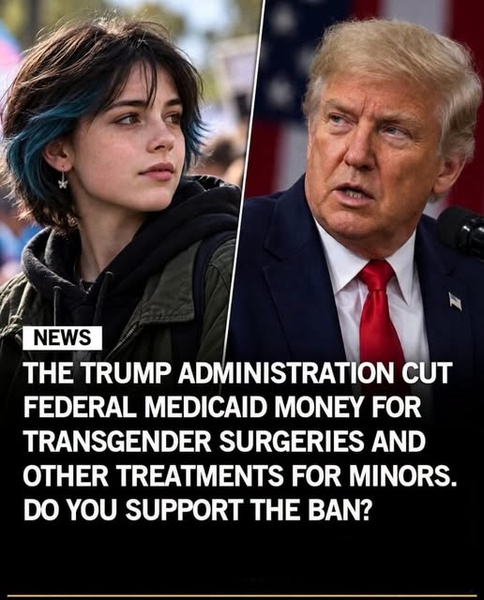
Trump Administration Cuts Federal Medicaid Funding for Gender-Affirming Care for Minors: What the New Rule Means
The federal policy took effect in October 2026, restricting Medicaid and CHIP funding for specified gender-related medical treatments for young people. Supporters call it a child-protection measure, while opponents argue it interferes with medical decisions and limits healthcare access for vulnerable families.
1. A Major Change to Federal Healthcare Funding
The Trump administration has implemented a major change to federal healthcare policy, ending federal Medicaid and Children's Health Insurance Program (CHIP) funding for specified gender-affirming medical treatments for minors.
The final rule was issued by the Centers for Medicare & Medicaid Services (CMS) on August 11, 2026, and took effect on October 13.
The decision affects federal reimbursement for puberty blockers, hormone therapy and surgical procedures used to treat gender dysphoria in young people. It represents one of the administration's most consequential federal actions involving transgender healthcare.
However, the policy does not make these treatments illegal nationwide. Its central effect is to restrict the use of federal Medicaid and CHIP money to pay for them.
2. Which Treatments Are Affected?
The final rule uses the administration's term “sex-rejecting procedures” to describe a category of pharmaceutical and surgical interventions intended to align a person's physical characteristics with a gender identity different from their sex.
The restrictions cover three major categories:
-
Puberty blockers: Medications used to delay the physical changes associated with puberty.
Hormone therapy: Treatments involving hormones such as testosterone or estrogen.
Surgical procedures: Certain operations associated with gender transition.
The restrictions apply to Medicaid beneficiaries under 18 and CHIP beneficiaries under 19.
The policy is not a blanket prohibition on every medical service received by transgender minors. Mental-health counseling and psychotherapy remain eligible for federal funding under the applicable programs.
3. Medicaid and CHIP: Why the Decision Matters
Medicaid and CHIP provide healthcare coverage to millions of children from low-income households.
Medicaid is jointly funded by the federal government and individual states. CHIP provides health coverage for eligible children in families whose incomes are too high to qualify for Medicaid but who may not be able to afford private insurance.
According to Reuters, the two programs together cover approximately 35.5 million children nationwide.
The new rule changes the financial arrangements behind certain treatments. States can no longer claim federal matching funds for the specified procedures when they are provided for the purposes covered by the rule.
That could create substantial difficulties for families who depend on public insurance, particularly in states that previously covered these treatments.
4. The Rule Does Not Completely Ban Treatment
One of the most important details is what the federal policy does not do.
The administration has not made gender-affirming treatment illegal in every state. The rule restricts federal financial participation in Medicaid and CHIP for the specified services.
States may still choose to cover those treatments using state-only funds, outside the federally matched portion of the programs. Private insurance arrangements are also not automatically prohibited by this particular rule.
However, the financial consequences could be significant. States that want to preserve coverage may have to find alternative funding, while families could face higher costs if their state does not provide another payment option.
In practical terms, a restriction on federal reimbursement can reduce access even when a treatment remains legally available.
5. Existing Patients Receive a Limited Transition Period
The final rule includes a limited transition provision for certain young people who were already receiving hormone therapy when the rule took effect.
States may continue claiming federal reimbursement for qualifying hormone therapy medications for up to six months after October 13, 2026.
This provision does not extend to puberty blockers or surgical procedures. It also does not provide the same transition allowance to patients who begin hormone therapy after the effective date.
The administration says the temporary period is intended to give existing patients and their healthcare providers time to manage the transition.
The distinction is important because the rule does not provide a six-month continuation of federal funding for every affected treatment.
6. Why the Trump Administration Supports the Restrictions
The Department of Health and Human Services, led by Secretary Robert F. Kennedy Jr., defended the rule as a measure intended to protect children and safeguard taxpayer money.
In its announcement, HHS argued that the available evidence did not sufficiently establish the long-term benefits of the specified interventions for minors and that some treatments could involve serious or irreversible consequences.
The administration also cited international reviews, including the United Kingdom's Cass Review, and changes in the positions of some medical organizations.
Officials argue that federal healthcare programs should not finance treatments when the government believes the evidence does not demonstrate a sufficiently favorable balance of benefits and risks.
Those conclusions are the administration's stated justification for the rule and remain contested by medical organizations and state officials.
7. Medical Organizations and Opponents Warn About the Consequences
Opponents argue that the restrictions could undermine the ability of patients, families and qualified healthcare professionals to make individualized medical decisions.
The American Academy of Pediatrics and the American Medical Association have supported access to gender-affirming care under appropriate medical supervision. Their positions differ from the administration's assessment of the evidence and the need for a federal funding restriction.
Critics also warn that removing federal reimbursement could disproportionately affect low-income families, who may have fewer alternatives for paying for treatment.
The debate is not simply about whether a treatment should be available. It also concerns who should decide what care is appropriate, how medical evidence should be evaluated, and whether federal agencies can override coverage decisions made by states.
8. More Than 20 States Challenge the Federal Rule
The policy has already triggered a major legal confrontation.
On September 2, 2026, a coalition of 22 states and the District of Columbia filed a lawsuit challenging the administration's authority to impose the restrictions.
The states argue that CMS exceeded its legal authority, interfered with state control over Medicaid coverage and failed to provide a sufficient legal and evidentiary basis for the policy.
A separate lawsuit was filed in New Hampshire by families and transgender adolescents seeking to block the rule. A federal judge denied their request for an immediate temporary restraining order on October 5, although the broader challenge remains ongoing.
As of November 2, the Massachusetts case remains in the briefing process, with the administrative record due that day. No final ruling invalidating the federal funding restriction had been reported in the case materials available for this article.
9. A National Debate Over Healthcare, Parental Rights and Federal Authority
The new policy has placed transgender healthcare at the center of another major national debate.
Supporters believe the federal government should protect children from treatments they consider insufficiently supported by long-term evidence and should ensure public money is spent responsibly.
Opponents argue that the government is restricting access to care that some families and medical professionals consider necessary, while placing additional financial pressure on low-income households.
The legal challenges could ultimately determine how much authority federal agencies have to restrict Medicaid and CHIP reimbursement for specific treatments that states have chosen to cover.
For now, the federal rule is in effect, although its legality is being challenged. The outcome could influence healthcare policy across the country and shape the future relationship between federal agencies, state governments, medical professionals and families.
Comments (0)
Loading comments...
May You Like



Trump Revives His Controversial Immigration Remarks as Ilhan Omar Remains a Political Target