Trump Administration Drafts Rule to Redirect Child Care Aid to Stay-at-Home Moms in Vance-Backed Proposal
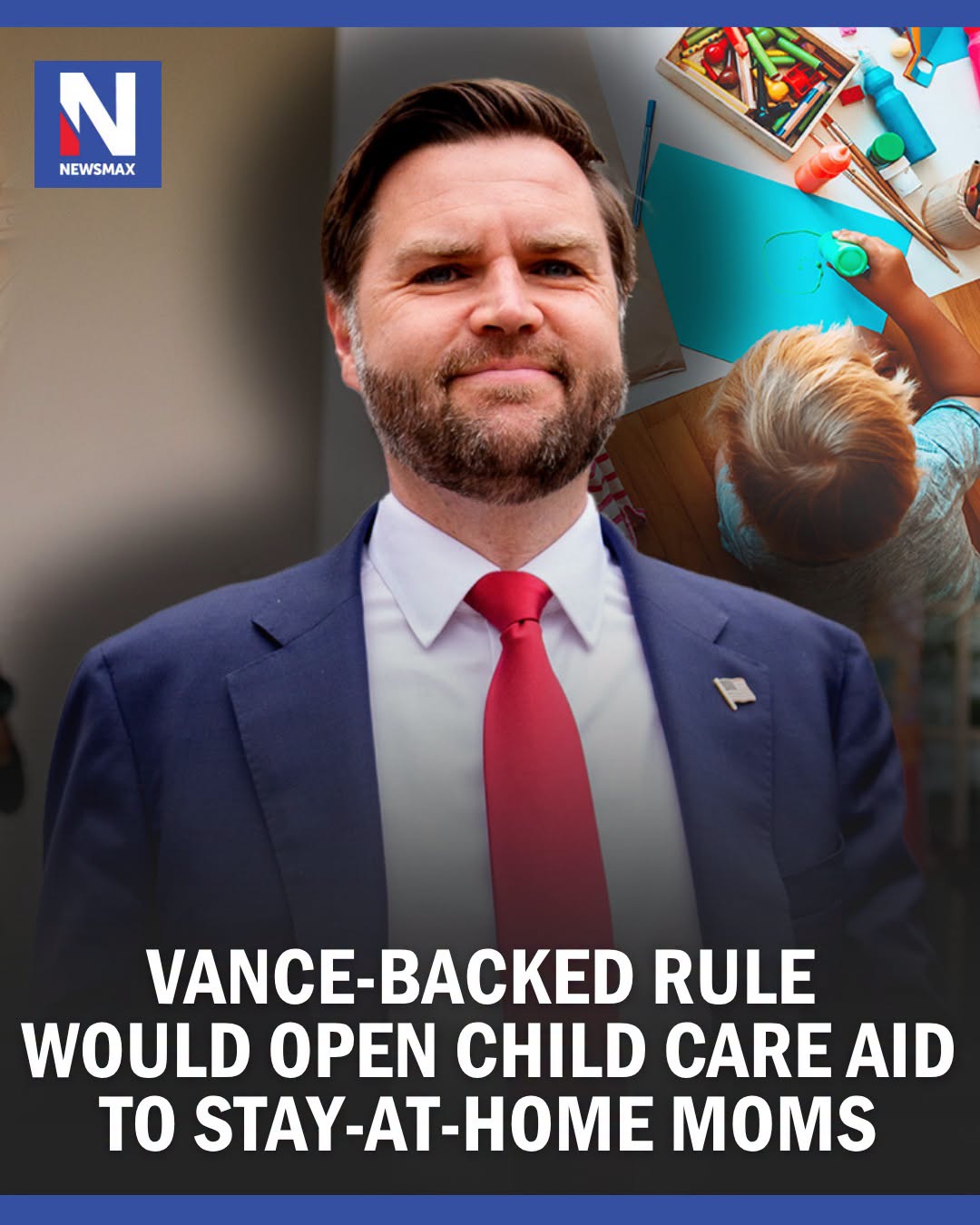
The Trump administration is drafting a rule that would allow married couples with a stay-at-home parent to collect federal child care subsidies — a first-of-its-kind policy championed by Vice President JD Vance that would redirect funds from a $12 billion program intended to help low-income working parents afford day care.
WASHINGTON – The Trump administration is preparing to make one of the most significant shifts in federal family policy in decades, drafting a rule that would open the Child Care and Development Fund (CCDF) — a program designed to help low-income parents work or attend school — to households where one married parent stays home to raise children .
The draft rule, which has become a top priority for Vice President JD Vance, would create the only federal subsidy that effectively pays parents to forgo work and care for their children at home . The proposal would allow married couples meeting income requirements — with one spouse working at least 35 hours per week — to receive approximately $9,000 per child annually from the CCDF .
The change would not require congressional approval, but needs White House sign-off and a public comment period before it could take effect as soon as next year .
Vance's Longstanding Push for Stay-at-Home Parents
Vice President Vance has made the proposal a personal priority, and the draft borrows from legislation Secretary of State Marco Rubio wrote as a senator . Vance has argued for years that young children fare better at home with a parent. In a 2021 Wall Street Journal essay, he declared: "Young children are clearly happier and healthier when they spend the day at home with a parent" .
At the time, Vance tweeted that "normal Americans" want a "family policy that doesn't shunt their kids into crap daycare" . He also said that child care policies should support not just parents who use day care, but stay-at-home moms, stay-at-home dads, and grandparents .
"I don't want us to favor one family model over another," Vance said during the 2024 campaign. "If you've got grandparents who are at home taking care of the kids, I think they deserve to be treated the same way as other family models by their government" .
More than 80% of stay-at-home parents are mothers, according to Pew Research Center data .
How the Program Would Work
Under the proposed rule, families must earn below 85% of their state's median income — though some states set the bar at 60% — to qualify . The draft would create "a new category of care, parent-based child care," under which "one married parent" could "receive C.C.D.F. assistance to care for their own child, while a spouse works at least 35 hours per week" .
Key eligibility rules include :
| Requirement | Detail |
|---|---|
| Marital status | Married couples only — unmarried couples do not qualify |
| Income | Below 85% of state median income |
| Work requirement | One spouse must work at least 35 hours per week |
| Subsidy amount | Approximately $9,000 per child per year |
| Coverage | Children up to age 13 |
The CCDF is a $12 billion program created during the Clinton administration and administered by the Health and Human Services Department . It currently serves about 1.3 million children, and about 80% of the 870,000 families receiving subsidies are headed by single working parents, most of them mothers .
Critics Warn of Consequences for Working Families
The proposal has drawn sharp criticism from family policy experts who argue that expanding eligibility without increasing funding would hurt the very families the program was designed to help .
"Expanding the eligibility without increasing funding would mean more parents competing for the same dollars, and leaving more parents — particularly single working parents — worse off," said Joshua McCabe, director of social policy at the Niskanen Center, a centrist think tank .
Critics also warn the move could worsen what experts call a child care crisis . Redirecting money away from working parents and child care providers could cause some providers to raise rates or even close, making quality care harder to find for families who need it .
Some Health Department lawyers have questioned whether conditioning the benefit on marriage is lawful, while others have flagged fraud risks, because the subsidy would land in the hands of individual recipients instead of licensed providers .
A Broader Conservative Agenda
The proposal aligns with Project 2025, the Heritage Foundation blueprint that calls for "prioritizing funding for home-based child care, not universal day care" and giving funding to parents "to offset the cost of staying home with a child" .
The effort is part of a broader social agenda being pursued by the Trump administration and its allies to promote a traditional view of families — with a married mother and father who have as many children as possible . While White House officials say they want to give parents flexibility, critics say the policy leaves out many families that do not conform to traditional structures, particularly single parents .
Vance has also backed expanding the Child Tax Credit to $5,000 per child, an idea that has garnered bipartisan support . White House aides have discussed other ideas intended to allow more parents to spend time at home, including eliminating federal tax credits for day care and opening federal lands for affordable housing construction .
What Happens Next
The rule is still in the drafting stage and requires White House sign-off and a public comment period before it can take effect . If finalized, it would become the first federal program to pay parents to stay home and raise children .
| What the graphic suggests | What the proposal would do |
|---|---|
| Child care aid opens to stay-at-home moms | Married couples with one stay-at-home parent could receive CCDF subsidies |
| Vance-backed rule | Vance has made the proposal a priority; draft borrows from Rubio legislation |
| No congressional approval needed | Admin rule can be changed by HHS without Congress |
| ~$9,000 per child | Typical subsidy amount under CCDF |
The proposed shift in federal child care policy represents a landmark moment in the Trump administration's efforts to promote a traditional family model through federal spending. For Vice President Vance, it is the culmination of years of advocacy. For critics, it is a redistribution of scarce resources away from the working parents who need them most.
The public comment period, when it comes, is expected to generate intense debate — and with it, the next chapter in America's ongoing conversation about family, work, and who should care for the children.
Comments (0)
Loading comments...
May You Like

Russian Drone Strikes Kyiv Bridge as German Chancellor Arrives in Ukraine

Shocking news from Ohio: an unexpected development ahead of Trump's rally

Barack Obama Draws Attention With New Literary Podcast