Trump Administration Targets Millions of Questionable Obamacare Enrollments in New Anti-Fraud Crackdown
Federal officials say billions of dollars in subsidies were improperly paid as enrollment safeguards weakened under the Biden administration, while the new enforcement campaign could affect millions of Affordable Care Act marketplace records.
WASHINGTON — The Trump administration has launched an aggressive new effort targeting suspected fraud and improper enrollment within Affordable Care Act marketplaces, reviving one of America’s longest-running political battles over Obamacare.
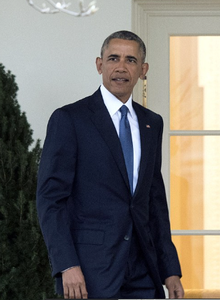
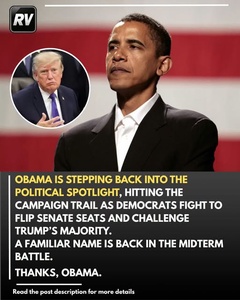
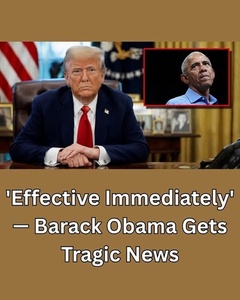
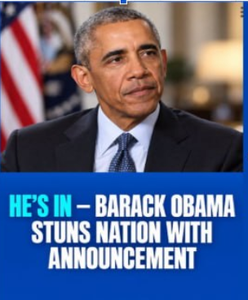
The viral headline describing “tragic news” for Barack Obama refers to this healthcare-policy dispute rather than any newly reported personal tragedy involving the former president.
Administration officials say approximately $10 billion in taxpayer-funded subsidies were improperly paid between 2021 and 2024 as safeguards governing enrollment were weakened during President Joe Biden’s administration.
Officials have also said nearly three million fraudulent or improper Obamacare enrollments have already been removed as part of efforts to verify who legitimately qualifies for subsidized marketplace coverage.
Another approximately 2.6 million enrollments remain questionable, according to figures cited in reporting about the administration’s findings, potentially exposing the healthcare exchanges to additional scrutiny.
Those figures represent the Trump administration’s findings and characterization of the problem. They should not be interpreted as proof that millions of individual Americans intentionally committed healthcare fraud.
Enrollment can be classified as improper for different reasons, including inaccurate information, duplicate coverage, eligibility problems or administrative errors, rather than deliberate criminal activity by the person receiving insurance.
The issue centers on the Affordable Care Act, Barack Obama’s signature domestic legislative achievement, which was enacted in 2010 and became widely known simply as Obamacare.
The law created subsidized insurance marketplaces while expanding healthcare coverage through several mechanisms, fundamentally changing the individual health-insurance market across much of the United States.
Trump has opposed Obamacare since his first presidential campaign, repeatedly promising to repeal, replace or substantially restructure the system while criticizing its premiums, subsidies and federal regulations.
His administration’s latest approach focuses less on eliminating the entire law immediately and more on tightening eligibility verification and attempting to reduce federal spending associated with improper enrollment.
The new controversy also reaches directly into policies adopted under Biden, whose administration expanded ACA enrollment and increased efforts to make subsidized marketplace coverage accessible to more Americans.
Trump officials argue some of those policies weakened verification mechanisms and created opportunities for brokers or other intermediaries to enroll people improperly while federal subsidies continued flowing to insurers.
Fraud concerns surrounding ACA enrollment are not entirely new. Federal regulators have previously investigated complaints involving consumers who said insurance brokers switched plans or enrolled them without proper authorization.
Such cases can generate federal subsidy payments even when the affected individual does not knowingly seek the insurance policy involved, complicating claims that every questionable enrollment represents intentional beneficiary fraud.
The administration’s figures therefore raise two separate questions: how much federal money was spent improperly and how much of that spending resulted from deliberate fraudulent conduct rather than administrative or eligibility problems.
Those distinctions will matter as regulators conduct further reviews and determine whether individual brokers, insurance organizations or beneficiaries should face enforcement action.
The political implications are equally significant because Obamacare has survived repeated attempts to repeal or weaken it since Republicans regained congressional power following its passage.
Trump’s first administration came close to achieving a major repeal in 2017, but Republican legislation ultimately failed in the Senate after several GOP lawmakers opposed the final proposal.
Since then, the Affordable Care Act has become more entrenched within the American healthcare system, making outright repeal politically and practically more complicated than during Obama’s presidency.
The current anti-fraud campaign offers Trump another route for reshaping the program: strengthening eligibility requirements, reducing improper subsidies and changing how marketplace enrollment is verified.
Supporters of tougher verification argue taxpayer-funded health subsidies should reach only people legally eligible for them and that fraudulent enrollment ultimately raises costs throughout the system.
Defenders of the ACA generally agree genuine fraud should be addressed but caution that aggressive verification requirements can also create administrative barriers for eligible people attempting to maintain health coverage.
That tension is common in large federal benefit programs: policymakers must balance preventing improper payments against making legitimate benefits realistically accessible to qualifying households.
The administration’s allegations will consequently require continued examination of government records, audits and enforcement actions before the full scale and causes of improper ACA spending can be established.
They also do not establish that Barack Obama personally participated in any misconduct. The disputed enrollment practices occurred primarily years after Obama left office, particularly during the Biden administration.
Obama’s connection is instead political and historical: the healthcare law carries his name informally and remains the most recognizable domestic-policy achievement of his presidency.
That explains the viral headline’s framing. Calling the crackdown “tragic news for Barack Obama” converts a regulatory development affecting his signature law into a personalized political story.
The phrase “effective immediately” similarly creates urgency, but readers should distinguish any immediate administrative changes from the broader question of whether Obamacare itself has been abolished.
It has not. The Affordable Care Act remains federal law, and marketplace insurance continues to exist despite the Trump administration’s efforts to tighten administration and combat alleged abuse.
Major structural repeal would ordinarily require congressional legislation unless particular provisions could separately be changed through existing executive or regulatory authority.
The healthcare debate also remains highly consequential for consumers because changes to eligibility verification, subsidies and enrollment procedures can directly affect insurance affordability and continuity of coverage.
For the administration, the newly publicized findings support its broader argument that federal benefit systems require stronger controls to prevent taxpayer money from being wasted or improperly distributed.
For ACA supporters, the central question will be whether enforcement accurately targets fraud without incorrectly removing eligible Americans from coverage or creating unnecessary enrollment obstacles.
The numbers themselves will also face scrutiny as independent analysts examine precisely how the government defines “fraudulent,” “improper” and “questionable” enrollment.
Those definitions matter enormously. A fraudulent enrollment deliberately engineered to obtain government money is fundamentally different from a technically improper record produced through missing documentation or administrative error.
Comments (0)
Loading comments...
May You Like

South Korea–Ukraine Rift Deepens Over North Korean POW Transfer as PURL Draws New Scrutiny
Barack Obama Draws Attention With New Literary Podcast