
Trump and Epstein Face Renewed Scrutiny Over Allegations Involving a 13-Year-Old Girl
Trump and Epstein Face Renewed Scrutiny Over Allegations Involving a 13-Year-Old Girl
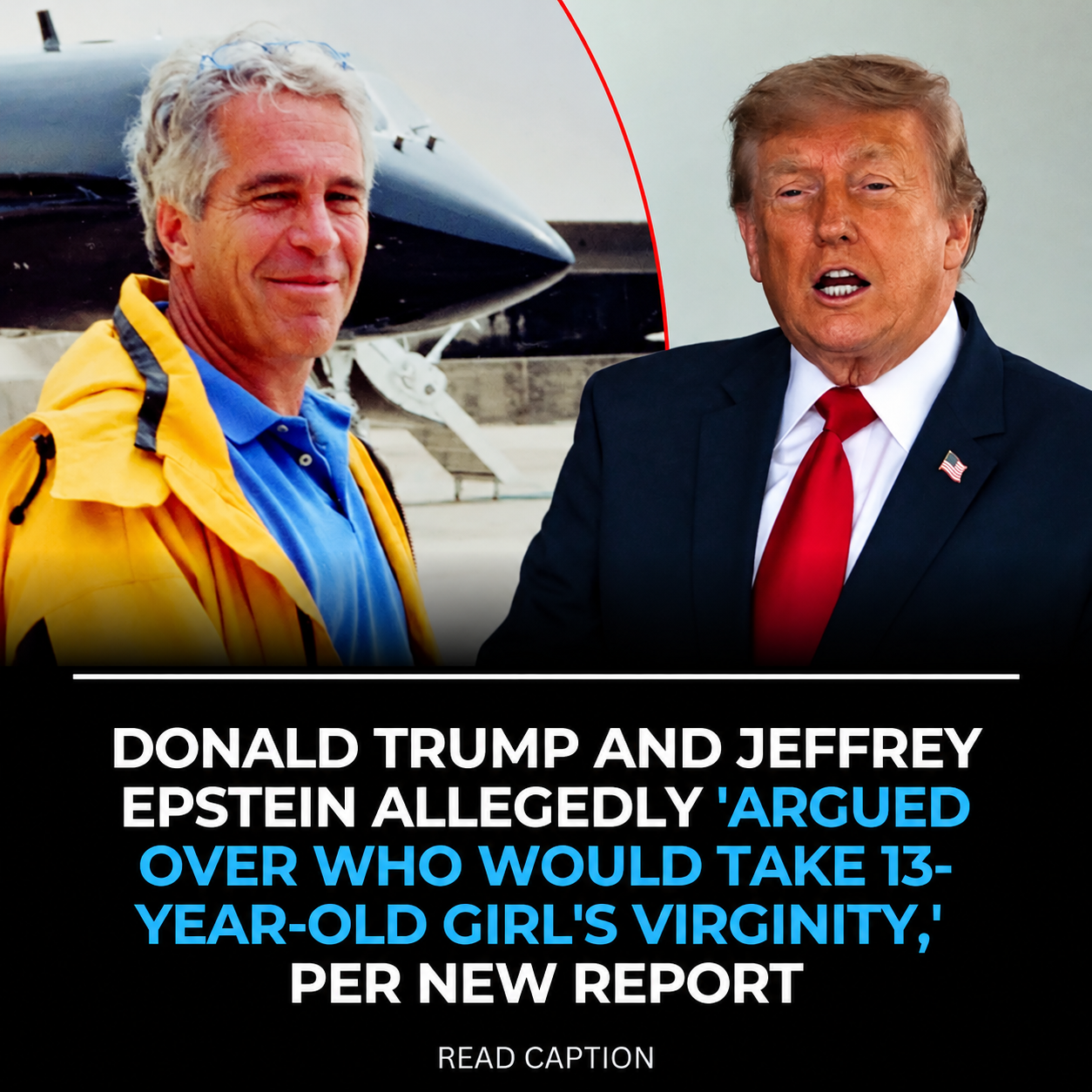
A provocative image circulating online claims Donald Trump and Jeffrey Epstein argued over a 13-year-old girl. The allegation is disturbing, but the available public record requires a careful distinction between an accusation, a documented legal filing, and a proven event.
Trump and Epstein were acquainted in the 1990s and early 2000s, a relationship documented through photographs, social encounters, and contemporary reporting. That association alone does not establish participation in Epstein’s crimes.
Epstein, the financier whose abuse and trafficking of underage girls became a major national scandal, died in federal custody in 2019 while awaiting trial on sex-trafficking charges. His death was ruled a suicide.
In 2016, a woman using a pseudonym filed a civil lawsuit accusing Trump and Epstein of sexually assaulting her when she was 13. The complaint contained graphic allegations and became a recurring subject of political debate.
The lawsuit was withdrawn before its claims were tested at trial. As a result, the filing remains a record of what the plaintiff alleged, not a judicial finding that the alleged acts occurred.

Trump denied the 2016 accusations. His representatives described the allegations as false, and no criminal conviction resulted from that lawsuit.
The viral claim that the two men argued over who would be first is often repeated without the precise underlying document, its procedural status, or independent corroboration. That omission matters because sensational summaries can overstate what the evidence establishes.
A lawsuit can describe an accusation in detail without proving it. Courts evaluate evidence, witnesses, and competing accounts; allegations alone do not settle those questions.
The Epstein case nevertheless raises legitimate public-interest questions about how powerful people gained access to his social circle and what institutions knew about his exploitation of minors.
In March 2026, the Justice Department released additional FBI interview summaries involving a separate woman who accused Trump of sexual misconduct when she was a minor in the 1980s.
Those interview summaries had previously been omitted from a large release of Epstein-related records after officials categorized them as duplicates. Their later publication prompted renewed scrutiny of the department’s document-handling procedures.
Reuters reported that the woman’s claims could not be independently verified. The White House rejected the allegations, and the release of an interview record did not constitute a finding of guilt.
The 2016 civil complaint and the FBI interviews released in 2026 should not be casually combined. They involve different accounts and different evidentiary records, even though both have appeared in discussions of Trump and Epstein.
For readers, the distinction is crucial: a claim recorded by investigators shows that someone made the claim. It does not by itself establish that investigators confirmed it.
Public attention has also focused on why some Epstein-related materials became available only after additional pressure from lawmakers and journalists. Transparency can help the public assess both the allegations and the government’s response.
At the same time, responsible coverage should protect the privacy of people who say they experienced sexual abuse, especially when allegations concern events that occurred during childhood.
The controversy is politically explosive because Trump is a sitting president and because Epstein’s network included influential figures from business, entertainment, academia, and politics.
Critics argue that every credible lead involving Epstein’s associates deserves thorough investigation. Trump’s defenders emphasize that unproven accusations should not be treated as established facts.
Both principles can coexist: allegations involving children merit serious scrutiny, and any person accused is entitled to have the evidence examined rather than be convicted by a viral graphic.
The central unanswered question is not whether the image is shocking. It is which specific claims can be corroborated by testimony, contemporaneous records, and reliable investigative findings—and which remain unproven.
Comments (0)
Loading comments...
May You Like

IRAN DEFIES WASHINGTON — SUPREME LEADER CLAIMS U.S. MILITARY ATTACKS FAILED!

STORM WARNING: MILLIONS FACE EVACUATION, MACY'S GIANT BALLOONS GROUNDED!

AMERICAN FLAG BURNING IN CHICAGO — FREE SPEECH OR DISRESPECT TOWARD AMERICA?












