
Trump Announces Plan to End in Annual U.S. Aid to Israel
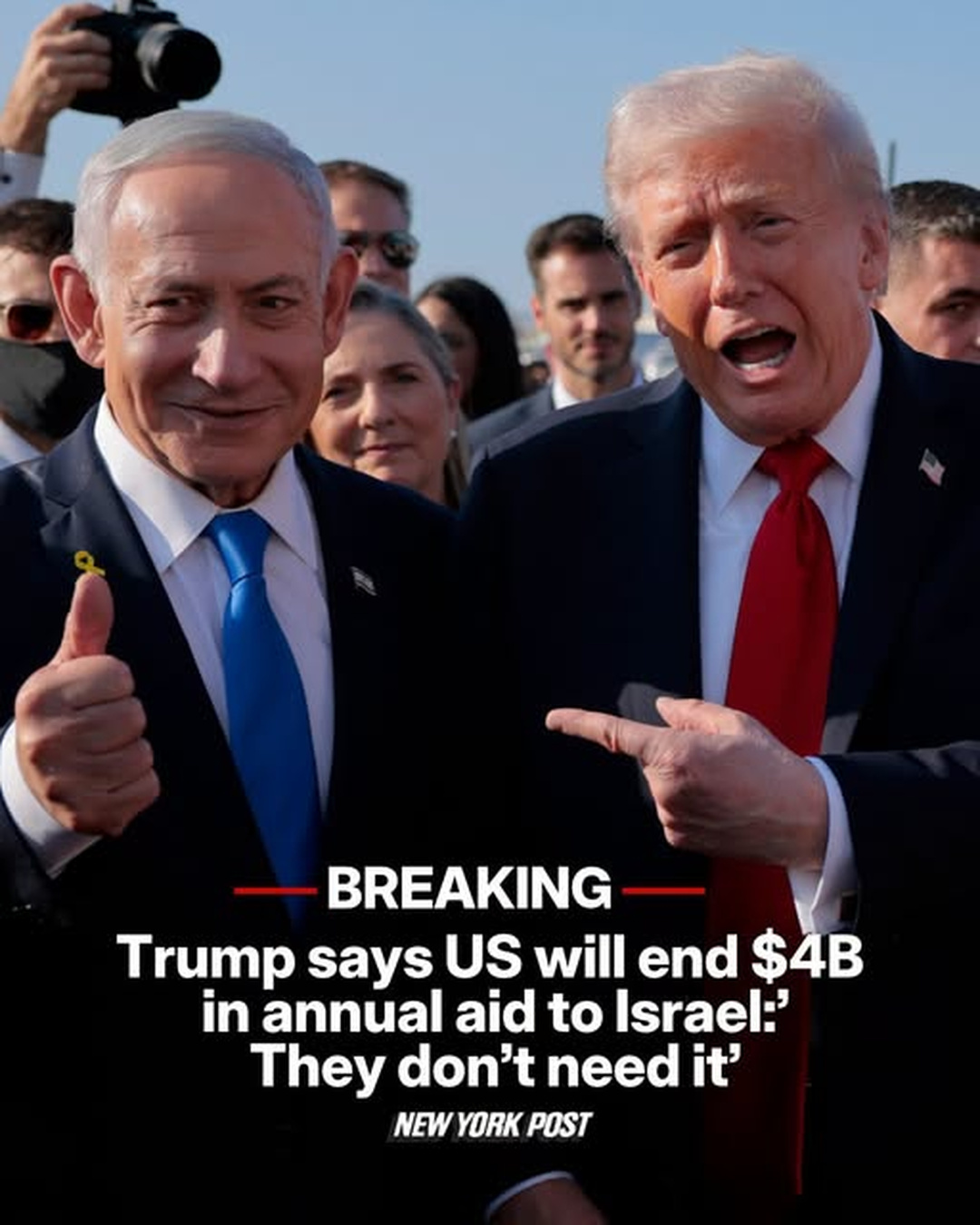
Trump Announces Plan to End $4 Billion in Annual U.S. Aid to Israel by Year-End
U.S. Foreign Policy | November 4, 2026
President Donald Trump has announced that the United States will stop providing approximately $4 billion in annual assistance to Israel by the end of 2026, saying the longtime American ally has become wealthy enough to support itself.
Trump made the announcement during a November 3 interview with Fox News, claiming that he and Israeli Prime Minister Benjamin Netanyahu had reached an agreement months earlier to end the financial assistance.
“They don’t need it,” Trump said, arguing that continued American support had become a political liability for Republicans as criticism of U.S. assistance to Israel grows among some Democratic voters.
The announcement represents a potentially significant shift in one of Washington’s most important Middle Eastern relationships. However, the precise scope and implementation of the proposed change remain unclear.
What Exactly Is Being Cut?
The assistance in question is part of a 10-year U.S.–Israel security agreement signed in 2016 under President Barack Obama. It commits Washington to provide approximately $38 billion over the decade, averaging $3.8 billion annually.
The agreement is scheduled to run through 2028. Trump’s announcement would therefore bring the existing arrangement to an earlier end, potentially changing decades of American military support.
Most of the assistance is provided through Foreign Military Financing, which Israel uses to purchase American-made military equipment, including aircraft, ammunition, and advanced defense systems.
Trump indicated that the proposed termination would cover military assistance, money, or other forms of support. However, he did not provide a detailed breakdown of which programs would stop or how existing commitments would be handled.
Importantly, ending direct aid would not necessarily mean ending American arms sales to Israel. Trump explicitly said Israel could continue purchasing American weapons using its own funds.
Why Trump Is Making the Announcement
Trump connected the decision not only to Israel’s economic strength but also to growing political opposition to American financial assistance.
During his interview, he specifically mentioned Abdul El-Sayed, the Democratic Senate candidate in Michigan, who had made reducing or ending military aid to Israel a campaign issue.
Trump argued that Republicans should not face political criticism over billions of dollars in assistance to a country he considers economically successful and capable of financing its own defense.
The announcement came on November 3, Election Day in the United States, when control of Congress was being contested in closely watched midterm elections.
His comments therefore carried both foreign-policy implications and an unmistakable domestic political message, particularly as public opinion toward American support for Israel has become increasingly divided.
Netanyahu's Position and Israel's Response
Trump claimed Netanyahu had personally raised the idea of ending American assistance and that the two leaders had discussed the issue for several years.
Netanyahu has previously expressed support for gradually reducing Israel’s dependence on American military funding, saying in January 2026 that he wanted to taper off the assistance over approximately ten years.
However, Netanyahu had not publicly confirmed Trump's announcement by Tuesday evening, according to the Associated Press. His office had not issued an immediate response.
Israeli opposition figures criticized the announcement. Former military chief Gadi Eisenkot questioned why Israel's defense establishment appeared to be learning about such a major strategic change through the media.
Opposition leader Yair Golan warned that ending American military assistance could seriously damage Israeli security while the country remains involved in conflicts on multiple fronts.
Can Trump End the Aid Immediately?
One of the biggest questions concerns whether the president can implement the announcement without congressional approval.
The existing assistance agreement is not simply a personal arrangement between Trump and Netanyahu. Congress controls federal appropriations, meaning lawmakers have a significant role in determining whether funding continues or changes.
The Associated Press reported that an abrupt termination would be difficult, particularly because the current agreement remains in effect through 2028 and existing weapons purchases are already moving through production and delivery pipelines.
Even if future assistance is reduced, previously approved contracts could continue for years, meaning the practical consequences may emerge gradually rather than immediately.
A New Chapter in U.S.–Israel Relations
The announcement could mark a major transition from a relationship built partly around direct financial assistance toward one emphasizing weapons sales, defense technology, intelligence cooperation, and industrial partnerships.
Supporters of reducing aid argue that Israel has developed a strong economy and sophisticated defense industry capable of assuming more responsibility for its security.
Critics warn that removing American financial support could weaken Israel’s military readiness and reduce Washington’s influence over its closest regional ally.
The decision could also affect American defense manufacturers because much of the assistance is ultimately spent purchasing weapons produced in the United States.
For now, Trump's announcement signals a major policy intention, but the details of implementation remain unsettled. The next steps will depend on congressional decisions, negotiations with Israel, and the future structure of bilateral defense cooperation.
Comments (0)
Loading comments...
May You Like

IOWA CRISIS — 150+ WITH LEAD AND MERCURY POISONING, 69 CRITICAL!

STORM WARNING: MILLIONS FACE EVACUATION, MACY'S GIANT BALLOONS GROUNDED!

$1 BILLION DISASTER AT BANGCHAK REFINERY, THAILAND—40 BURNED, 8 AMERICANS DEAD!

Latest Posts







Popular Posts




