
Trump Awards YouTuber Nick Shirley $10,000 for Minnesota Fraud Reporting — But Questions Remain About His Viral Claims
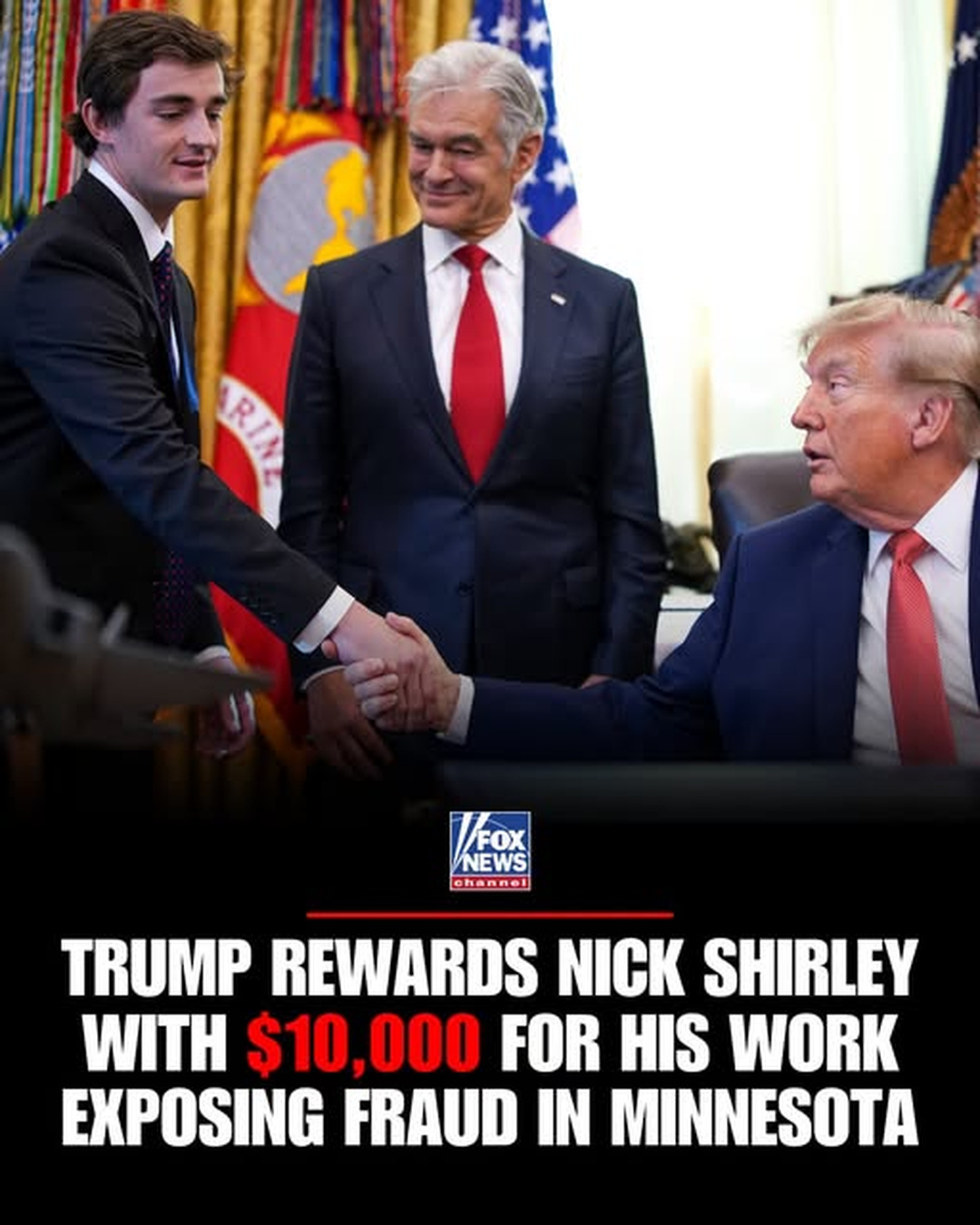
President Donald Trump has awarded conservative YouTuber Nick Shirley $10,000 for his reporting on alleged fraud involving childcare centers in Minnesota, making him the first high-profile recipient of a newly announced federal whistleblower incentive program.
The presentation took place in the Oval Office on October 20, when Trump and Vice President JD Vance unveiled a $25 million initiative designed to encourage Americans to report suspected fraud involving government-funded programs.
Shirley, 24, attracted national attention after publishing a widely viewed video in December 2025 alleging that multiple Minnesota childcare centers were receiving public money despite apparently providing little or no service.
The video triggered intense political debate, prompted renewed scrutiny of public-benefit spending, and became a central talking point for officials seeking to strengthen investigations into suspected government fraud.
During the White House event, Trump praised Shirley’s work and presented him with a $10,000 check. Administration officials described the award as an example of how public tips could help investigators identify potential wrongdoing.
The payment coincided with the launch of the Fraud Whistleblower Incentive Program, known as WHIP. The Justice Department says eligible tipsters can receive awards generally ranging from $10,000 to $30,000 when their information leads to qualifying criminal charges.
The Treasury Department has committed $25 million to support the initiative. That amount represents the program’s initial funding, not a promise that every person reporting suspected fraud will receive a payment.
Trump described the proposed rewards as potentially reaching 1% of the amount of fraud reported, while the Justice Department’s published terms set out specific payment limits and eligibility conditions. The differences have prompted questions about how awards will be administered.
Shirley’s video focused on childcare facilities in Minnesota that he said appeared inactive despite receiving public funding. Its rapid spread drew attention from conservative commentators, lawmakers, and officials in the Trump administration.
However, the allegations require careful distinction from proven criminal conduct. A facility appearing quiet during a visit does not, by itself, establish that it improperly received public funds or committed fraud.
A CBS News review of state records in December 2025 found that all but two of the centers featured in Shirley’s video had active licenses. Regulators had visited the licensed facilities in the preceding six months.
The review identified safety and other regulatory citations at some locations, but it did not find recorded evidence of fraud at those centers as of December 30, 2025. That finding does not resolve every allegation or subsequent investigation.
Separately, federal prosecutors have pursued major fraud cases involving Minnesota public-benefit programs. One woman featured in Shirley’s reporting later pleaded guilty to wire fraud and conspiracy charges connected to inflated reimbursement claims.
That guilty plea establishes wrongdoing in the specific case, but it does not automatically validate every allegation in Shirley’s video or prove that every facility shown engaged in criminal activity.
Minnesota officials have also challenged some of the broader claims circulating online, emphasizing the need to distinguish documented fraud from suspicions based on brief visits, incomplete records, or footage taken outside operating hours.
The new federal incentive program is intended to cover certain categories of suspected fraud, including federal healthcare offenses and fraud involving government benefits administered by several federal departments.
The Justice Department says awards are discretionary and depend on the information provided and the resulting enforcement action. People considering reporting suspected wrongdoing should consult the official terms rather than assume that a viral accusation qualifies for payment.
Supporters argue that financial incentives could encourage insiders and members of the public to provide evidence that investigators might otherwise struggle to obtain. They say exposing fraud can help protect taxpayers and preserve funding for people who genuinely need public services.
Critics have raised concerns about rewarding politically prominent commentators before every allegation is fully substantiated. They also warn that financial incentives could encourage exaggerated claims unless authorities apply clear standards and carefully verify evidence.
The controversy illustrates the tension between citizen journalism and formal investigations. Independent reporting can bring overlooked issues to public attention, but establishing criminal fraud requires evidence, investigative procedures, and legal standards that social media videos cannot replace.
For Shirley, the $10,000 award marks a significant moment in his rise from online creator to a figure welcomed by senior administration officials. It also places his reporting under greater scrutiny as authorities continue examining fraud allegations.
The broader test for the new program will be whether it produces credible leads, supports successful investigations, and applies its rules consistently. Its effectiveness will depend on reliable evidence rather than the popularity or political appeal of any particular accusation.
Comments (0)
Loading comments...
May You Like

EAST COAST CATASTROPHE — $20 BILLION AT STAKE, 5 MILLION AT RISK OF LOSING POWER, WATER AND HEAT!


DAVENPORT AIRBNB HORROR — “SHOTS AT THE DOOR” GAME, 1 DEAD, 6 INJURED!








Popular Posts





