
Trump Calls NBC Journalist a Horrible Little Reporter
TRUMP CALLS NBC JOURNALIST A “HORRIBLE LITTLE REPORTER” AFTER QUESTIONS ABOUT CONTROVERSIAL OHIO CAMPAIGN AD
A QUESTION THAT TURNED HOSTILE
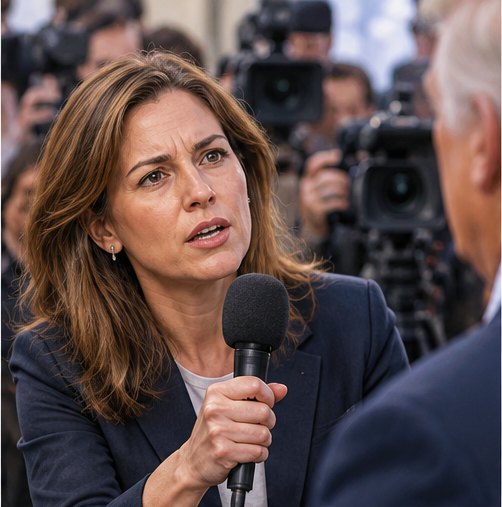
President Donald Trump’s exchange with NBC correspondent Monica Alba became a flashpoint in the Ohio governor’s race after she repeatedly asked why he supported a Republican campaign advertisement built around the estranged mother of Democratic candidate Dr. Amy Acton. Rather than address the history behind the ad, Trump attacked the reporter and defended the campaign’s decision to use it.
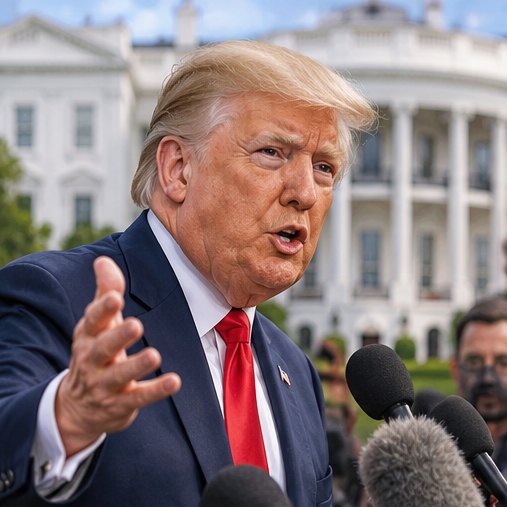
THE MOMENT OUTSIDE THE WHITE HOUSE
The confrontation took place on October 23, 2026, as Trump spoke with reporters outside the White House. Alba asked about the president’s backing for an advertisement produced by the campaign of Republican gubernatorial candidate Vivek Ramaswamy. Trump first asked which news organization she represented. When she identified NBC, he criticized the network and then called her a “horrible little reporter.”
WHY ALBA KEPT PRESSING
Alba’s central question was whether the allegations of sexual abuse in Acton’s childhood changed Trump’s view of the advertisement. She pointed out that Acton’s stepfather had faced a rape charge connected to the period when Acton was 12. Trump told her to be quiet and said he did not know anything about the stepfather.
THE AD AT THE CENTER OF THE CONTROVERSY
The roughly one-minute campaign spot featured Donna Arthur, Acton’s estranged mother, criticizing her daughter and describing her as a liar. The ad disputed Acton’s public account of a difficult childhood, including abuse and periods of homelessness, and urged Ohio voters not to elect her governor.
RAMASWAMY’S CAMPAIGN ACCEPTED RESPONSIBILITY
The video initially circulated online without clearly identifying who had paid for it. Ramaswamy’s campaign later confirmed that it had produced the advertisement and said it would invest up to $4 million to promote it across Ohio. Ramaswamy defended the spot as a legitimate political message, arguing that it concerned his opponent’s credibility.
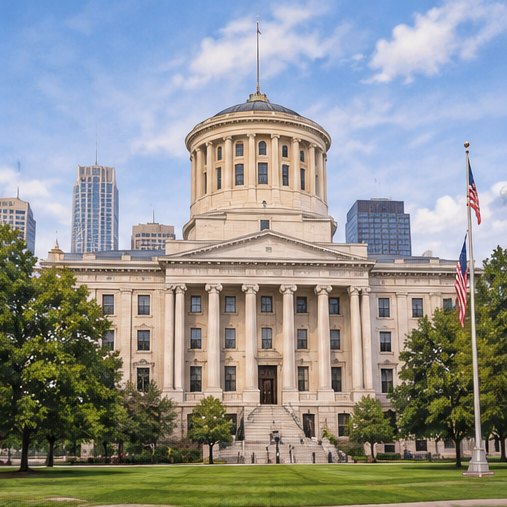
THE FAMILY HISTORY THE AD LEFT OUT
Acton has said she was sexually abused by her stepfather when she was 12 and that her mother failed to protect her. Acton and her brother, Philip Stearns, have described being removed from their mother’s custody after the stepfather was charged in 1978. The siblings have said they became estranged from their mother during that period.
WHAT THE RECORDS SHOW
Contemporary newspaper reports and court documents reviewed by journalists support the fact that Cledith Arthur was arrested and indicted in 1978 on a charge involving the rape of a 12-year-old girl. He pleaded not guilty, failed to appear in court and was later treated as a fugitive. He was never tried on the charge, so the indictment should not be described as a conviction.

ACTON’S ACCOUNT AND HER BROTHER’S RESPONSE
Acton has spoken publicly about her childhood for years, including in interviews before the current campaign. After the ad surfaced, her brother publicly supported her account and condemned the decision to turn their family history into a campaign weapon. Acton’s campaign also released a response advertisement featuring Stearns describing the abuse and instability he said they experienced.
TRUMP’S DEFENSE: A MOTHER’S CRITICISM
Trump repeatedly framed the commercial as a mother criticizing her daughter. He compared the situation with a hypothetical attack involving his own mother and argued that Democrats would use such material if it were politically useful. He said he saw no reason the mother’s statements should be excluded from the campaign debate.
THE REPORTER TRIED TO RETURN TO THE ALLEGATIONS
Alba continued asking whether the sexual-abuse allegations mattered to Trump’s support for the ad. The president shifted the exchange toward NBC and the reporter herself. The transcript shows that he repeatedly interrupted her, told her to be quiet and questioned her knowledge of the case before returning to his defense of the mother’s criticism.
A BROADER QUESTION ABOUT CAMPAIGN ETHICS
The dispute quickly became larger than one exchange between a president and a journalist. It raised questions about how far campaigns should go in using private family conflicts, whether a relative’s accusation is fair evidence of a candidate’s fitness for office, and what responsibility campaigns have to include essential context when presenting a personal story.

THE BACKLASH CROSSED PARTY LINES
Criticism did not come only from Democrats. Several Republicans and conservative commentators objected to the ad’s use of Acton’s childhood trauma. Ohio political figures urged Ramaswamy to withdraw it, while others warned that the strategy could provoke sympathy for Acton rather than damage her standing.
VANCE AND OTHER REPUBLICANS ENTER THE DEBATE
Vice President JD Vance also defended the decision to air the advertisement, while some Republicans publicly distanced themselves from it. The split exposed a tension inside the party: some saw the ad as aggressive opposition research, while others considered the use of a candidate’s family trauma politically reckless and needlessly cruel.
THE CAMPAIGN SAID THE AD WAS ABOUT CREDIBILITY
Ramaswamy argued that the advertisement was about whether voters could trust Acton, not about the alleged abuse itself. Critics countered that the ad’s central witness was a mother from whom Acton had been estranged for decades, and that omitting the reason for the estrangement fundamentally changed how viewers would understand the claims.
THE PRICE TAG AND THE REAL SPENDING
Ramaswamy’s campaign initially announced a $4 million promotional push. Later advertising-tracking data indicated that spending on the spot was closer to $1 million. The difference matters: the announced budget described the campaign’s intended investment, while the tracking estimate measured the amount that appeared to have been spent.
THE AD WAS EVENTUALLY PULLED
By October 30, Ramaswamy said the advertisement’s planned run had ended. The campaign had also edited a later version of the spot. Its withdrawal did not end the argument over whether the ad had crossed a line, but it changed the immediate campaign landscape as Ohio voters approached Election Day.
A CLOSE RACE WITH NATIONAL ATTENTION
The controversy unfolded in a competitive race for Ohio governor. Acton, a physician and former state health director, is seeking to become Ohio’s first elected woman governor. Ramaswamy, an entrepreneur and former presidential candidate, is seeking to become the state’s first Indian American governor. The contest has attracted national attention and substantial campaign spending.
THE LATEST POLLS SHOW A TIGHT FINISH
Polling available on November 1 continued to show a close contest, with several recent surveys placing Acton slightly ahead. Polls are snapshots rather than predictions, and differences in samples and methods matter. The final result will depend on turnout and votes cast, not on any single survey or viral campaign moment.
WHY THE EXCHANGE MATTERS FOR THE PRESS
Trump’s insult toward Alba renewed concerns about the treatment of journalists who question public officials. Reporters are expected to ask follow-up questions, especially when a political endorsement concerns a serious allegation. Personal attacks may dominate a news cycle, but they do not answer the underlying questions put to elected leaders.
THE STORY IS ABOUT MORE THAN ONE INSULT
The central issue is not simply that a president insulted a reporter. It is that the exchange exposed how a campaign ad, a painful family history and a candidate’s public record can collide in the final stretch of an election. Voters are left to judge both the claims in the advertisement and the political judgment of those who defended it.
Comments (0)
Loading comments...
May You Like

KUWAIT DRONE ATTACK SPARKS TENSION BETWEEN ISRAEL, THE U.S AND IRAN

TOLEDO I-75 TRUCK CRASH — POTENTIAL BRIDGE COLLAPSE AND MILLIONS IN DAMAGE!

THANKSGIVING NIGHTMARE: OVER 1M BLACKOUTS, NEARLY 2M WATER ALERTS!

Latest Posts








Popular Posts




