
TRUMP CANCEL $810 MILLION
TRUMP MOVES TO CANCEL $810 MILLION IN CONGRESS-APPROVED FUNDING
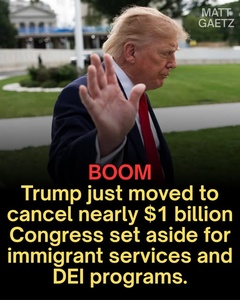
President Donald Trump has moved to cancel approximately $810 million in federal funding previously approved by Congress, targeting programs involving immigrant services, education, minority initiatives and other areas.
The administration used a rarely employed budget mechanism known as a “pocket rescission,” submitting the cancellations shortly before the federal fiscal year ended.
The White House described the move as an effort to eliminate what it considers wasteful or harmful government spending that does not sufficiently benefit American citizens.
The largest portion, approximately $567 million, involved Health and Human Services programs providing services to refugees, asylum seekers and unaccompanied migrant children.
The administration argued that declining illegal border crossings reduced the need for those services and said taxpayers should no longer finance programs connected to unauthorized immigration.
Another $25 million targeted an Education Department program serving migrant students, while additional funding was directed toward programs involving racial relations and minority communities.
The cancellations also included approximately $15 million for the Justice Department’s Community Relations Service, which works on racial and ethnic tensions and related community disputes.
A separate $56 million from the Department of Housing and Urban Development involved housing counseling programs that the administration criticized as supporting diversity-focused organizations.
Other reductions affected minority-business development, international environmental programs and grants that the administration characterized as ideological or inconsistent with its priorities.
The White House said the rescissions were authorized under the Congressional Budget and Impoundment Control Act of 1974.
The timing was central to the administration’s strategy. By submitting the rescission request near the end of the fiscal year, officials sought to prevent the funds from being spent before Congress could respond.
Normally, Congress has a period to consider proposed rescissions, creating a potential obstacle when the fiscal year is already approaching its deadline.
Critics argue the strategy effectively allows the executive branch to prevent Congress from exercising its constitutional authority over federal spending.
Senator Susan Collins, the Republican chair of the Senate Appropriations Committee, criticized the administration’s action and said Congress had not been adequately consulted.
Democratic lawmakers also challenged the move, arguing that Congress had approved the funding through the normal legislative process and that the president should not be able to cancel it unilaterally.
On September 30, Senate Democrats attempted to block the rescission, but their effort failed after Republican Senator Ron Johnson objected to moving the measure forward.
Seven states, led by California, subsequently sued the Trump administration, arguing that withholding the approximately $810 million violated constitutional limits on executive spending authority.
The lawsuit adds a new legal dimension to the dispute, with courts potentially being asked to determine how far presidential authority extends when Congress has already appropriated money.
The administration has defended the action by arguing that the programs targeted by the rescissions are unnecessary, wasteful or inconsistent with current federal priorities.
The dispute therefore extends beyond the individual programs, raising a broader question about whether presidents can use last-minute rescission requests to prevent congressionally approved funds from being spent.
Trump previously used a similar “pocket rescission” strategy involving billions of dollars in foreign assistance, although the legal circumstances surrounding the latest domestic spending dispute are different.
As the fiscal year closes, the $810 million fight has become another confrontation between the White House and Congress over who ultimately controls federal spending.
The outcome of the resulting legal challenges could have implications for executive authority, congressional appropriations power and how future administrations handle funding approved by lawmakers.


Comments (0)
Loading comments...
May You Like

Russian Drone Strikes Kyiv Bridge as German Chancellor Arrives in Ukraine
OBAMA STEPS BACK INTO THE POLITICAL SPOTLIGHT














