
Trump Celebrates Major Greenland Deal — But Denmark Says Sovereignty Is Not Changing
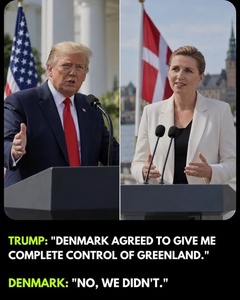
Washington is poised to gain a stronger and potentially permanent security role in Greenland, while Denmark and Greenland insist the Arctic territory remains under existing sovereignty arrangements.
WASHINGTON/COPENHAGEN — President Donald Trump is celebrating a new Greenland security agreement that would dramatically strengthen America’s military position in the Arctic without transferring sovereignty over the territory to Washington.
The agreement was negotiated among the United States, Denmark and Greenland following months of extraordinary tension surrounding Trump’s repeated demands for greater American control over the strategically important Arctic island.
Danish Prime Minister Mette Frederiksen confirmed September 18 that the three governments expect to sign an agreement strengthening security across Greenland, the Arctic and the wider North Atlantic region.
The signing is expected around the United Nations General Assembly, after which the agreement must proceed through necessary parliamentary procedures before entering into force.
Trump has portrayed the arrangement in expansive terms, emphasizing that the United States will obtain a lasting security role in Greenland and substantially greater ability to protect the territory.
That description has fueled viral claims that Denmark effectively surrendered Greenland to Trump or granted Washington “complete control” over the island.
The available agreement, however, does not support that interpretation. Frederiksen explicitly said the arrangement recognizes the sovereignty and territorial integrity of the Kingdom of Denmark.
Her government also emphasized another principle that has remained central throughout the dispute: Greenlanders retain their recognized right to determine their own political future.
Greenland’s Prime Minister Jens-Frederik Nielsen welcomed the emerging agreement, saying it would strengthen security for Greenland, Denmark, the United States and the broader Western alliance.
Nielsen also stressed that the agreement recognizes Greenland’s interests and its position within international cooperation, presenting the outcome as mutually beneficial rather than an American takeover.
The agreement instead focuses heavily on security and military access, areas in which Washington has maintained a significant role in Greenland for decades.
The United States already operates Pituffik Space Base in northwestern Greenland, an important installation supporting missile warning, missile defense, space surveillance and broader North American security operations.
American military access also predates the Trump administration. Denmark and the United States signed their foundational Greenland defense agreement in 1951, during the early years of the Cold War.
The new framework would build upon that history while responding to growing strategic competition in an Arctic region becoming increasingly important for military operations, shipping and access to natural resources.
One major objective is preventing strategic adversaries outside NATO — particularly Russia and China — from developing a military foothold or comparable strategic presence in Greenland.
That provision addresses one of Trump’s longstanding arguments: the United States cannot permit rival powers to gain influence over territory occupying such an important position between North America and Europe.
Greenland sits along strategically important Arctic approaches to the United States, while its geography gives the territory considerable importance for missile detection and other defense systems.
Trump had previously argued that conventional cooperation was insufficient, repeatedly suggesting the United States needed Greenland itself for national-security purposes and refusing at times to rule out stronger measures.
Those statements triggered a major diplomatic confrontation. In January, Frederiksen responded that the United States had no right to annex any portion of the Danish Realm.
She said Denmark was prepared to negotiate extensively over security, investment and economic cooperation but declared that sovereignty itself was not something Copenhagen would negotiate away.
European leaders backed that position. Britain, France, Germany, Italy, Poland and Spain joined Denmark in declaring that Greenland’s future belongs to Greenlanders and Denmark, not an outside government.
That makes the emerging agreement a significant compromise: Trump obtains stronger American security guarantees and military opportunities without achieving the territorial acquisition his earlier rhetoric appeared to contemplate.
Denmark and Greenland, meanwhile, preserve their central demand that expanded American cooperation cannot alter sovereignty or override Greenlanders’ right to determine their future political status.
The agreement also potentially eases an unusually serious dispute inside NATO, where Trump’s earlier statements about acquiring territory belonging to a fellow alliance member generated concern across Europe.
Frederiksen has consistently argued that stronger American involvement in Arctic defense is welcome when conducted through NATO and with respect for Denmark and Greenland’s territorial integrity.
Greenland itself is simultaneously strengthening relationships elsewhere. Earlier this month, Nielsen, Frederiksen and European Commission President Ursula von der Leyen signed an expanded EU-Greenland cooperation declaration in Nuuk.
That framework expands cooperation involving infrastructure, connectivity, maritime affairs and civil preparedness while strengthening European investment and political engagement with Greenland.
Von der Leyen used her Greenland visit to reiterate Europe’s position that the island’s political future must be determined by Greenland and Denmark rather than another government.
The combination of these agreements suggests Greenland is becoming more strategically integrated with Western allies rather than simply shifting from Danish to American control.
The legal structure is also important. Greenland possesses extensive self-government, while defense and certain foreign-policy matters remain governed within the constitutional framework of the Kingdom of Denmark.
Greenland’s Self-Government Act also establishes a path toward independence if Greenlanders choose it, involving negotiations, approval by Greenland’s parliament, a Greenlandic referendum and Danish parliamentary consent.
Nothing announced in the new U.S. security agreement eliminates that framework or substitutes American sovereignty for Danish sovereignty.
The deal is not completely finished either. The governments expect to sign it around the U.N. General Assembly, and domestic parliamentary procedures must follow before it takes legal effect.
For Trump, the agreement nevertheless represents a substantial strategic gain: the United States can expand its long-term Arctic security position without the diplomatic confrontation associated with attempting to acquire Greenland outright.
For Denmark and Greenland, the agreement offers additional security while preserving the principles they repeatedly identified as non-negotiable — territorial integrity, sovereignty and Greenlandic self-determination.
The viral graphic therefore presents the disagreement too simply. Trump did obtain an important Greenland security arrangement, but Denmark did not announce that it had handed him “complete control” of Greenland.
Comments (0)
Loading comments...
May You Like

gfnhgmnghnmfgnbvvvvvvvvv

Shocking news from Ohio: an unexpected development ahead of Trump's rally













