
Trump Claims Solar Panels “Kill All the Animals” — What Does the Evidence Say?
Trump Claims Solar Panels “Kill All the Animals” — What Does the Evidence Say?
The president’s sweeping statement raises a real question about wildlife and energy infrastructure, but available evidence does not support the claim that ordinary solar panels routinely fry animals that jump onto them.
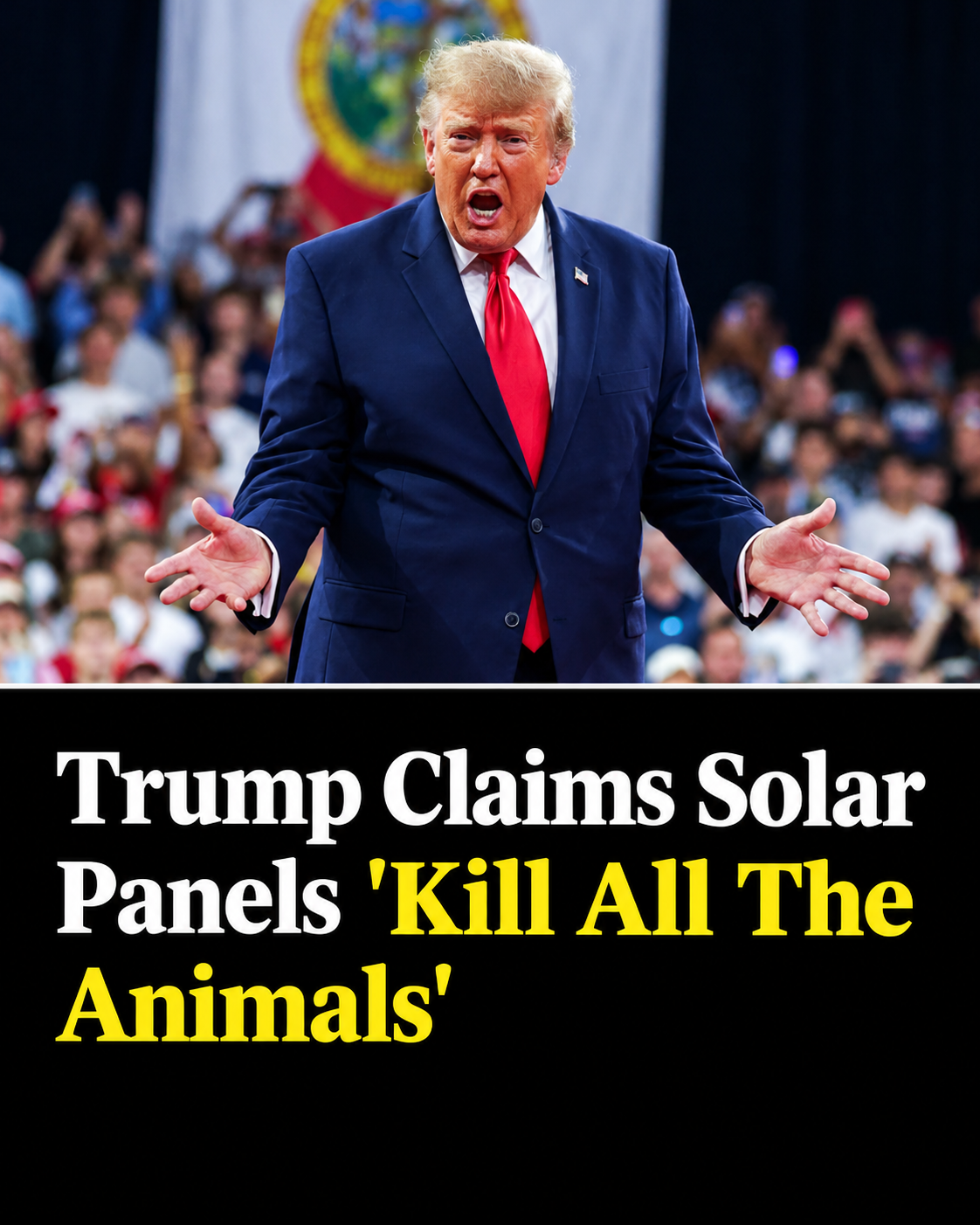
President Donald Trump made a sweeping claim about solar energy at a campaign rally in Lubbock, Texas, on October 27, 2026. He said large solar installations “kill all the animals,” arguing that animals jump onto black panels and are burned by their heat. The remark formed part of a broader attack on renewable energy.
The statement mixes a genuine environmental issue with a claim that is not supported as a general description of ordinary solar panels. Utility-scale solar projects can affect habitats, especially when land is cleared or fenced. That does not show that animals routinely leap onto photovoltaic panels and are fried.
A transcript of the rally records Trump describing large solar installations as “monsters” and saying animals jump onto the panels and fry because the panels are hotter than a stove. The remarks were delivered while he was criticizing wind power and promoting fossil fuels.
That vivid description is political rhetoric, not a scientific account of how most solar farms work. Conventional photovoltaic panels convert sunlight into electricity; they do not concentrate sunlight into a single intense beam. Panels can become hot in direct sun, but that alone does not prove that wildlife is routinely killed by touching them.
Different technologies are grouped under the term solar power. Most utility-scale projects use photovoltaic panels, which generate electricity directly from light. Concentrated solar power facilities instead use mirrors to focus sunlight on a receiver. That distinction matters when evaluating claims about extreme heat and wildlife.

The U.S. Energy Information Administration says solar power plants can affect the environment through land use, water use, and local ecosystem changes. Clearing vegetation may reduce or fragment habitat. Those are real planning concerns, but they are different from the claim that all animals are killed by landing on panels.
Fact-checking has previously challenged broad claims that solar farms inevitably harm wildlife. In 2024, E&E News reported that large solar projects can be compatible with wild and domesticated rabbits and found no evidence supporting the claim that rabbits are seriously harmed simply because they live near solar arrays. Effects depend on location, design, and management.
Solar projects are not automatically harmless. Roads, fences, vegetation removal, and habitat fragmentation can affect animal movement, feeding, and breeding. Projects placed in sensitive habitats may cause meaningful ecological damage. The responsible approach is to evaluate each site rather than assume every solar farm has identical effects.
Concentrated solar power presents a different set of risks. The Energy Information Administration notes that the intense beam of concentrated sunlight from solar power towers can harm birds and insects that fly into it. This is a technology-specific concern and should not be confused with standard photovoltaic panels.
Bird interactions with solar facilities are also being studied. Some birds may collide with infrastructure or mistake reflective surfaces for water, while changes in habitat may benefit some species and harm others. Researchers assess these risks through monitoring and mitigation, rather than assuming all facilities have the same outcomes.

Trump’s comments fit a wider pattern of criticism of renewable energy. He has repeatedly argued that wind turbines kill birds and questioned the costs and reliability of clean-energy projects. Such claims often become part of political arguments about climate policy, energy prices, and the future mix of American electricity.
An earlier controversy illustrates why evidence needs to be checked carefully. In December 2025, Trump shared an image suggesting a bald eagle had been killed by a wind turbine. AFP fact-checkers reported that the photograph was taken in Israel in 2017 and showed what experts said was likely a Eurasian kestrel, not an American bald eagle.
Individual wildlife deaths can be real and important, but a photograph or anecdote may be misidentified or taken out of context. Reliable assessments compare verified incidents with population data, other causes of mortality, and the amount of electricity produced. The same standard should apply to claims about solar installations.
The political debate is not only about wildlife. Solar energy raises questions about land use, electricity prices, climate policy, and grid reliability. Supporters say solar can diversify electricity supplies and reduce emissions during operation. Critics point to the footprint of large projects, intermittency, transmission needs, and integration costs.
Both sides can overstate their case. Renewable-energy projects have environmental trade-offs, and fossil-fuel infrastructure has them too. Coal mining, oil and gas extraction, pipelines, roads, and power plants can alter habitat and contribute to pollution. A fair comparison considers the life cycle of each energy source rather than one dramatic example.

The claim that panels are “hotter than your stove” needs context. Surface temperatures vary with panel design, sunlight, ambient temperature, wind, and installation. Even if a panel becomes hot, that fact alone cannot establish that animals regularly jump onto it or are fatally burned. Such a claim requires direct, systematic evidence.
For communities considering a solar project, practical questions are more useful: Where will it be built? Does the site contain sensitive habitat or migration routes? Can developers preserve vegetation, maintain wildlife corridors, and monitor effects after construction? These choices can significantly influence a project’s environmental footprint.
Regulators and developers can reduce some risks through careful site selection, habitat buffers, wildlife-conscious fencing, environmental review, and ongoing monitoring. In some settings, solar development can coexist with grazing or pollinator-friendly vegetation. These measures cannot eliminate every impact, but they offer a practical response to specific risks.
The phrase “all the animals” implies a universal effect, while evidence on wildlife impacts is varied and technology-specific. Environmental guidance recognizes genuine land-use and wildlife concerns, but it does not support the broad assertion that ordinary solar panels routinely fry animals that jump onto them.
Trump’s remarks are best understood as part of a political argument against large-scale renewable energy, not as a precise explanation of solar technology. Solar projects can affect habitats, and some designs pose specific risks. The evidence-based debate is about which projects create which risks, how those risks compare with other energy sources, and what safeguards can protect wildlife.
Comments (0)
Loading comments...
May You Like

EAST COAST CATASTROPHE — $20 BILLION AT STAKE, 5 MILLION AT RISK OF LOSING POWER, WATER AND HEAT!

WWE BRONSON REED—STAR COLLAPSES AT COMPANY EVENT, FATAL DRUG REACTION SUSPECTED!

WEYMOUTH HORROR—80-MPH WIND GUSTS, FIRE TRUCK FLIPS, 3 FIREFIGHTERS CRITICAL!









Popular Posts



