Trump Cut Kamala Harris’ Secret Service Protection — Then Police Moved In. Here’s What Really Happened
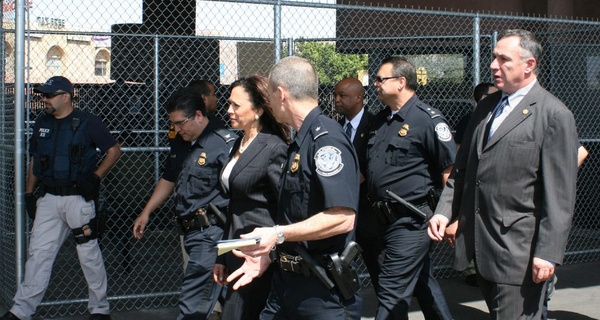
A viral graphic claiming “Police Move In After Trump Makes Move Against Kamala Harris” is built around a real and consequential episode from September 2025.
But the image dramatically compresses what happened.
President Donald Trump did revoke former Vice President Kamala Harris’ extended Secret Service protection. California authorities then arranged temporary protection involving the California Highway Patrol and the Los Angeles Police Department.
The key detail the graphic leaves out is that the police were not moving in to arrest Harris or investigate her. They were moving in to protect her after her federal security detail was terminated.
And the story did not end there.
Trump Revoked Harris’ Extended Secret Service Protection
On August 28, 2025, Trump signed a memorandum directing the Department of Homeland Security to discontinue security procedures for Harris beyond those required by law, effective September 1.
The decision ended an extension that President Joe Biden had authorized before leaving office. Former vice presidents generally receive Secret Service protection for six months after leaving office, while Biden had extended Harris' protection beyond that period.
Reuters reported that Trump's decision ended Harris' protection effective September 1. The move came shortly before Harris was scheduled to begin a national book tour for her memoir, 107 Days, about her 2024 presidential campaign.
Trump's administration emphasized that six months is the normal statutory period for former vice presidents.
That point is important.
Trump did not eliminate a protection that federal law permanently guarantees former vice presidents. He canceled an extension beyond the normal period.
Then California Police Stepped In
Within days, California authorities arranged alternative protection.
The Los Angeles Police Department confirmed that it would assist the California Highway Patrol in providing temporary protective services for Harris.
The arrangement became public on September 3-4, 2025.
According to the Los Angeles Times, a dozen or more LAPD officers were assigned to protect Harris, with officers from the department's Metropolitan Division assisting the CHP. The LAPD described the arrangement as temporary and intended to prevent a lapse in protection.
So the viral graphic has a kernel of truth:
Police really did move in around Harris.
But the purpose was the opposite of what the dramatic wording might lead readers to believe.
They were there as security, not law enforcement acting against her.
Why Were LAPD Officers Used?
This became controversial almost immediately.
The officers assigned to Harris came from the LAPD Metropolitan Division, and the Los Angeles Times reported that some had been scheduled for crime-suppression work in the San Fernando Valley before being reassigned to the protective detail.
That created a political and resource-allocation dispute inside Los Angeles.
The Los Angeles Police Protective League, the union representing rank-and-file officers, criticized the decision, arguing that officers should not be diverted from protecting residents to provide security for a wealthy former politician who could potentially arrange private protection.
That criticism gave opponents of Harris a new talking point:
Trump removed federal protection, and California taxpayers were potentially being asked to pick up the bill.
But supporters of the arrangement argued that Harris remained a prominent public figure who had faced threats and that the government had a legitimate interest in ensuring her safety.
The Graphic Makes It Sound Like an Attack on Harris
The wording — “Trump Makes Move Against Kamala Harris” — is intentionally ambiguous.
It can make viewers think Trump ordered police action against Harris.
That is not what happened.
Trump's action was administrative and security-related: he terminated her extended Secret Service protection.
California's response was also security-related: state and local authorities arranged alternative protection.
There was no arrest, criminal raid or police investigation of Harris associated with this episode.
The visual itself also does not establish that the officers shown were responding to some new Trump order.
The Story Took Another Turn
The temporary LAPD arrangement did not last.
On September 6, the Los Angeles Police Department discontinued its protection of Harris after criticism that officers were being diverted from crime-suppression duties. The Los Angeles Times reported that the Metropolitan Division officers had been assisting the CHP but were removed from the assignment.
Los Angeles Mayor Karen Bass said the arrangement had always been intended to be temporary and thanked the department for protecting Harris.
That development is crucial because many versions of the viral story stop at the most dramatic moment — “police move in” — without telling readers that the police detail was subsequently withdrawn.
Harris Had Not Lost All Protection
Another important distinction is that Trump's decision did not necessarily mean Harris was left completely without security.
California's security arrangements involved the CHP, and the state had been working on a replacement for the federal Secret Service detail. The LAPD's role was described as temporary assistance.
California has its own mechanisms for protecting prominent public officials.
The controversy was therefore not simply:
Trump removed Harris' protection and left her defenseless.
It was more accurately:
Trump ended her extended federal protection, after which California authorities scrambled to establish another protective arrangement.
That is a substantially different story.
Why Trump's Decision Was So Politically Charged
The decision attracted immediate criticism because Harris was Trump's Democratic opponent in the 2024 presidential election.
Los Angeles Mayor Karen Bass called the move an act of political retaliation and said it could place Harris in danger. California Gov. Gavin Newsom's office similarly criticized the decision's timing and characterized public officials' safety as something that should not be affected by political impulses.
Trump's side had a simpler argument: former vice presidents normally receive six months of Secret Service protection, and Harris had already received that period.
Both facts can be true simultaneously.
The controversy was largely about why Biden extended the protection, why Trump canceled the extension, and whether the decision was appropriate given the threat environment surrounding prominent political figures.
The Threat Question Matters
The timing was particularly sensitive because American political violence had become a major security concern.
Harris had received heightened protection during the 2024 campaign, and the Secret Service's broader protective mission had expanded amid threats against major political figures.
A September 2026 Government Accountability Office report examining Secret Service protection policies noted that, following the July 2024 assassination attempt against Trump, the security posture of several major protectees was elevated. The report specifically noted that protection for then-Vice President Harris had been elevated to the level of a sitting president.
That context makes the argument over whether Harris needed continued protection more complicated than simply saying she was or was not legally entitled to it.
What the Viral Graphic Gets Right
The image is not completely fabricated.
It is built around a real chain of events:
- Trump revoked Harris' extended Secret Service protection.
- The change took effect September 1, 2025.
- California authorities arranged alternative protection.
- LAPD officers temporarily joined the protective effort.
- The deployment became controversial.
- LAPD subsequently withdrew from the detail.
So there really was a dramatic political confrontation over Harris' security.
What the Graphic Leaves Out
The missing context is even more important:
Police were not moving against Harris. They were protecting her.
The image also fails to explain:
- that Biden had extended Harris' protection beyond the normal six-month period;
- that Trump canceled the extension rather than eliminating a lifetime entitlement;
- that California authorities arranged replacement protection;
- that LAPD's involvement was temporary;
- that police unions objected to diverting officers from crime suppression;
- and that LAPD eventually ended its role.
Without those facts, the graphic encourages viewers to interpret a protective operation as an enforcement operation.
That is misleading.
The Bigger Political Fight
The episode ultimately became another example of the increasingly bitter fight over how political opponents are treated after leaving office.
Trump has argued that many former officials were receiving security arrangements beyond what the law normally requires. Critics, meanwhile, have argued that political considerations should not determine protection decisions when prominent public figures face credible threats.
Harris' case also illustrates a larger problem for former high-ranking officials.
Who pays for their security after federal protection ends?
Should taxpayers cover it?
Should states assume responsibility?
Should former officials pay for private protection themselves?
Or should federal authorities be able to extend protection whenever threat assessments warrant it?
Those questions extend far beyond Harris.
The Bottom Line
The viral headline “Police Move In After Trump Makes Move Against Kamala Harris” is based on a real event, but its presentation is highly sensationalized.
Trump did revoke Harris' extended Secret Service protection in 2025.
California authorities did respond by arranging replacement protection.
LAPD officers did temporarily participate in that protective operation.
But they did not move in to arrest Harris, raid her home or prosecute her.
And within days, LAPD withdrew from the assignment after criticism over the use of police resources.
The most accurate description is therefore:
Trump ended Kamala Harris' extended federal protection. California police temporarily stepped in to protect her — and the arrangement quickly became a political and policing controversy.
That's a very different story from the one implied by the viral graphic.
Comments (0)
Loading comments...
May You Like
Russian Drone Strikes Kyiv Bridge as German Chancellor Arrives in Ukraine
South Korea–Ukraine Rift Deepens Over North Korean POW Transfer as PURL Draws New Scrutiny
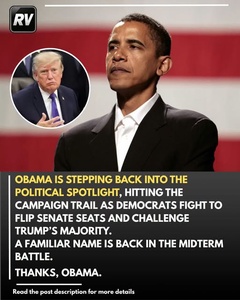
OBAMA STEPS BACK INTO THE POLITICAL SPOTLIGHT