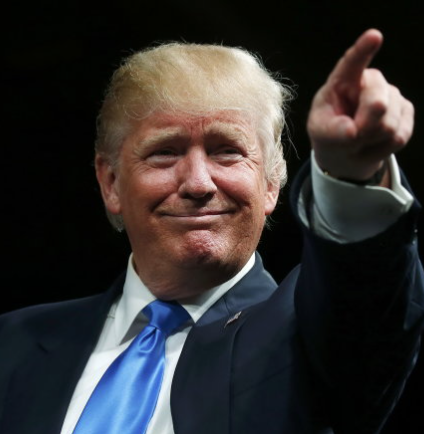
Trump Demands 1% Interest Rates After Fed Hikes, Deepening Clash Over U.S. Monetary Policy
President Donald Trump says U.S. interest rates should fall to 1 percent or lower, challenging the Federal Reserve just hours after policymakers unanimously raised borrowing costs to fight persistent inflation.
President Donald Trump intensified his pressure on the Federal Reserve Wednesday, saying U.S. interest rates should be cut to 1 percent or lower only hours after policymakers raised rates.
Trump posted that rates should come down quickly, arguing that the United States has exceptional credit strength and would benefit from substantially cheaper borrowing for households, businesses, and government.
His demand came after the Federal Open Market Committee unanimously raised its benchmark target range by a quarter percentage point, moving it from 3.50–3.75 percent to 3.75–4.00 percent.
The September decision marked the Federal Reserve’s first rate increase since 2023 and represented a clear divergence from Trump’s repeated public calls for the central bank to reduce borrowing costs.
Fed Chair Kevin Warsh said policymakers acted because inflation remains elevated and because the central bank wants price pressures to return more quickly toward its long-run 2 percent objective.
The Fed’s statement said economic activity continues to expand at a solid pace, domestic spending remains resilient, productivity growth is strong, and job gains have kept pace with workforce growth.
Trump’s proposed 1 percent rate would therefore represent a dramatic shift from current policy, lowering the federal funds target by roughly three percentage points from the range adopted Wednesday.
The president argues that lower rates would stimulate investment and reduce financing costs, but the Federal Reserve does not set policy according to presidential preferences or short-term political objectives.
Congress gave the Fed operational independence while assigning it a dual mandate of maximum employment and stable prices, leaving the FOMC responsible for deciding the appropriate stance of monetary policy.
Changes in the federal funds rate influence other short-term interest rates and broader financial conditions, affecting how households and businesses make decisions about borrowing, spending, hiring, and investment.
A rapid reduction toward 1 percent could make credit cheaper, but it would also represent much easier monetary policy at a time when Fed officials say inflation remains above their target.
The Fed’s latest projections show policymakers expect overall PCE inflation of 3.7 percent in 2026, with inflation gradually moving closer to 2 percent over the following several years.
Those same projections place the median federal funds rate at 4.1 percent for the end of 2026, far above Trump’s preferred level and consistent with the possibility of additional tightening.
The contrast highlights a fundamental policy disagreement: Trump emphasizes growth and lower financing costs, while Fed officials are currently prioritizing stronger action against inflation and maintaining confidence in price stability.
Warsh’s position is especially notable because Trump selected him to lead the central bank, yet Wednesday’s rate increase received support from every voting member of the Federal Open Market Committee.
The unanimous vote gave the decision institutional weight and showed that the current policy stance extends beyond Warsh personally, despite the intense political attention surrounding his relationship with the White House.
Financial markets reacted quickly to the decision, with major stock indexes falling and Treasury yields moving as investors reconsidered how long borrowing costs could remain elevated during the current inflation fight.
For consumers, the Fed does not directly set mortgage, auto-loan, or credit-card rates, but changes in monetary policy can influence those borrowing costs through wider financial-market conditions.
Trump’s 1 percent demand does not itself change monetary policy; any reduction would require the FOMC to decide that economic conditions justify substantially easier financial conditions under its congressional mandate.
For now, the gap remains wide: Trump wants rates at 1 percent or below, while the Federal Reserve has just raised its target range to 3.75–4.00 percent to confront inflation.


Comments (0)
Loading comments...
May You Like

South Korea–Ukraine Rift Deepens Over North Korean POW Transfer as PURL Draws New Scrutiny
FIGHT OVER OBAMA’S IRAN POLICY
Jack Smith Defends His Integrity as Trump Investigations Face Renewed Political Firestorm