Trump Demands Europe Pay Back U.S. Aid
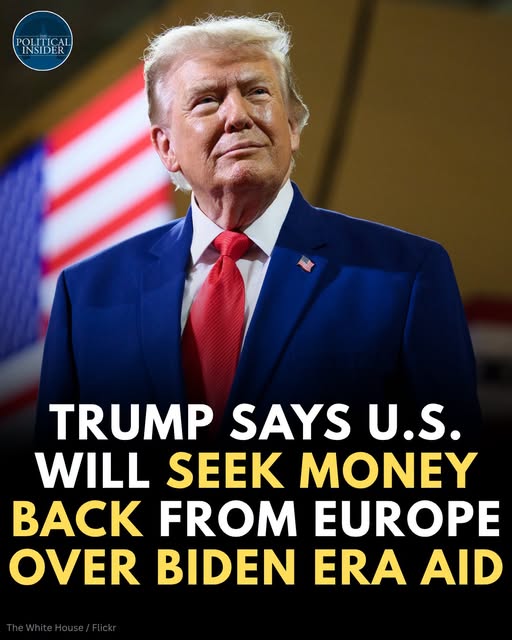
WASHINGTON — President Donald Trump is demanding that European countries reimburse the United States for military aid and ammunition that Washington provided to Ukraine during the Biden administration, opening a new and potentially explosive dispute with America's European allies over who should bear the financial burden of supporting Kyiv.
In a Sept. 3 post on Truth Social, Trump said the United States had supplied “hundreds of billions of dollars” in assistance to Ukraine and NATO without receiving payment and argued that European nations should now repay Washington. Reuters reported that Trump specifically linked the demand to U.S. military aid and munitions provided during the war with Russia.
The proposal represents another sharp shift in Washington's approach to Ukraine and raises difficult questions about whether European governments would accept responsibility for reimbursing the United States for assistance that was authorized by Congress and delivered as part of the Western response to Russia's invasion.
Trump Says Europe Should “Pay Back” America
Trump's argument is straightforward: the United States supplied enormous quantities of weapons and ammunition while European allies benefited from American military support, and Washington should no longer be expected to shoulder the costs alone.
He has repeatedly argued that European countries should contribute more to their own defense and to the broader effort to support Ukraine.
This time, however, Trump went further by calling for reimbursement for assistance already provided.
According to Reuters, Trump said the United States would seek repayment from European nations for previous military aid and munitions sent to Ukraine. He also suggested that Washington should prioritize rebuilding its own weapons stockpiles before continuing large-scale sales or transfers abroad.
The announcement comes as the administration faces concerns over U.S. weapons inventories following America's separate military conflict with Iran.
The “Hundreds of Billions” Claim Needs Context
Trump's description of the amount of money involved is politically powerful, but the accounting behind U.S. support for Ukraine is considerably more complicated.
Congress has authorized roughly $195 billion in spending related to the Ukraine war, according to the Council on Foreign Relations. That figure does not mean $195 billion was simply handed over to Kyiv in cash.
A significant portion of U.S. appropriations has funded weapons, replenishment of American military stocks, military operations, economic assistance and other costs associated with the war. As of March 31, 2026, about 59% of that spending had been disbursed.
That distinction is important when evaluating Trump's demand.
Much of the money appropriated for Ukraine ultimately supports American defense production, including purchases from U.S. weapons manufacturers and the replacement of equipment transferred from Pentagon stocks.
In other words, the financial relationship is not simply a case of Washington writing a check to Kyiv.
Europe Has Already Spent Enormous Sums on Ukraine
European governments are also likely to point to their own contributions.
The European Union says the EU and its member states have made more than $226 billion available to Ukraine since the beginning of Russia's full-scale invasion, covering financial, military, humanitarian and refugee assistance.
The EU says roughly 65% of that support has been provided through grants or in-kind assistance, while about 35% has come through highly concessional loans. It also says European countries have provided more than $86 billion in military assistance.
That means the argument over who has “paid” for Ukraine is more complicated than Trump's political framing suggests.
Europe has not simply relied on Washington.
European governments have spent heavily on weapons, humanitarian assistance, Ukrainian refugees and financial support for Kyiv while simultaneously attempting to strengthen their own military capabilities.
Washington and Europe Have Already Been Moving Toward a Different Model
There is, however, an important change underway.
Under the Trump administration, European countries have increasingly been encouraged to purchase American weapons for Ukraine rather than relying entirely on direct U.S. transfers.
The Washington Post reported in 2025 that European governments including Germany and Norway were preparing to spend billions of dollars on U.S.-made weapons for Ukraine under arrangements developed with the Trump administration.
That model effectively shifts more of the financial burden toward European governments while keeping American defense companies involved in supplying Ukraine.
Trump's latest demand could therefore be seen as an escalation of an existing policy direction: Europe should pay more, while the United States reduces the amount of assistance it provides at its own expense.
The Timing Is Especially Significant
Trump's announcement comes at a sensitive moment for American military readiness.
The United States is simultaneously dealing with the war in Iran, where the administration has faced questions about ammunition and missile inventories.
Trump has rejected reports that America's stockpiles are dangerously depleted, saying the United States is increasing production and rebuilding its supplies. At the same time, he has indicated that sales of weapons to allies would resume after the United States addresses its own inventory requirements.
That makes Ukraine policy part of a much larger debate over America's defense-industrial capacity.
Washington must now balance support for Ukraine, military operations in the Middle East and the need to maintain sufficient weapons for America's own armed forces.
Europe Could Face a New Financial Burden
If Trump's demand becomes an actual negotiating position rather than a political declaration, European governments would face a difficult question: Should they reimburse the United States for weapons already supplied to Ukraine?
There is no indication in the reporting that European governments have agreed to such a repayment arrangement.
European officials can point to the enormous sums they have already spent supporting Ukraine, while Washington can argue that American weapons, intelligence and military capabilities have played a disproportionate role in sustaining Ukraine's defense.
The disagreement therefore goes beyond money.
It touches the fundamental question of what NATO allies owe one another during a major European war.
A New Test for the U.S.-Europe Alliance
For decades, America's relationship with Europe has rested partly on the assumption that Washington would provide the military backbone of the transatlantic alliance while European allies contributed financially and militarily according to their capabilities.
Trump has repeatedly challenged that arrangement.
His latest demand pushes that challenge into new territory by suggesting that the United States should seek compensation for assistance that has already been delivered.
The European Union, meanwhile, insists that it remains Ukraine's largest overall supporter and says European governments have substantially increased their financial and military commitments.
The disagreement could become especially consequential if Washington begins conditioning future weapons sales or other forms of support on European reimbursement.
What Happens Next?
For now, Trump's announcement is best understood as a demand rather than an established repayment agreement.
No European-wide mechanism requiring governments to reimburse Washington for Biden-era military aid has been announced, and the complex accounting behind U.S. Ukraine spending makes it unclear how such a proposal could be implemented.
But politically, Trump's message is unmistakable.
The era in which Washington automatically absorbed the largest share of the cost of supporting Ukraine is being challenged.
Trump wants Europe to assume more of the financial responsibility — and he is now suggesting that responsibility should extend backward to assistance already provided.
For Ukraine, the development raises another uncomfortable question about the durability of Western support.
For Europe, it presents a potentially enormous new bill.
And for the United States, it marks another step toward Trump's broader vision of an alliance system in which American military power comes with a price tag — and America's allies are expected to pay it.
Comments (0)
Loading comments...
May You Like
gfnhgmnghnmfgnbvvvvvvvvv
OBAMA STUNS ON INSTAGRAM: MESSAGE MARKING 34-YEAR MILESTONE SPARKS A BUZZ
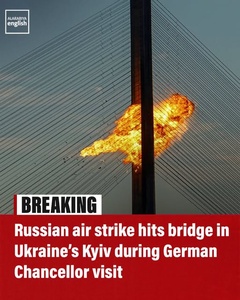
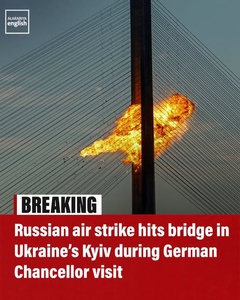
Russian Drone Strikes Kyiv Bridge as German Chancellor Arrives in Ukraine