Trump Denies Reported Weapons Offer to Xi as Ambassador’s Account Sparks Controversy
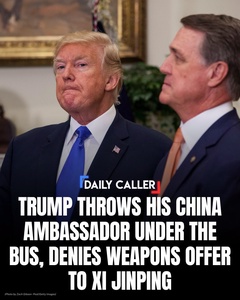
President Donald Trump has denied asking Chinese President Xi Jinping whether Beijing wanted to buy American weapons, contradicting U.S. Ambassador David Perdue’s account of their recent Washington discussions.
Perdue made the claim during a Fox News Sunday interview, saying Trump referenced American arms sales to other countries before asking Xi whether China wanted to purchase U.S. weapons.
The ambassador did not specify exactly when the exchange occurred, but his comments came shortly after Xi’s three-day state visit to Washington for meetings with Trump.
Trump was asked about Perdue’s remarks in the Oval Office and appeared surprised, asking whether the ambassador meant Taiwan rather than China before rejecting the account.
“I’ve never heard of that one,” Trump said, according to AFP, adding that China might want American equipment but insisting that the two leaders did not discuss such a sale.
The State Department also moved quickly to distance the administration from the reported exchange, saying U.S. law prohibits arms sales to China and that no offer or plan exists.
The dispute has drawn attention because Washington and Beijing remain strategic competitors, while American weapons sales to Taiwan have long been one of the most sensitive issues between them.
China considers Taiwan part of its territory and has repeatedly demanded that Washington stop supplying weapons to the island, while the United States continues providing defensive equipment.
Perdue himself argued that Trump remains strongly committed to Taiwan, pointing to American weapons sales and saying the president and Xi continue discussing future Taiwanese arms purchases.
His comments followed questions about delays affecting Taiwan’s weapons orders, amid wider concerns in Washington about whether trade negotiations with Beijing could influence U.S. security decisions.
Trump has previously described Taiwan arms sales as a negotiating tool in discussions with China, including after Washington paused a major package valued at roughly $14 billion.
That earlier pause intensified scrutiny of the administration’s approach to Taiwan, particularly because Beijing has consistently sought an end to American military support for Taipei.
During Xi’s latest Washington visit, Taiwan again featured prominently in the broader diplomatic agenda, with Chinese officials urging Washington to oppose Taiwanese independence and exercise caution.
Chinese officials did not directly confirm Perdue’s account of the weapons conversation, while Beijing reiterated that China determines its defense needs independently and remains committed to maintaining stability.
The reported exchange also highlights the unusually transactional language surrounding the broader U.S.-China relationship, where tariffs, market access, technology and military issues increasingly overlap.
At the same time, the two governments announced several areas of cooperation during the summit, including trade measures and new mechanisms for discussing advanced artificial intelligence.
Those agreements suggest that Washington and Beijing are attempting to stabilize relations even as major disagreements remain over Taiwan, technology restrictions, critical minerals and strategic security.
The weapons controversy therefore stands apart from the summit’s negotiated economic measures, because officials on both sides have emphasized that no U.S. arms sale to China is currently planned.
Trump’s denial leaves Perdue’s account unresolved in public, while the State Department’s statement provides the administration’s clearest formal position: existing law prevents such sales and no plan has been offered.
The episode is likely to keep attention focused on how Trump’s administration manages competing economic and security interests with Beijing, particularly as the two leaders prepare for further meetings.
Comments (0)
Loading comments...
May You Like
gfnhgmnghnmfgnbvvvvvvvvv
FIGHT OVER OBAMA’S IRAN POLICY
OBAMA STEPS BACK INTO THE POLITICAL SPOTLIGHT