Trump Dismisses Six-Month Iran Conflict as 'Small Potatoes,' Says It's 'Not a War'
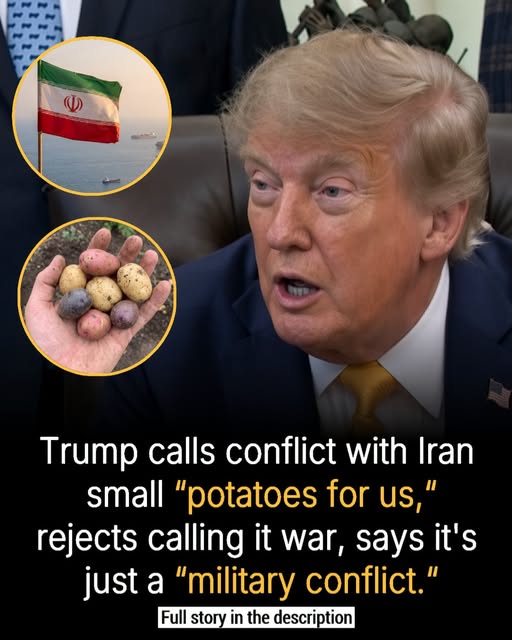
President Donald Trump downplayed the ongoing military confrontation with Iran on Friday, calling it "small potatoes" and defending Vice President JD Vance's controversial assertion that the conflict does not constitute a war — even as 18 U.S. service members have been killed and the war has cost American taxpayers more than $37.5 billion.
WASHINGTON – As the U.S.-Israel military campaign against Iran enters its seventh month with no end in sight, President Donald Trump has adopted a new strategy: minimizing it .
Speaking to reporters in the Oval Office on Friday, Trump backed Vice President JD Vance's claim that the ongoing conflict is not a "war." "A lot of people don't call it a war. I call it a military conflict because it's small potatoes for us. It's not a big thing," Trump said .
When pressed on the characterization — given that 18 American service members have lost their lives — Trump doubled down, comparing the toll to past U.S. wars. "In Venezuela, we lost nobody. And this, we lost 18 people. And, in Vietnam, we lost 100,000 people," he said .
The president's remarks came just one day after Vance told reporters at a White House news briefing: "I wouldn't call it a war. Right now, there is no active shooting" . Vance argued that "major combat operations lasted for about six weeks," and that the current situation involves only intermittent flare-ups .
A War by Any Other Name
Despite the administration's semantic efforts, the conflict — which began on February 28 with joint U.S.-Israeli strikes targeting Iranian military, government, and infrastructure sites — shows no signs of abating .
Over the past week alone, U.S. forces conducted a wave of strikes against nearly 60 Iranian military targets around the strategic Strait of Hormuz, including air defense sites, radar systems, maritime assets, and communications infrastructure . Iran responded by attacking U.S. bases and assets in Jordan, Kuwait, Bahrain, Iraq's semi-autonomous Kurdistan region, and the United Arab Emirates .
Iran has also accused the United States of "deliberately attacking civilian targets," including a wedding celebration in the coastal city of Sirik that killed at least four people, including a 4-year-old child . The U.S. Central Command said it is investigating the reports but stressed that the military "never targets civilians" .
The Politics of Language
Experts say the administration's reluctance to call the conflict a "war" is likely strategic .
The U.S. Constitution grants Congress the exclusive power to declare war, and the Trump administration has faced bipartisan pushback for not seeking congressional approval before launching strikes on Iran . In June, both chambers of Congress passed a war powers resolution calling on Trump to either stop the military campaign or seek congressional authorization — though the measure was largely symbolic .
Trump has used a variety of terms to avoid the "war" label since the conflict began, calling it at various times a "little skirmish," a "little detour," and a "little excursion" . "It's an excursion that will keep us out of a war," Trump said in March .
'Tremendous Success' or Political Liability?
Despite the ongoing violence, Trump insisted the campaign has been successful. "I don't think it matters what you call it. What matters is the fact that we have had tremendous success," he told reporters .
He claimed the United States has "essentially" taken over Iran and now controls the Strait of Hormuz — a strategically vital waterway through which a significant volume of global oil supplies passes . "We control it very strongly," Trump said .
He also suggested further strikes could be imminent, saying the U.S. may "very soon" hit Pickaxe Mountain, a military site near the Natanz uranium enrichment facility . Natanz was bombed in June 2025 and again during the current war .
However, the conflict remains deeply unpopular with the American public. A Reuters/Ipsos poll released on September 1 found that nearly six in 10 U.S. adults disapprove of the military strikes on Iran . And with midterm elections approaching in November, the war — and its impact on gas prices — threatens to become a significant political liability for Republicans .
AAA reports the average fuel price is now $4.15 per gallon, up nearly a dollar from last year . Meanwhile, the Strait of Hormuz, through which one-fifth of the world's oil once flowed, remains a chokepoint .
What the Graphic Gets Right
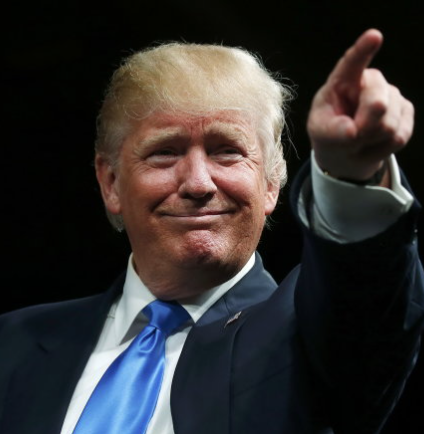
The image circulating online accurately captures Trump's comments from Friday, September 4, 2026: He called the Iran conflict "small potatoes" for the U.S. and rejected the "war" label in favor of "military conflict" .
However, the graphic's framing — suggesting the conflict is minor or inconsequential — stands in stark contrast to the reality on the ground: months of sustained military operations, 18 American deaths, billions in costs, and a region on the brink of wider escalation.
| What Trump said | The reality |
|---|---|
| "Small potatoes" | 18 U.S. service members killed |
| "Not a war" | Six months of sustained military operations |
| "Tremendous success" | Conflict remains stalemated; Iran still retaliating |
| "We control the Strait" | Global oil prices spiking; maritime traffic disrupted |
The president's dismissive language may be an attempt to frame the conflict as manageable ahead of the midterms — but for the families of the fallen and the millions of Americans paying higher prices at the pump, "small potatoes" is a hard sell.
Comments (0)
Loading comments...
May You Like
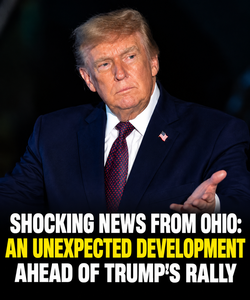
Shocking news from Ohio: an unexpected development ahead of Trump's rally
Barack Obama Draws Attention With New Literary Podcast
South Korea–Ukraine Rift Deepens Over North Korean POW Transfer as PURL Draws New Scrutiny