
Trump Ordered to Give Sworn Testimony in $10 Billion BBC Lawsuit by December 11 as Judge Warns of Possible Sanctions
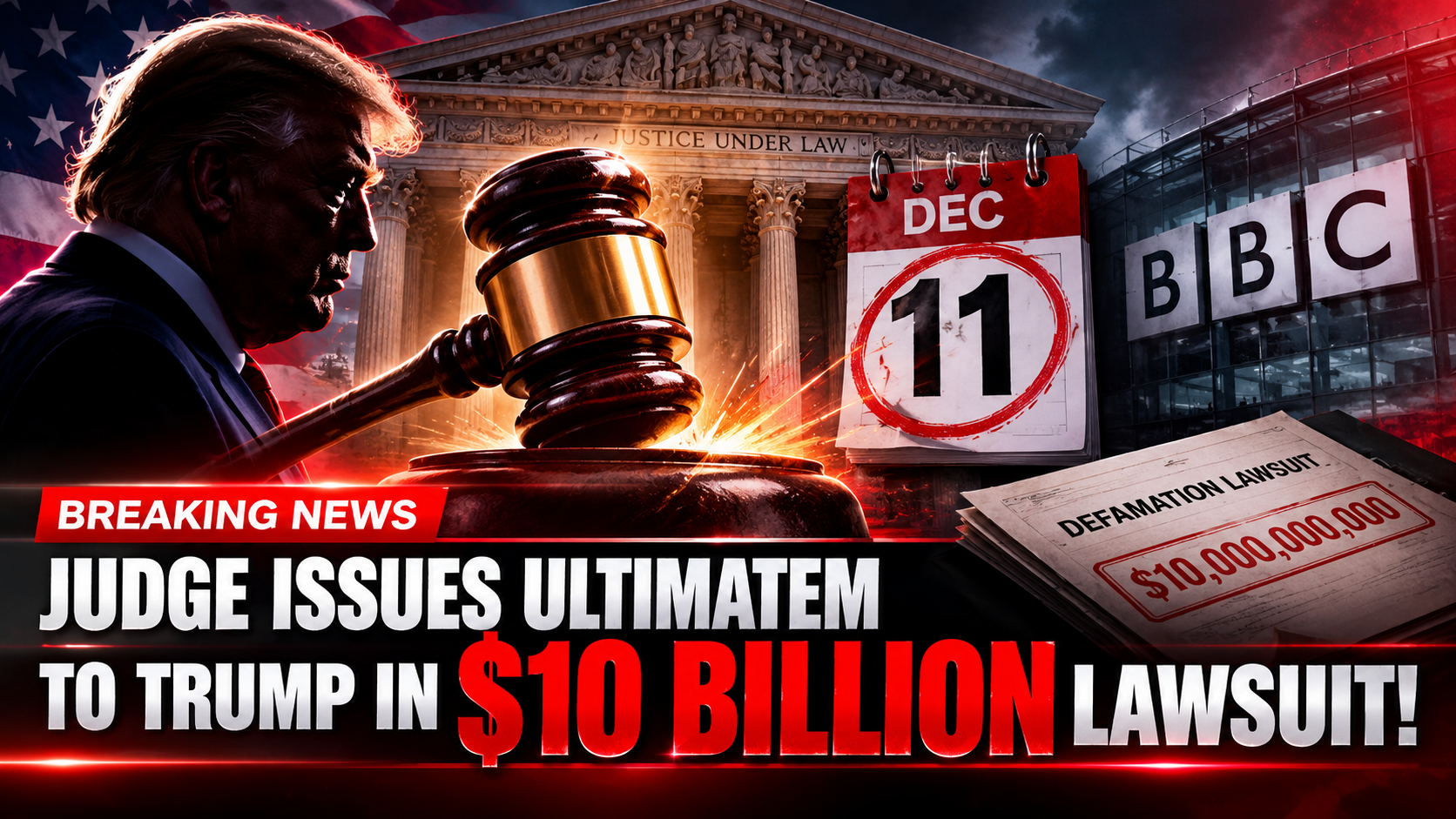
President Donald Trump has been ordered to sit for a sworn deposition by December 11 in his $10 billion defamation lawsuit against the British Broadcasting Corporation, placing a firm deadline on a legal battle over the broadcaster’s editing of his January 6, 2021, speech. The order, issued Thursday by U.S. Magistrate Judge Enjoliqué Lett in Miami, warns that failure to comply could expose Trump to sanctions, potentially including dismissal of his lawsuit if the discovery schedule is not extended.
The ruling marks a significant procedural development in a case that has become a major test of the relationship between political figures, public broadcasters and the legal standards governing defamation. Trump alleges that a BBC documentary deceptively edited excerpts from his speech before the attack on the U.S. Capitol, making it appear that he directly encouraged violence. The BBC has acknowledged serious problems with the editing and apologized, but it denies that its actions amount to defamation.
At the center of the immediate dispute is not a final determination about whether the BBC defamed Trump. Instead, it is whether the president must answer the broadcaster’s lawyers under oath while the lawsuit he initiated moves through the evidence-gathering stage.
The BBC’s legal team argued that it cannot adequately defend itself without questioning the person whose claims are at the heart of the case. Trump’s lawyers, meanwhile, sought to postpone his deposition until January 2027, citing his presidential responsibilities and matters of national importance. Judge Lett’s December 11 deadline places that proposed timetable in conflict with the existing schedule for gathering evidence.
The stakes are substantial, but the legal position needs to be understood precisely: the judge has not ruled that Trump lost the case, nor has the court ordered him to pay $10 billion. The immediate order concerns his obligation to participate in discovery, with possible sanctions if he fails to comply.
The December 11 deadline: What the judge actually ordered
The order followed a hearing on October 22, when lawyers for Trump and the BBC argued over outstanding discovery issues in federal court in Miami. The BBC had asked the court to compel Trump to appear for a deposition after an earlier appointment was canceled.
Judge Lett ordered Trump to complete the deposition by December 11. The distinction between a deadline and a final judgment is important: the order establishes when Trump must answer questions under oath, but it does not resolve the underlying defamation allegations.
The case's discovery period—the stage in which the parties exchange documents, seek testimony and gather evidence—is scheduled to close on December 18. That leaves only one week between the court-ordered deposition deadline and the current end of discovery.
The judge warned that failure to comply could lead to sanctions, including dismissal of Trump's claims, unless the discovery period is extended. Any such consequence would depend on subsequent court action; the lawsuit has not been dismissed.
That warning is especially consequential because Trump is the plaintiff. By bringing the lawsuit, he has placed the documentary, his speech and the alleged reputational harm at issue. The BBC argues that it must have a meaningful opportunity to question him and test the factual and legal foundations of his claims.
The dispute therefore concerns the ordinary mechanics of civil litigation as well as the high-profile personalities involved. A person who files a lawsuit generally must comply with applicable discovery obligations, subject to legitimate objections, procedural protections and court orders.
Why Trump's October deposition was canceled


The immediate conflict began when Trump did not attend a deposition scheduled for October 16.
According to court filings described by the Associated Press and CBS News, Trump's legal team informed the BBC in late September that he would no longer be available on the agreed date because of “other matters of national importance.” His lawyers subsequently indicated that he could appear during the second or third week of January 2027, after the existing discovery deadline.
The BBC objected to that proposed delay. Its lawyers said they had sought dates for Trump's deposition since July and had repeatedly attempted to arrange the questioning. They argued that, with discovery due to end in December, postponing the deposition until January would prevent them from obtaining evidence from the central figure in the case within the existing schedule.
The broadcaster also challenged the explanation for the cancellation. Its lawyers noted that Trump attended a political rally in Georgia on October 16 before traveling to his Mar-a-Lago resort in Florida for a Republican National Committee event. They argued that the day's activities raised questions about why the agreed deposition could not proceed.
Those details are part of the BBC's argument about the timing of Trump's appearance. They do not, on their own, establish that the cancellation was unlawful or that the president acted with an improper motive.
Trump's legal team has rejected the BBC's characterization of the delay. In a statement reported by CBS News, a spokesman described the lawsuit as an effort to hold the broadcaster accountable for alleged defamation and what Trump's side characterizes as reckless election interference. His lawyers have also argued that the president's duties make it difficult to accommodate the BBC's preferred schedule.
Judge Lett's ruling now establishes a deadline that is earlier than the January dates proposed by Trump's lawyers. The parties will have to work within that timetable unless the court changes it.
What the BBC documentary showed—and why the editing matters


The lawsuit stems from a BBC documentary titled Trump: A Second Chance, which included footage from Trump's January 6, 2021, speech to supporters near the White House.
The speech came before a crowd of Trump supporters marched toward the U.S. Capitol, where Congress was meeting to certify the 2020 presidential election result. A violent breach of the Capitol followed, interrupting the proceedings.
The BBC documentary edited together excerpts from different parts of Trump's speech. Trump alleges that the sequence gave viewers a misleading impression of what he said, making it appear that he directly urged supporters to engage in violence. The broadcaster has acknowledged that the editing was flawed and apologized, but disputes the contention that the documentary legally defamed him.
The central question is not simply whether the editing was an error. In a defamation case, the court must consider the challenged material, its meaning in context, the applicable legal standards and whether the plaintiff can establish the elements required for the claims brought.
A broadcaster's acknowledgment of an editing mistake does not automatically establish liability for defamation. Conversely, an apology does not by itself resolve whether the material caused legally actionable harm. Those questions must be examined through the evidence and the governing law.
Trump's complaint also includes allegations involving deceptive and unfair trade practices. The BBC disputes his claims, and the court has not issued a final decision establishing liability or determining damages.
That means the case remains a dispute to be resolved through litigation, not a finding that either side has conclusively established its version of events.
The $10 billion claim: What is at stake financially?


Trump's lawsuit seeks $10 billion in damages, an extraordinary amount that reflects the scale of the dispute but should not be mistaken for a sum the court has awarded.
The BBC is contesting the allegations. No final ruling has established that it owes Trump damages, and the December deposition deadline does not determine whether the requested amount is justified.
In a defamation case, damages can depend on several questions: whether the challenged statements were legally defamatory, whether the plaintiff can establish the required level of fault, whether legally cognizable harm occurred and what evidence supports the amount claimed. The precise requirements depend on the claims and applicable law.
The BBC's legal team is seeking evidence it says is necessary to defend itself. That includes questioning Trump about his allegations and the harm he claims to have suffered. The broadcaster has also sought information relating to membership and initiation fees at Mar-a-Lago, arguing that the records could be relevant to assessing damages and Trump's reputation. His lawyers have challenged that request.
The amount sought, therefore, is one part of the case rather than an indication of its likely outcome. Whether Trump can prove his claims, whether the BBC can establish its defenses and whether any damages would be appropriate remain unresolved.
Another legal battle over the January 6 speech


The BBC litigation also intersects with the continuing legal and political debate over Trump's conduct surrounding January 6, 2021.
Trump's speech, the events that followed and the meaning of his remarks have been examined in congressional investigations, public reporting and criminal proceedings. In the BBC case, however, the immediate question is whether the documentary's editing and presentation satisfy the legal standards for the claims Trump has brought against the broadcaster.
The distinction matters because a civil defamation lawsuit is not a general trial of everything that happened on January 6. The court must focus on the allegations in the complaint, the evidence admitted or considered under the applicable rules, and the defenses available to the BBC.
The broadcaster has argued that the original speech is publicly available and that its reporting must be evaluated in context. Trump's lawyers maintain that the documentary's editing materially misrepresented his remarks. The deposition could help clarify his account of the alleged harm and the factual basis of his claims, while allowing the BBC's lawyers to test those assertions under oath.
The case also illustrates the challenges facing news organizations when editing political material. Television documentaries routinely condense long speeches and combine footage to make complex events understandable. But editing can become legally contentious if the resulting presentation allegedly changes the meaning of a person's statements in a materially misleading way.
The relevant legal question is not whether every edit is acceptable or whether every mistake constitutes defamation. It is whether the specific material, considered in its full context, meets the applicable legal requirements.
Jack Smith and the BBC's other discovery requests
The October 22 hearing also addressed whether former special counsel Jack Smith should be deposed as part of the litigation.
The BBC has argued that Smith's investigation into January 6 could make him a relevant witness concerning the events and issues surrounding Trump's speech. Trump's lawyers have opposed the request, arguing that Smith lacks personal knowledge of Trump's state of mind when he delivered the remarks and that much of the proposed testimony would duplicate material already available through Smith's report and congressional testimony.
The question of whether Smith can be compelled to testify involves separate legal and procedural issues. The Justice Department's position and the applicable rules governing testimony by former government officials are relevant to whether the deposition can proceed.
These discovery disputes show that the lawsuit is not limited to the video itself. Both sides are attempting to obtain evidence they consider important to their positions, while challenging requests they believe are unnecessary or improper.
For the BBC, the challenge is to assemble its defense before discovery closes. For Trump, it is to substantiate the allegations he has made and comply with the court's timetable while carrying out the responsibilities of the presidency.
What happens if Trump misses the deadline?
The December 11 deadline creates a clear procedural milestone, but the consequences of noncompliance would depend on the circumstances and any further decision by the court.
-
If Trump sits for the deposition: The BBC's lawyers will have an opportunity to question him under oath, and the case can continue through the remaining discovery process.
If the deposition is postponed by agreement and the court permits it: The schedule may need to be adjusted, potentially affecting other discovery deadlines.
If Trump fails to comply with the order: The judge has warned that sanctions could follow, including possible dismissal of the lawsuit if the discovery period is not extended. Dismissal is a potential consequence, not an automatic outcome already imposed.
The deposition is to be recorded on video for attorneys' use, according to the Associated Press. That does not mean the recording will automatically be broadcast publicly. Depositions are part of the evidence-gathering process, and access to recordings or transcripts depends on applicable court rules and any relevant orders.
The deadline is especially important because discovery is currently scheduled to conclude on December 18. If the parties cannot complete the necessary evidence gathering within that period, they may seek changes to the schedule, but the decision to extend it rests with the court under the applicable procedures.
The broader implications for journalism and accountability
The lawsuit places two important principles in tension: the right of public figures to seek legal remedies for allegedly defamatory reporting, and the ability of news organizations to report on matters of public concern without being held liable simply because their coverage is controversial.
The BBC's admission that the documentary's editing was flawed has intensified scrutiny of its editorial practices. Yet the legal question remains whether that error satisfies the requirements for the claims Trump has asserted. Those are separate questions, and neither should be treated as settled before the court reaches a final decision.
For journalists, the case is a reminder that the context surrounding edited footage can be critical. When excerpts from a political speech are combined, the sequence should not create a materially misleading impression of the speaker's words. Clear editorial standards, careful review and transparent corrections can help news organizations maintain credibility and reduce legal risk.
For public figures, the litigation highlights the importance of substantiating claims of reputational harm and participating in the ordinary discovery process. Filing a lawsuit gives a plaintiff the opportunity to seek a legal remedy, but it also creates obligations to provide relevant evidence under the rules governing the case.
For the public, the most important distinction is between allegations, procedural orders and final judgments. The $10 billion figure is the amount Trump is seeking, not a court-verified measure of damages. The December 11 date is a deadline for testimony, not a ruling on whether the BBC defamed him.
Conclusion: A deadline that could shape the next phase of the case
The court's order gives Trump's legal team a clear date to meet as the president pursues his $10 billion lawsuit against the BBC. After the cancellation of the October 16 deposition and the disagreement over a proposed January appearance, Judge Lett has required Trump to sit for questioning by December 11, warning of possible sanctions if he does not comply.
The dispute's immediate focus is procedural, but the underlying case raises broader questions about political speech, the editing of news footage, reputational harm and the legal responsibilities of major broadcasters.
The BBC has acknowledged errors in the documentary's editing and apologized, while denying that those errors establish defamation. Trump maintains that the documentary misrepresented his January 6 speech and damaged him. The court has not yet resolved those competing claims.
The next critical steps will be whether Trump completes the deposition by the deadline, whether the parties can finish discovery by December 18 and what evidence emerges as the litigation progresses.
For now, the central takeaway is clear: Trump has been ordered to testify by December 11, but neither liability nor damages have been decided. The case will turn on the evidence, the applicable legal standards and the court's eventual assessment—not simply on the size of the claim or the intensity of the public controversy.
Comments (0)
Loading comments...
May You Like

WWE BRONSON REED DEAD AT 38, STIMULANTS DETECTED, $10M INSURANCE PAYOUT FROZEN!

WWE BRONSON REED—STAR COLLAPSES AT COMPANY EVENT, FATAL DRUG REACTION SUSPECTEDs!!

DAVENPORT AIRBNB HORROR — “SHOTS AT THE DOOR” GAME, 1 DEAD, 6 INJURED!










Popular Posts


