
Trump Escalates Attacks on Abdul El-Sayed at Michigan Rally, Raising Questions About Extremism and Religious Prejudice
Trump Escalates Attacks on Abdul El-Sayed at Michigan Rally, Raising Questions About Extremism and Religious Prejudice

President Donald Trump intensified his attacks on Democratic Senate candidate Abdul El-Sayed during a campaign rally in Port Huron, Michigan, on October 25, turning the closely watched Senate race into a heated debate over national security, religious identity, and political rhetoric.
Speaking to a crowd of supporters, Trump portrayed El-Sayed as a threat to the United States, repeatedly using the word “jihadist” and alleging links to the Muslim Brotherhood. He offered no publicly substantiated evidence that El-Sayed was a terrorist.
The remarks marked a sharp escalation in a campaign already shaped by disputes over El-Sayed’s progressive politics, Muslim faith, and Egyptian family background.

El-Sayed, a Michigan-born physician and public health expert who previously served as Detroit’s health director, is running for an open U.S. Senate seat. A victory would make him the first Muslim elected to the United States Senate.
Trump used the rally to support Republican Senate candidate Mike Rogers, a former congressman and national security official. The president presented Rogers as a patriotic alternative while warning supporters against electing El-Sayed.
In some of his most provocative comments, Trump compared the political contest to the fight against the perpetrators of the September 11, 2001, terrorist attacks. He invoked the memory of Todd Beamer, a passenger aboard United Airlines Flight 93 who died while passengers resisted the hijackers.
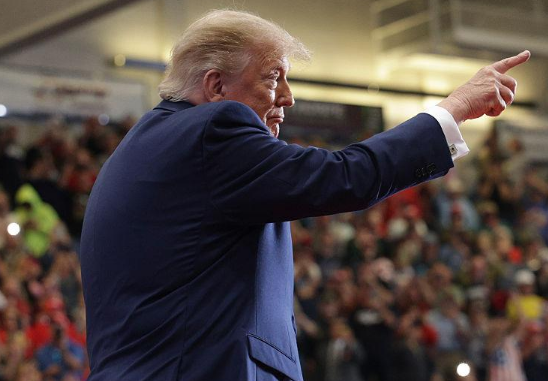
The comparison drew a direct connection between a candidate running for elected office and the threat posed by violent extremists. Critics argued that such language went far beyond ordinary political criticism and risked casting suspicion on Muslim Americans more broadly.
Trump also claimed that El-Sayed should not be trusted with access to sensitive national security information if elected to the Senate. He suggested that the candidate should face extraordinary security screening, including a metal detector before entering the Senate chamber.
These statements were campaign rhetoric, not an official security determination. No evidence presented at the rally established that El-Sayed posed a terrorist threat or that he would be legally barred from serving in the Senate.

The controversy also involved allegations concerning El-Sayed’s extended family and supposed connections to the Muslim Brotherhood. Trump referred to family relationships and past statements while arguing that voters should question the Democrat’s loyalties.
Such allegations require careful distinction between claims about relatives, a person’s own political positions, and evidence of criminal or extremist activity. A family connection or disputed political association does not, by itself, establish that a candidate supports terrorism.
El-Sayed has repeatedly rejected efforts to portray him as a member or supporter of the Muslim Brotherhood. He has also argued that attacks focusing on his religion and background are designed to distract voters from the issues affecting their daily lives.

The candidate’s campaign has emphasized issues such as health care, housing affordability, economic pressure, and the influence of wealthy donors in politics. Those concerns are especially important in Michigan, where voters are weighing household costs alongside debates over trade, manufacturing, and national policy.
The Senate contest has become one of the races that could help determine control of Congress. Republicans are seeking to defend their majority, while Democrats see competitive states such as Michigan as critical opportunities to regain power.
For Trump, campaigning against El-Sayed offers a chance to mobilize conservative voters around national security and cultural issues. It also allows the president to make the Senate race a referendum on his broader political agenda just days before the November 3 midterm elections.

The approach carries potential risks. Strong language may energize some Republican supporters, but it can also alienate moderate voters, independents, and communities who view the comments as an attack on Muslims rather than a substantive discussion of a candidate’s record.
The rally followed a Democratic campaign appearance in Detroit by former President Barack Obama, who urged voters to reject attempts to portray El-Sayed as less American because of his faith or background. The competing appearances underscored how national figures have become central to the Michigan contest.
Trump’s comments also drew criticism from Arab American advocates and other opponents, who said that treating a Muslim candidate as inherently suspect reinforces prejudice. Michigan has a significant Arab American population, making the political consequences of such rhetoric particularly relevant in the state.

At the same time, Republicans have sought to make El-Sayed’s political associations and public comments a central campaign issue. They argue that voters should scrutinize a candidate’s statements and allies, particularly when national security is involved.
That argument raises a legitimate question about the standards applied to public officials: candidates can be questioned about their beliefs, associations, and policy positions, but allegations of terrorist sympathies should be supported by credible evidence rather than insinuation.
El-Sayed’s critics have also pointed to his association with online political commentator Hasan Piker. Trump used that association to question El-Sayed’s judgment, while El-Sayed has resisted the demand to disavow every controversial statement made by someone in his broader political circle.
The dispute illustrates a broader challenge in modern campaigning, where associations and short video clips can become defining political weapons. A candidate’s own words and actions may be relevant to voters, but the context of those statements matters when assessing what a person actually believes.
The election’s outcome will depend on whether voters focus more heavily on these cultural and national security disputes or on concerns such as the cost of living, access to health care, and Michigan’s economic future. Both parties are trying to persuade voters that their preferred issues should dominate the final days of the campaign.
For now, Trump’s attack has placed El-Sayed at the center of a national argument about Islam, political identity, and the boundaries of campaign rhetoric. The controversy is likely to remain part of the Senate race as voters decide which candidate they trust to represent Michigan.
Comments (0)
Loading comments...
May You Like

STAR DIED AT 38, $10M LIFE INSURANCE INCREASED JUST 30 DAYS BEFORE WWE BRONSON REED'S DEATH!


EAST COAST DISASTER—179 THOUSANDS OF HOMES AT RISK, CAUSING $50 BILLION IN DAMAGE!











Popular Posts


