
TRUMP FACES IMPEACHMENT SHOWDOWN
TRUMP FACES IMPEACHMENT SHOWDOWN: Democrats Prepare Congressional Offensive as Viral Prediction Warns of Removal Before Christmas 2026
WASHINGTON, D.C. — President Donald Trump is facing renewed political pressure following the 2026 midterm elections, as Democrats prepare to use their newly strengthened congressional position to investigate his administration and examine potential grounds for further impeachment proceedings.
A dramatic political image circulating online makes an extraordinary prediction: Trump could be impeached, removed from office by Congress, and imprisoned in Florida before Christmas Day 2026.
The claim has attracted attention because it combines several developments that are genuinely taking place in American politics.
Democrats have gained control of both chambers of Congress following the November 3 midterm elections.
Impeachment proposals targeting Trump have also been introduced by Democratic lawmakers.
And congressional leaders are preparing investigations into the administration's policies, decisions, and use of executive authority.
But the prediction of Trump's removal and imprisonment before December 25 goes considerably further than the available evidence.
Impeachment, removal from office, and criminal imprisonment are three separate legal and constitutional processes.
Each requires different procedures, evidence, and decisions by different institutions.
The new Democratic majority could increase political pressure on the White House, but it does not automatically establish grounds for removal or guarantee a criminal conviction.
Nevertheless, the political consequences of the midterm elections could make the coming months an important period for Trump's presidency.
A New Congress Changes the Political Equation
The November 3 midterm elections produced a significant shift in Washington.
Democrats gained control of both the House of Representatives and the Senate, creating a substantially more difficult political environment for the Republican administration.
The change gives Democrats greater authority over congressional committees, legislative priorities, and investigations.
For Trump, the immediate challenge is that congressional oversight will increasingly be directed by political opponents.
Democratic leaders have already indicated that they intend to examine major administration decisions.
These investigations could involve immigration enforcement, executive authority, federal spending, government appointments, and other controversial policies.
The shift does not mean that Democrats can automatically remove the president.
But it gives them considerably more institutional power to demand information and challenge the administration.
Why Impeachment Is Back in the Political Conversation

Trump has faced impeachment twice before.
In December 2019, the House impeached him on charges of abuse of power and obstruction of Congress.
In January 2021, the House impeached him again following the January 6 Capitol attack.
The Senate acquitted him in both proceedings.
Now, with Democrats controlling Congress, discussions about another impeachment effort have returned to the political spotlight.
Representative Al Green of Texas introduced a new impeachment resolution in September 2026.
The proposal accused Trump of high crimes and misdemeanors related to his constitutional responsibilities.
However, the House voted to table the resolution on September 15.
That vote is important because it demonstrates that introducing impeachment articles does not mean the president has been impeached.
It also shows that the impeachment question remains politically and procedurally complicated, even among Democrats.
The House Could Launch New Investigations
One of the most immediate consequences of Democratic control will be the expansion of congressional oversight.
House committees can request documents, subpoena witnesses, and conduct public hearings.
They can investigate federal agencies and examine whether executive officials have complied with existing laws.
Potential investigations could focus on immigration enforcement, government contracts, federal spending, and controversial executive decisions.
Democratic lawmakers may also examine the administration's relationships with private businesses and the handling of sensitive government information.
These investigations could produce new political controversies.
They could also provide evidence that lawmakers might use when considering legislative action or additional impeachment proposals.
But congressional investigations are not criminal trials.
A subpoena does not establish guilt, and an allegation does not constitute a conviction.
The evidence gathered would need to be evaluated before any legal conclusions could be reached.
The Impeachment Process Is More Complicated Than the Viral Image Suggests
The Constitution establishes a specific process for removing a president.
First, the House of Representatives must approve articles of impeachment.
A simple majority vote is sufficient.
Impeachment is formally comparable to bringing charges against a federal official.
It does not, by itself, remove the president from office.
The process then moves to the Senate.
Senators conduct an impeachment trial, with the Chief Justice of the United States presiding when a sitting president is tried.
To convict and remove a president, two-thirds of senators present must vote in favor.
That threshold is considerably higher than an ordinary Senate majority.
Even with Democrats controlling both chambers, removal would require support from a substantial number of Republican senators if Democrats do not possess the necessary supermajority themselves.
This constitutional requirement makes the prediction of Trump's rapid removal far less straightforward than the image suggests.
Could Democrats Actually Remove Trump?
Democrats could initiate another impeachment proceeding if they believed the evidence justified it.
Their new House majority gives them the votes and committee structure needed to investigate allegations and consider formal charges.
However, removing Trump would require a separate Senate conviction.
If all 100 senators participated, 67 votes would be necessary.
A Democratic majority alone would not be sufficient.
The political question would therefore be whether enough Republican senators could be persuaded to support conviction.
That would depend on the specific allegations, the evidence presented, public reaction, and the political calculations of individual lawmakers.
At present, there is no established Senate supermajority supporting Trump's removal.
The possibility of impeachment proceedings should therefore not be confused with an imminent removal from office.
The Florida Imprisonment Claim Raises Even More Questions
The image goes beyond impeachment by predicting that Trump will be imprisoned in Florida before Christmas.
This is a separate and particularly extraordinary allegation.
Congress does not have the constitutional authority to sentence a president to prison through impeachment.
Impeachment addresses an official's continued ability to hold federal office.
Criminal imprisonment requires a separate legal process.
That process generally involves criminal charges, court proceedings, a conviction, and a sentence imposed by a judge.
The mention of Florida may be connected to Trump's former federal classified-documents case, which involved records stored at his Mar-a-Lago property.
But that case was dismissed in July 2024.
Judge Aileen Cannon ruled that the appointment of special counsel Jack Smith was unlawful.
The prosecution did not produce a criminal conviction or prison sentence against Trump in that case.
The dismissal and subsequent termination of the appeal meant that the case did not provide an active path to the Florida imprisonment predicted by the viral image.
Any new criminal prosecution would require its own legal basis and proceedings.
Why the Christmas 2026 Deadline Is Misleading
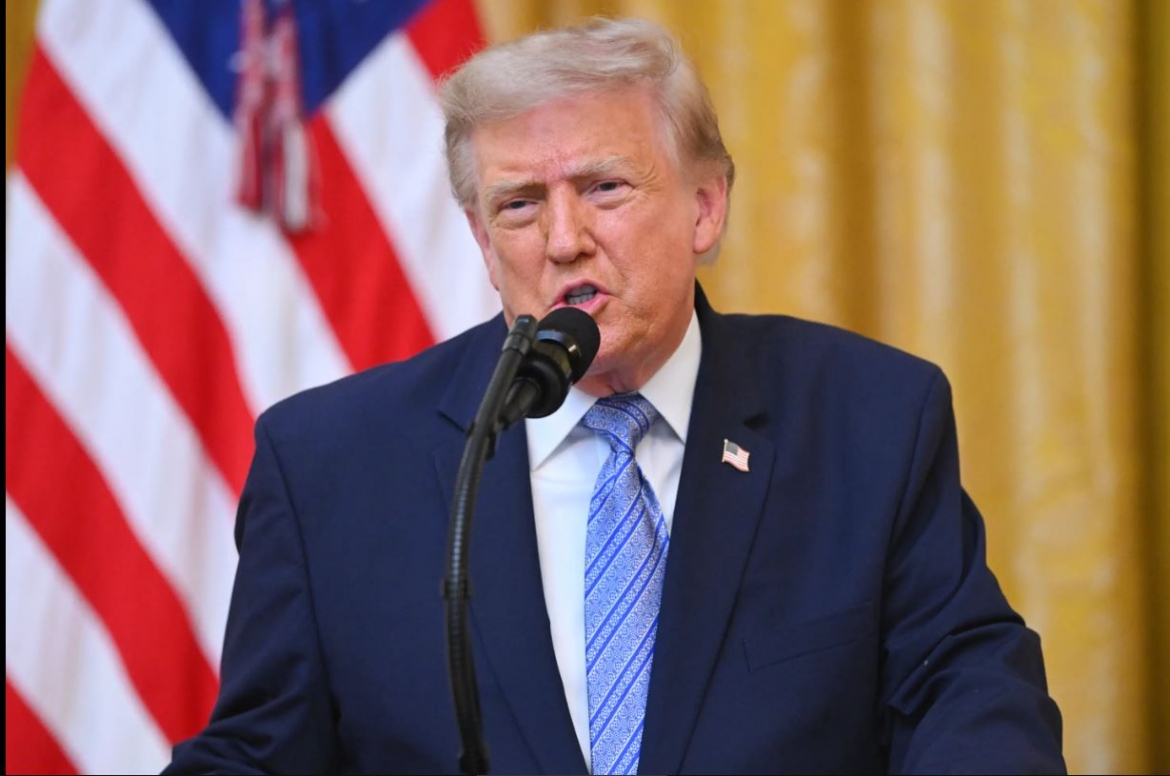
The image presents December 25, 2026, as though it were an approaching deadline for Trump's political and legal collapse.
But no verified congressional schedule, Senate conviction, Florida sentencing order, or official court decision establishes that timeline.
The date appears to be part of the image's dramatic political framing rather than a confirmed legal deadline.
Several independent events would have to occur before the prediction could become reality.
The House would need to approve impeachment articles.
The Senate would need to conduct a trial and secure the required two-thirds vote for removal.
Separately, prosecutors would need a viable criminal case, and a court would need to enter a conviction and sentence before imprisonment could occur.
These processes cannot simply be combined into one automatic congressional decision.
The Christmas deadline therefore has no established legal foundation.
What Happens to Trump If He Is Impeached but Acquitted?
A president who is impeached by the House but acquitted by the Senate remains in office.
That is exactly what happened to Trump in both of his previous impeachment trials.
The distinction is important.
Impeachment alone does not suspend the president's constitutional authority.
An acquittal allows the president to continue serving.
A Senate conviction, by contrast, results in removal from office.
The Senate may also separately consider disqualification from holding future federal office.
But neither outcome automatically produces a criminal conviction or imprisonment.
The constitutional process and criminal justice system operate independently.
Could the New Democratic Congress Investigate Trump's Administration?
Yes.
Congressional oversight is one of the most important powers available to the new majority.
Democrats could use committee investigations to examine how federal agencies operate and whether administration officials have complied with congressional requirements.
They could request communications, financial records, agency reports, and testimony.
Investigations could also examine the implementation of controversial policies.
Some inquiries may reveal administrative failures or evidence requiring further investigation.
Others may produce political disagreements without establishing illegal conduct.
The strength of any investigation will depend on the quality of its evidence.
The administration could challenge certain subpoenas or requests in court, creating additional legal disputes.
Trump's Second-Term Political Vulnerability
Trump's second presidency has been defined by an aggressive policy agenda and a confrontational relationship with political opponents.
His administration has emphasized immigration enforcement, changes to federal agencies, economic nationalism, and a more assertive approach to executive power.
These priorities have generated strong support among his political base.
They have also produced criticism from Democrats, civil liberties organizations, and some former government officials.
The midterm elections have given Trump's opponents a stronger institutional position.
The White House must now deal with congressional leaders who may have very different priorities.
The result could be a more difficult legislative environment during the final two years of Trump's term.
The Political Consequences Could Be More Immediate Than Removal
Even if Democrats cannot remove Trump, they can still significantly affect his presidency.
A Democratic-controlled Congress could block legislative proposals, demand additional information, and conduct investigations.
It could also make government funding negotiations more difficult.
The administration may find it harder to secure approval for controversial appointments or major legislative initiatives.
These constraints could influence the president's political strategy.
Instead of concentrating exclusively on passing legislation, the White House may need to devote more attention to defending its decisions and negotiating with congressional opponents.
That could become one of the defining features of the remainder of Trump's second term.
The Republican Party Faces a Difficult Decision
Republicans must now determine how to respond to the change in congressional power.
Some lawmakers may choose to defend Trump aggressively.
Others may prefer to distance themselves from controversial administration policies.
The party will also face questions about its legislative priorities and future leadership.
A Democratic-controlled Congress creates additional pressure on Republicans to demonstrate that they can remain politically unified.
If impeachment proceedings begin, Republican senators could face particularly difficult decisions.
Supporting Trump may strengthen their relationship with his political base.
But opposing him in certain circumstances could be viewed by some voters as a necessary response to serious allegations.
The eventual political calculations will depend heavily on the evidence and the specific circumstances of any future proceedings.
Could a Third Impeachment Become a Reality?
A third impeachment is constitutionally possible.
There is no constitutional rule preventing the House from considering additional impeachment articles against a president who has already been impeached twice.
The House could introduce new charges if lawmakers believe there is sufficient evidence of conduct meeting the constitutional standard.
But political possibility is not the same as a confirmed decision.
A formal impeachment process would require specific articles, committee work, debate, and a vote.
The Senate would then need to determine whether the allegations justify conviction and removal.
The new Democratic majority makes another impeachment effort more politically feasible.
It does not make the outcome inevitable.
What About Trump's Previous Criminal Cases?
Trump has faced several criminal investigations and prosecutions.
The most prominent included the New York business-records case, the federal classified-documents case, and the federal election-interference prosecution.
These cases followed different legal paths.
The New York case resulted in a criminal conviction in 2024.
The federal classified-documents case was dismissed.
The federal election-interference case was terminated after Trump returned to the presidency under longstanding Justice Department policy concerning prosecution of a sitting president.
Those outcomes must be distinguished from any future criminal proceedings.
A previous investigation or accusation cannot automatically serve as a basis for imprisonment in Florida.
Any new criminal case would need to follow applicable law and judicial procedures.
Can a Sitting President Be Imprisoned?
This is a complex constitutional question.
The Department of Justice has long maintained that a sitting president cannot be federally indicted or prosecuted while in office.
That position is based on executive branch legal interpretations rather than an explicit constitutional provision resolving every possible circumstance.
The Supreme Court has also recognized substantial presidential immunity for certain official acts.
But presidential immunity is not absolute protection against every criminal allegation.
The legal situation would depend on the nature of the conduct, the applicable law, and the timing of any prosecution.
Most importantly, impeachment and criminal prosecution remain separate processes.
A congressional vote cannot simply direct a state prison to take custody of the president.
Why Florida Is Mentioned So Frequently
Florida has a special political connection to Trump.
His Mar-a-Lago property is located in Palm Beach, and the state has been a major center of his political and personal activities.
It was also the location of the former federal classified-documents investigation.
That connection may explain why the viral image specifically mentions imprisonment in Florida.
However, a familiar geographic connection does not establish that a criminal case is pending or that a judge has ordered incarceration.
The location of Trump's residence and the location of a former criminal investigation should not be mistaken for evidence of an upcoming prison sentence.
The Democrats' Bigger Strategy
For Democrats, controlling Congress creates an opportunity to establish a new political narrative.
They can use oversight to challenge the administration's decisions and present their alternative policy priorities.
They can also seek to demonstrate that congressional checks and balances remain effective.
But Democrats face their own challenge.
If they focus exclusively on investigations and impeachment, they may face criticism from voters who want action on the economy, healthcare, housing, and other everyday concerns.
Their ability to balance accountability with legislative priorities could determine whether the new majority is viewed as effective.
Winning Congress creates power.
Using that power successfully is a separate challenge.
What Happens Between Now and Christmas?
The coming weeks could bring several important developments.
Congressional committees may begin organizing investigations and requesting information from federal agencies.
Democratic leaders may announce their legislative priorities.
Republican lawmakers may respond by defending the administration or seeking bipartisan compromises.
The House could also consider new impeachment proposals if lawmakers believe the evidence supports them.
However, there is no established timetable showing that Trump will be removed from office or imprisoned by December 25.
The more realistic expectation is an increasingly confrontational political environment as Democrats begin exercising their new congressional authority.
The most consequential developments will depend on what evidence emerges and how the administration responds.
The Constitutional Reality Behind the Political Drama
The American system of government divides power among the executive, legislative, and judicial branches.
The president directs the executive branch.
Congress passes legislation, controls federal appropriations, and conducts oversight.
The courts interpret the law and resolve disputes.
Impeachment is one of the Constitution's most important mechanisms for holding federal officials accountable.
But it is not a shortcut around the criminal justice system.
Even a president removed through impeachment would not automatically be sent to prison.
Criminal liability requires a separate legal determination.
That distinction is essential when evaluating dramatic predictions about Trump's political future.
A Presidency Under Pressure, but Not Yet Ending
The November midterms have changed the balance of power in Washington.
Democrats now have greater opportunities to investigate the administration, challenge its policies, and consider additional impeachment proceedings.
Trump will face a more difficult Congress during the remainder of his presidency.
His administration may also have to respond to new legal and political controversies.
But the viral claim that he is on course to be impeached, removed, and imprisoned in Florida before Christmas goes beyond what the available evidence establishes.
The House has not completed a new impeachment proceeding resulting in removal.
The Senate has not convicted him.
And no verified Florida sentencing order supports the image's prediction.
The Bigger Question: How Far Will the New Congress Go?
The central question is no longer whether Democrats have gained additional congressional power.
They have.
The question is how aggressively they will use that power.
Will they prioritize investigations?
Will they introduce another impeachment resolution?
Will they focus on blocking Trump's legislative agenda?
Or will they attempt to negotiate with the White House on selected issues?
Those decisions will shape the political environment over the coming months.
Trump's opponents have gained important institutional leverage.
But removing a president requires a much higher constitutional threshold than winning a midterm election.
The coming political battle could be intense.
And while the Christmas deadline in the viral image remains unsupported, the new congressional majority has undeniably created a more challenging period for Trump's presidency.
Comments (0)
Loading comments...
May You Like

TRUMP CALLS GDP FIGURE “FAKE” AFTER GOVERNMENT’S SCHEDULED REVISION

STORM WARNING: MILLIONS FACE EVACUATION, MACY'S GIANT BALLOONS GROUNDED!

BANGCHAK REFINERY DISASTER IN THAILAND—120,000 BARRELS A DAY SHUT DOWN, U.S. OIL PRICES SURGE 10%!

Latest Posts









Popular Posts


