Trump Is Barely Appearing in
Trump Is Barely Appearing in Republican TV Ads — Even as He Tries to Make the Midterms About Himself
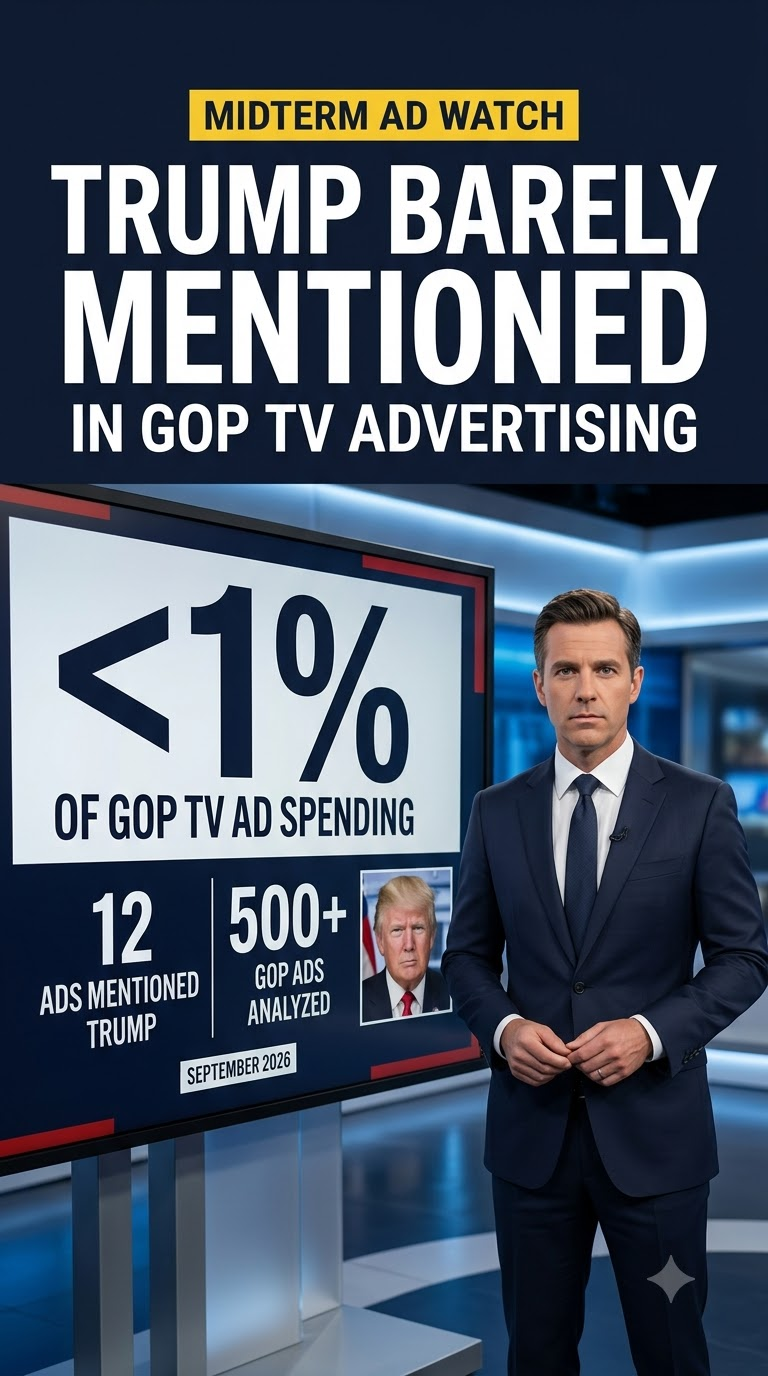
President Donald Trump remains the central figure in Republican politics, but you would not know it from much of the party’s television advertising this fall.
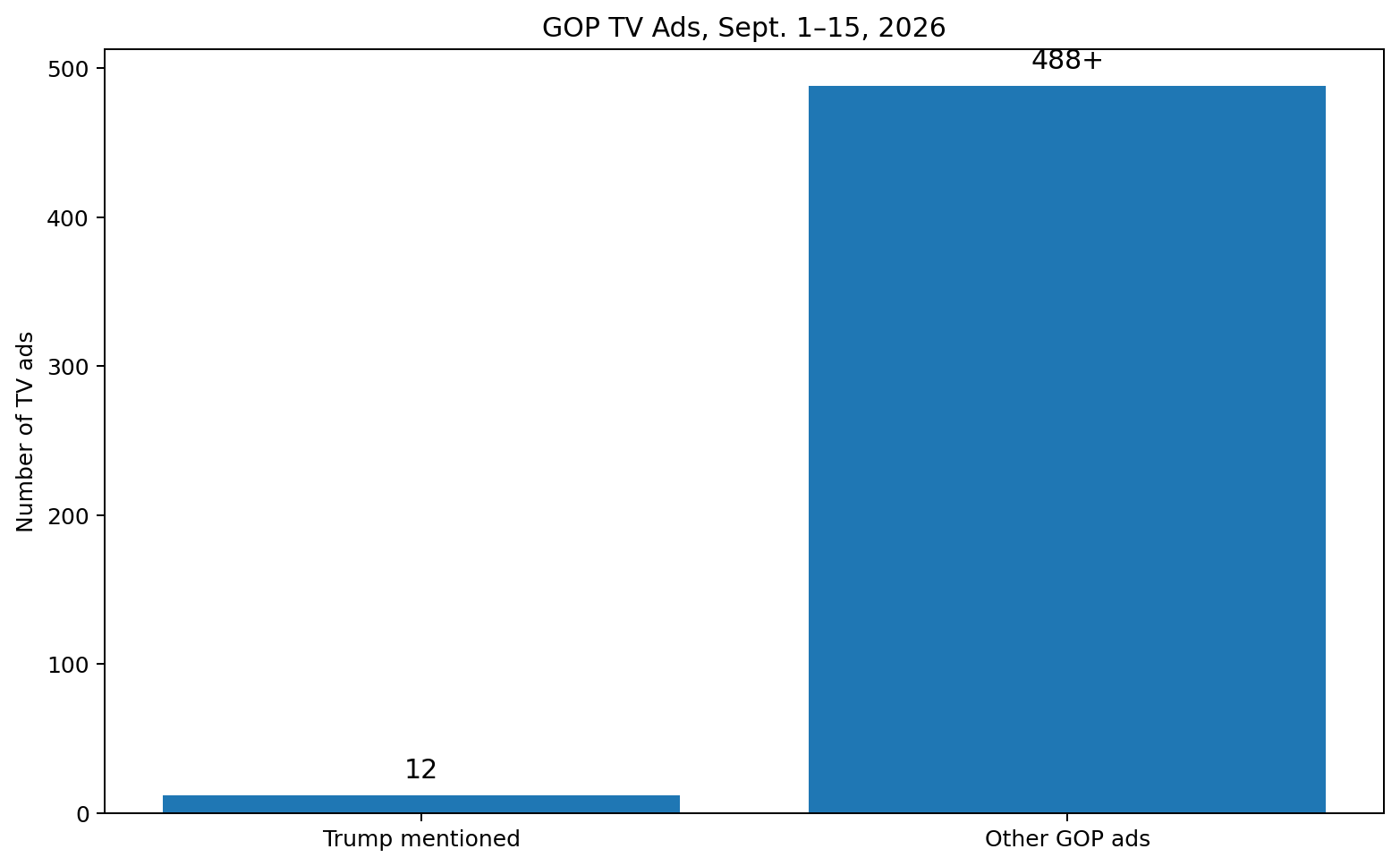
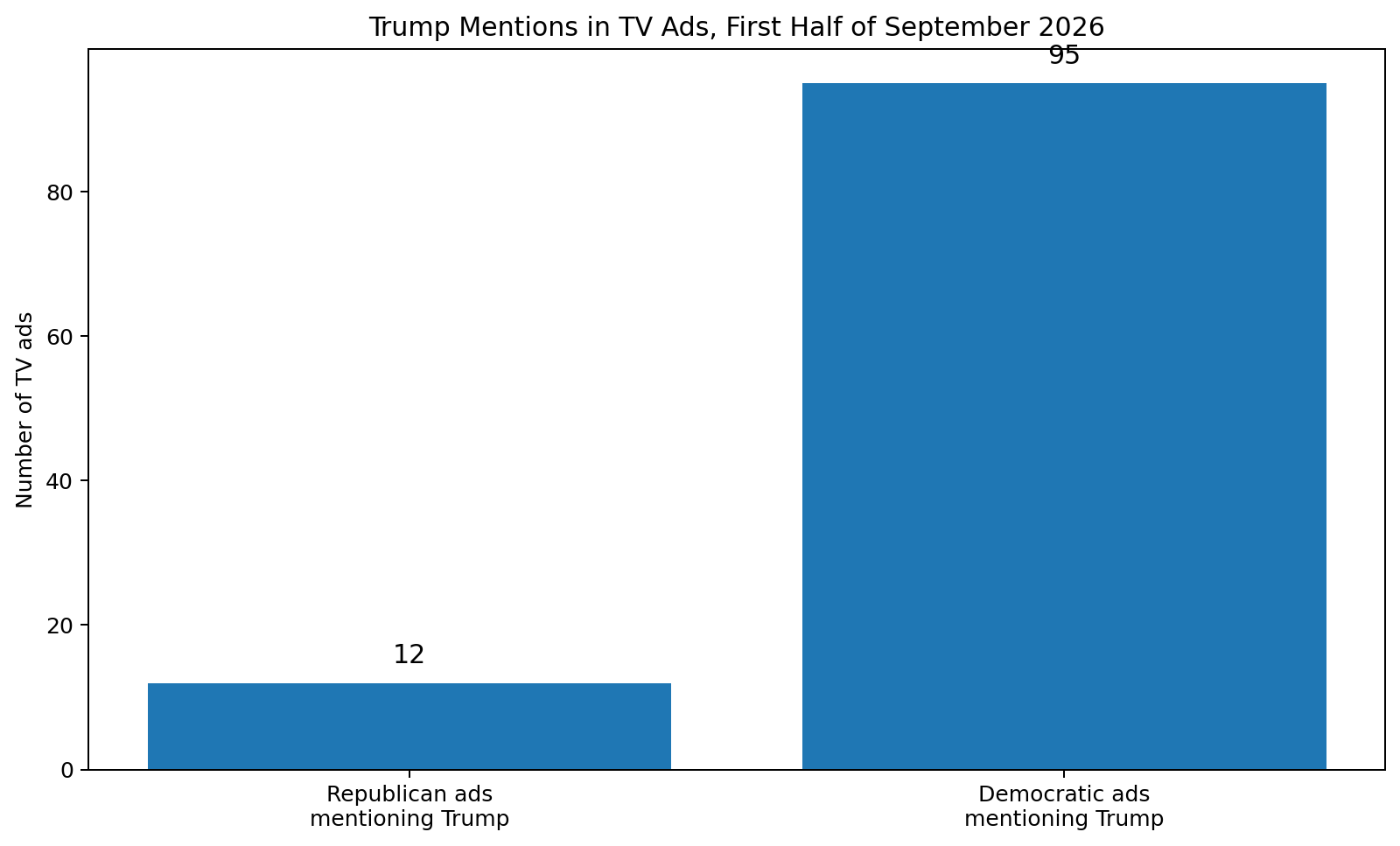
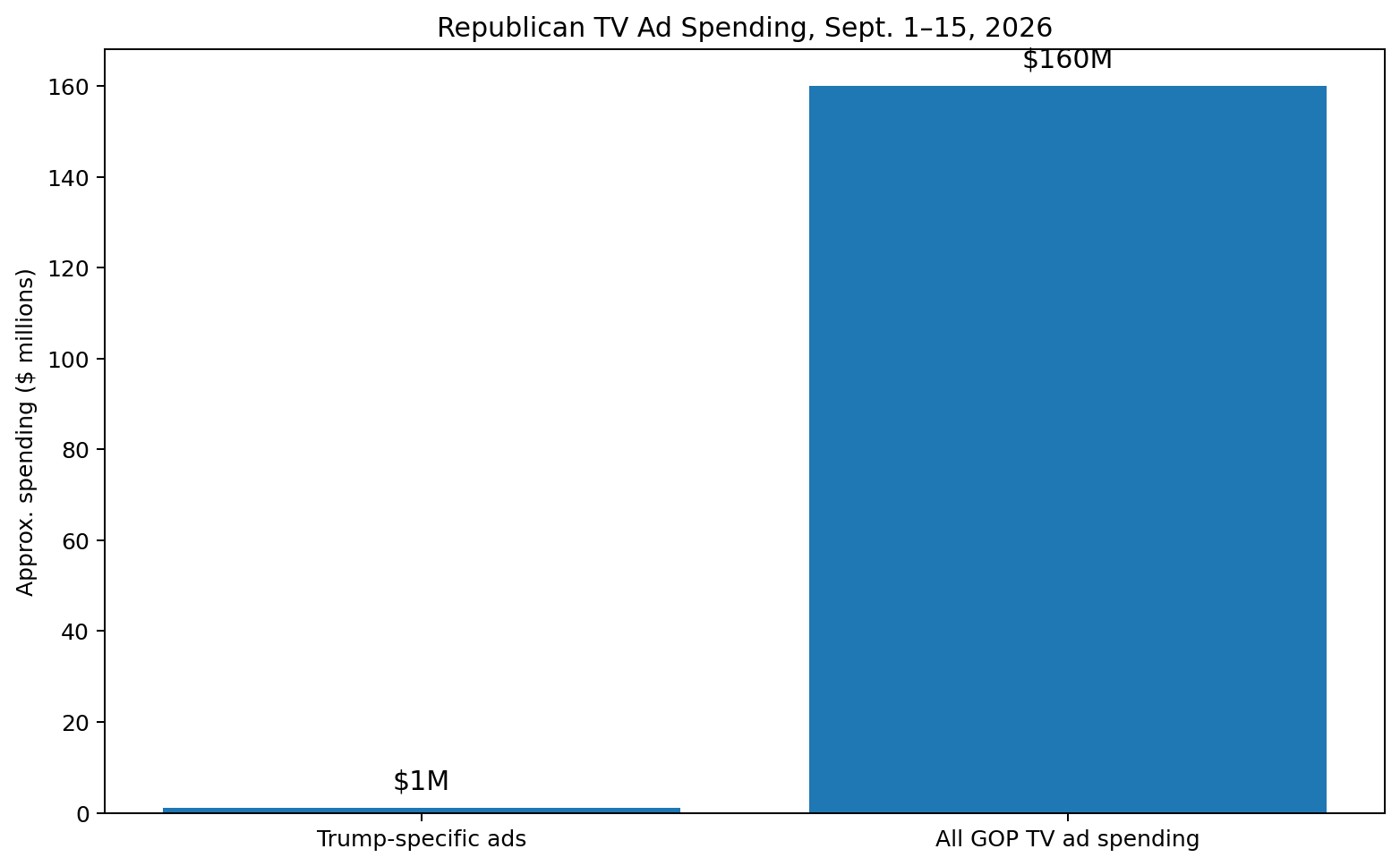
From September 1 through September 15, Republican advertisers aired just 12 television spots that mentioned Trump by name, even as more than 500 GOP ads were produced during the same period.
Those Trump-specific spots accounted for roughly $1 million in spending. Total Republican TV advertising during that stretch exceeded $160 million.
That means less than 1% of GOP television ad spending in the period was devoted to ads centered specifically on Trump.
The contrast is notable because Trump himself has repeatedly urged supporters to treat the 2026 midterm elections as a referendum on him and his presidency.
The Numbers Show a Clear Difference in Emphasis
The gap is not simply about the number of ads.
Republican candidates and allied groups are spending heavily on television, but most of that money is going toward messages about taxes, inflation, public safety, immigration and attacks on Democratic opponents rather than direct appeals built around Trump.
More than 200 Republican ads in September focused on taxation, with more than $70 million committed to that issue alone.
Some of those spots highlight policies enacted under Trump without making the president himself the main character.
That distinction allows candidates to talk about parts of the Republican record while deciding how much attention to give the president personally.
Democrats Are Doing the Opposite
Democratic advertisers have taken a very different approach.
During the first half of September, Democratic candidates and outside groups aired roughly 95 television ads that mentioned Trump, with nearly $23 million in spending tied to those spots.
In several battleground races, Democratic ads have tried to connect Republican candidates directly to Trump’s policies, leadership style or positions on major issues.
That means Trump is often more visible in Democratic advertising than in Republican advertising.
The same politician is therefore being used in opposite ways: Republicans often emphasize policy without making him the centerpiece, while Democrats frequently make him part of the argument against GOP candidates.
Why Republican Ads May Be Separating the President From the Message
Television advertising in competitive races is usually built around the voters a campaign most needs to persuade.
Candidates already have other ways to reach their party’s most loyal supporters, including rallies, direct mail, digital advertising, party events and social media.
TV spots aimed at a broader audience often focus on issues that test well locally or on defining an opponent before that opponent can define themselves.
In 2026, Republican advertisers have put particularly heavy emphasis on taxes and the cost of living.
That does not mean GOP candidates are rejecting Trump. Many continue to campaign with him, cite his policies and seek his endorsement.
It does mean the television message is often more selective than the party’s broader political identity.
Some Republicans Still Feature Trump Directly
The trend is not universal.
New York Republican Rep. Mike Lawler, for example, has aired advertising featuring his work with Trump on changes to the state and local tax deduction.
Other Republican candidates have also referred to working with the president on tax policy, health costs or legislation.
Those examples show that the decision is often race-specific rather than a single national rule.
A candidate in one district may see value in putting Trump on screen. Another may prefer to talk about the same policy outcome without mentioning him at all.
That is normal in congressional campaigns, where local political conditions can differ sharply even within the same party.
Trump Wants a More Personal Midterm Message
Trump himself has pushed in the opposite direction.
At rallies, he has repeatedly told Republican voters to act as if his name were on the ballot.
He has argued that Republican candidates perform better when his supporters are fully engaged and has tried to turn the midterms into a test of support for his administration.
That creates an unusual tension between presidential messaging and campaign advertising.
Trump is asking voters to think nationally and personally about the election. Many Republican television campaigns are instead presenting a more local or issue-focused case.
Both approaches can exist at the same time, but the difference is visible in where campaigns are spending their advertising dollars.
The Ad Strategy Is Also About Defining Democrats
A large share of Republican spending has gone toward negative advertising aimed at Democratic candidates.
In Senate and House races, outside groups aligned with Republicans have focused on issues such as taxes, public spending, crime, energy policy and the records of individual Democratic nominees.
Some of the largest Republican outside groups are spending heavily without putting Trump at the center of their ads.
That suggests the current television strategy is less about selling a national Republican brand through one figure and more about creating race-specific contrasts.
Whether voters see those contrasts as local or national, however, is another question. Midterm elections often become a broader judgment on the party controlling Washington even when individual campaigns try to keep the focus narrow.
The Numbers Need One Important Qualification
The 12-ad figure does not mean Trump is absent from Republican campaigning overall.
It measures a specific slice of television advertising during the first half of September.
Trump continues to appear at rallies, in news coverage, online, in fundraising messages and in other forms of political communication.
Republican candidates also frequently discuss policies associated with his administration without using his name in every ad.
So the advertising data are best understood as a measure of message emphasis, not a measure of Trump’s overall influence inside the Republican Party.
Why Television Still Matters
Digital advertising has become a major part of modern campaigning, but television remains one of the largest places where campaigns spend money in competitive races.
TV offers reach, repetition and access to voters who may not follow candidates closely online.
Because campaigns pay heavily for limited airtime, every choice about who appears and which issue is emphasized is deliberate.
That is why the absence of Trump from so many Republican spots is politically interesting even without treating it as a verdict on any single candidate or on the election as a whole.
It shows where campaigns believe their television message should be concentrated at this stage of the race.
What to Watch in October
The advertising picture can still change quickly.
Campaigns often shift messages in the final weeks before an election as new polling, economic data, debates and outside events reshape what they believe voters care about most.
Trump could appear in more Republican spots if campaigns decide his presence helps mobilize supporters. The party could also continue emphasizing taxes and attacks on Democratic candidates while keeping the president largely in the background on television.
Democrats are likely to keep testing whether linking GOP candidates to Trump remains effective in individual races.
The most useful comparison will be whether the September pattern holds as spending intensifies in October.
For now, the data show a striking split: Trump is highly visible in national political life, but far less visible in the Republican television ads filling the airwaves.
Comments (0)
Loading comments...
May You Like
Obama Steps Back Into the Political Spotlight as Democrats Target Trump’s Senate Majority
Shocking news from Ohio: an unexpected development ahead of Trump's rally
OBAMA STUNS ON INSTAGRAM: MESSAGE MARKING 34-YEAR MILESTONE SPARKS A BUZZ