
TRUMP JOKES ABOUT MOVING TO ISRAEL TO BECOME PRIME MINISTER — WHAT IS BEHIND THE VIRAL CLAIM?
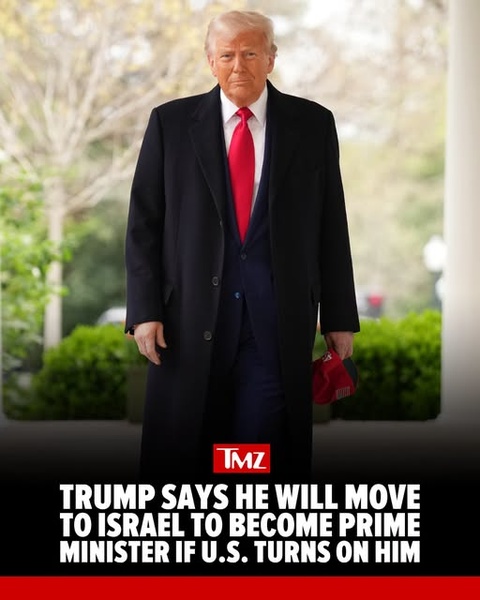
A striking headline attributed to Donald Trump claims that he would move to Israel and become prime minister if the United States turned against him. The suggestion is certainly provocative, but it should not be mistaken for a formal political plan: the image alone does not establish that Trump made a serious announcement or intends to leave the United States.
The claim also raises an interesting question about the relationship between Trump, Israel and the American political establishment. To understand the headline, it is important to separate the apparent joke from the constitutional and political realities.
In fact, Trump did make the remark. During a phone interview with Fox News on November 3, 2026, Election Day in the United States, he said: “If people ever got tired of me in the U.S., I'll move to Israel, become prime minister.”
The comment was made while he was discussing his relationship with Israel and his claimed popularity there. Trump described his approval rating in the country as 99 percent, although he did not provide polling evidence to support that extraordinary figure.

A joke built around Trump's claimed popularity
The context matters. Trump was not announcing a relocation date, presenting an Israeli political platform or formally declaring that he intended to challenge Benjamin Netanyahu. He was making a provocative, apparently humorous remark about the possibility that Americans might eventually become tired of him.
Nevertheless, the comment attracted attention because it involved an extraordinary suggestion: an American president imagining himself taking the top political office in another country.
Trump has made similar jokes before. In May 2026, he also floated the idea of going to Israel and running for prime minister after his American presidency, again linking the suggestion to his claims of overwhelming popularity among Israelis.
Why Israel became part of the conversation
Trump's relationship with Israel has been one of the defining features of his foreign policy. He has repeatedly praised the country, maintained a close relationship with Netanyahu and presented his administration's actions against Iran as evidence of his commitment to Israeli security.
During the November 3 interview, he also discussed a major change in American financial support for Israel. Trump said the United States would stop providing approximately $4 billion in annual assistance beginning in 2027, while continuing to sell weapons and potentially provide other support when needed.

That announcement could have significant consequences. The existing U.S.-Israel military assistance agreement covers $38 billion over ten years and runs through 2028. Any major change to that arrangement could involve negotiations and congressional decisions, rather than being implemented solely through a presidential statement.
The proposal has already raised questions about the future of the security relationship. Some Israeli critics have warned that reducing American assistance could weaken the country's security, while supporters of a gradual transition argue that Israel should become less dependent on U.S. funding.
Could Trump actually become Israel's prime minister?
There is also a major constitutional obstacle behind the joke. Israel's prime minister is not selected simply because a popular foreign politician moves to the country. The position is tied to Israel's parliamentary system, citizenship requirements and the political process involving the Knesset.
Trump has not announced any intention to pursue Israeli citizenship, enter Israeli politics or seek the support necessary to become prime minister. His remark should therefore be understood as political humor, not a realistic candidacy announcement.

The political reaction at home
The timing made the comment even more striking. Trump made it on the day Americans were voting in the 2026 midterm elections, when Republicans were fighting to maintain their congressional majorities.
For his supporters, the remark may have sounded like another example of Trump's confidence and unconventional humor. For critics, it offered fresh material to question his priorities, his rhetoric and the unusually personal nature of his relationship with foreign leaders.
The contrast between his claimed 99 percent approval in Israel and his political standing at home also became a major talking point. However, without a credible survey supporting the Israeli figure, it should be treated as Trump's own claim rather than an established measure of public opinion.

Ultimately, the headline contains a real quotation, but its meaning is more humorous than literal. Trump did say he would move to Israel and become prime minister if Americans ever grew tired of him. He did not announce plans to leave the White House or launch a campaign for Israeli leadership.
Still, the remark comes at a consequential moment for U.S.-Israeli relations, particularly as Washington considers changing its financial support while remaining deeply involved in the confrontation with Iran.
Was Trump simply joking about his popularity in Israel, or was he using the remark to send a broader political message about his relationship with American voters and Israel?
Comments (0)
Loading comments...
May You Like

TRUMP NAMES PICKAXE TARGET AS NETANYAHU PUSHES FOR MORE IRAN STRIKES

$1 BILLION DISASTER AT BANGCHAK REFINERY, THAILAND—40 BURNED, 8 AMERICANS DEAD!

FCC CLEARS SPACEX FOR ONE MILLION AI SATELLITES AS ASTRONOMERS SOUND ALARM

Latest Posts






Popular Posts





