
TRUMP MOCKS PUTIN WITH JOKES AND A VEILED WARNING AT APEC 2026!
TRUMP MOCKS PUTIN WITH JOKES AND A VEILED WARNING AT APEC 2026!
SHENZHEN, China — November 19, 2026 — President Donald Trump greeted Russian President Vladimir Putin with a joke and a handshake on Thursday before talks at the Asia-Pacific Economic Cooperation summit, offering a lighthearted opening to discussions involving the war in Ukraine, nuclear weapons and the future of relations among Washington, Moscow and Beijing.
As Trump approached the Russian leader, he jokingly questioned Putin's identity before immediately describing him as a friend.
The brief exchange was captured in footage available to the American press pool and reported by CBS News and Radio Free Europe/Radio Liberty.
The two presidents then held a separate meeting ahead of a highly anticipated three-way gathering with Chinese President Xi Jinping.
Russia's state news agency TASS reported that Ukraine was the principal subject of the Trump-Putin discussion. The Kremlin subsequently described Putin as leaving the meeting in an excellent mood.
The episode provided a striking contrast between Trump's conversational opening and the difficult international questions awaiting the three leaders.
It also raised a central question: whether friendly language could produce progress on conflicts and security disputes that have resisted previous negotiations.
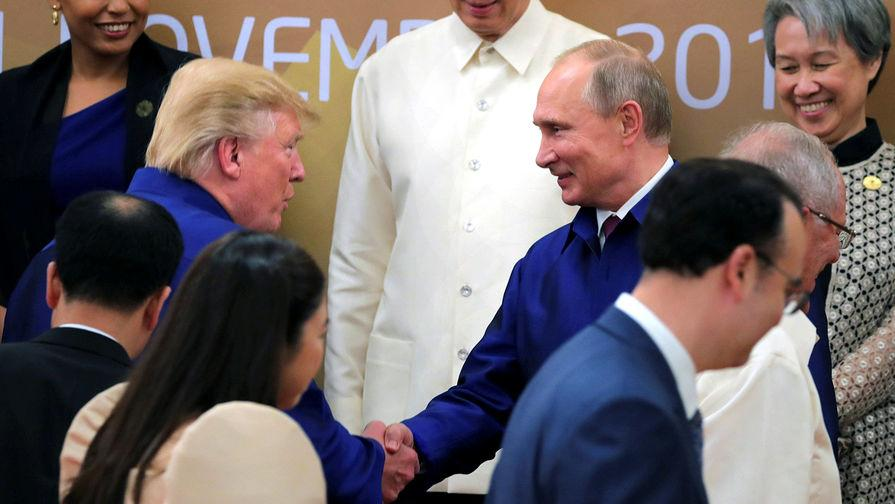
The exchange occurred as Trump entered a meeting room in Shenzhen.
He was accompanied by senior American officials, including Secretary of State Marco Rubio and Treasury Secretary Scott Bessent.
Putin was waiting with members of the Russian delegation.
As Trump approached, he pointed toward the Russian president and asked, “Who is he?”
He then laughed and added, “He's my friend.”
The moment was brief, but it attracted attention because of the relationship between the two leaders and the significance of the talks.
The remark was delivered in a joking tone rather than as a formal diplomatic statement.
The available footage does not show Trump insulting Putin or issuing a direct warning during that exchange.
Instead, the president used humor to introduce a meeting involving some of the world's most difficult security questions.
Trump has often emphasized his personal relationships with foreign leaders.
He has described diplomacy as an opportunity to resolve disagreements through direct conversation.
His approach to Putin has been particularly closely watched because Russia's invasion of Ukraine has strained relations with Western governments.
The APEC exchange brought those contrasting elements together.
Trump used friendly language toward a leader whose government remains engaged in a major European war.
That combination generated considerable interest in how the meeting might proceed.
The joke itself did not reveal the substance of the negotiations.
But it offered an early indication of the public tone Trump intended to establish.
The more consequential questions concerned whether that tone would translate into any changes in Russian policy or the diplomatic process surrounding Ukraine.
Putin greeted Trump and participated in the opening exchange.
The available accounts describe a cordial encounter rather than a confrontation.
After the meeting, Russia's TASS news agency reported that Ukraine had been the principal topic.
The Kremlin said Putin left in an excellent mood.
That description was provided by Russian officials and should be understood as their account of the meeting.
It does not establish that Putin obtained concessions or that the two governments reached an agreement.
What the public record does show is that Moscow presented the meeting positively.
There was no verified report of Putin responding angrily to Trump's joke.
The documented reaction was consistent with the friendly atmosphere visible at the beginning of the encounter.
Trump followed the informal greeting with remarks about his relationship with Putin.
He said the two leaders had known each other for many years and expressed optimism about their discussions.
He suggested that positive developments could emerge from the meeting or at least begin there.
The language was notably conciliatory.
Trump did not publicly announce a deadline for Russian concessions during the recorded opening.
He also indicated that another meeting would take place later.
The American press pool was permitted to record the beginning of the encounter but not the private discussion.
That restriction limits what can be independently established about the conversation.
The public remarks demonstrate optimism about dialogue.
They do not, by themselves, establish a specific diplomatic breakthrough.
The separate Trump-Putin meeting took place before the planned trilateral talks with Xi.
American journalists recorded the opening but were not permitted to remain inside.
Russian officials cited practical arrangements and parity between the delegations as reasons for restricting access.
Consequently, much of the discussion was known only through subsequent statements and briefings.
TASS identified Ukraine as the main subject.
The public record did not provide a complete transcript of the private conversation.
That makes it important to distinguish official descriptions from independently observed events.
The joke and handshake were visible.
The precise arguments exchanged behind closed doors were not.
Any claim that Trump secretly threatened Putin would require evidence beyond the publicly recorded opening and the general accounts released afterward.
Xi was the host of the wider APEC gathering and the planned trilateral summit.
The Chinese president was not shown participating in the specific Trump-Putin joke at the beginning of their separate meeting.
That distinction matters when describing the event.
The three leaders were present in Shenzhen, but not every exchange took place with all three together.
Trump met Putin separately and also held discussions with Xi.
The subsequent trilateral meeting brought the leaders together to address overlapping international concerns.
China's role was particularly important because Beijing maintains close economic and diplomatic relations with Moscow while also managing a complex relationship with Washington.
Xi therefore entered the talks with interests that were different from those of both Trump and Putin.
The diplomatic challenge was not simply managing personalities. It involved reconciling competing national priorities.
The gathering brought together the leaders of the United States, Russia and China at a time of considerable international tension.
The three countries possess substantial nuclear arsenals and play major roles in global security.
Their relationships include cooperation in some areas and significant disagreements in others.
Washington and Moscow remain divided over Ukraine.
Washington and Beijing face disputes involving trade, technology and regional security.
China and Russia have developed closer ties, particularly as Western governments have imposed sanctions on Moscow.
A joint meeting therefore offered an unusual setting for direct discussion among competing powers.
Associated Press reported that nuclear arms control and the wars involving Ukraine and Iran were central subjects.
The encounter was diplomatically significant even without a comprehensive agreement.
The most consequential issue behind Trump's friendly greeting was the need to address conflicts and nuclear risks.
Trump had publicly expressed interest in reducing nuclear weapons and pursuing an end to the war in Ukraine.
Those priorities created difficult questions for Moscow and Beijing.
For Russia, the Ukraine conflict involves territorial demands and wider security objectives.
For the United States, the negotiations involve relations with Kyiv, European allies and the broader international security system.
China has its own concerns about nuclear restrictions and the role of major powers in resolving conflicts.
Trump's public agenda therefore carried substantial diplomatic implications.
But those implications should not be confused with a verified personal threat delivered to Putin.
The documented warning was the broader danger of unresolved conflict and expanding nuclear arsenals.
Russia's war against Ukraine remained one of the most difficult issues facing the leaders.
The conflict has continued since Russia launched its full-scale invasion in February 2022.
Attempts to negotiate a settlement have encountered disagreements over territory, security guarantees and the conditions for ending hostilities.
Moscow has sought arrangements reflecting its military and political demands.
Ukraine has insisted on protecting its sovereignty and national security.
European governments have also expressed concern about any settlement that could affect the continent's security without adequate consultation.
Trump has argued that direct negotiations could help bring the war to an end.
However, a meeting between the American and Russian presidents cannot, by itself, determine Ukraine's position.
Any durable settlement would require addressing the interests and security of the parties directly involved.
For Putin, the Shenzhen gathering offered an opportunity to participate in high-profile diplomacy alongside the leaders of the United States and China.
Russia has faced extensive sanctions and political isolation from Western governments since its invasion of Ukraine.
Appearing at a major international summit provides Moscow with an opportunity to demonstrate that it retains important diplomatic relationships.
French newspaper Le Monde reported that the meeting's symbolic significance was considerable for Putin.
Russian media also presented the gathering as evidence of Moscow's continued international relevance.
That interpretation does not mean the meeting changed the military situation in Ukraine.
Nor does it establish that Russia secured its preferred diplomatic outcome.
It means that the setting itself carried political significance, independent of any agreement reached.
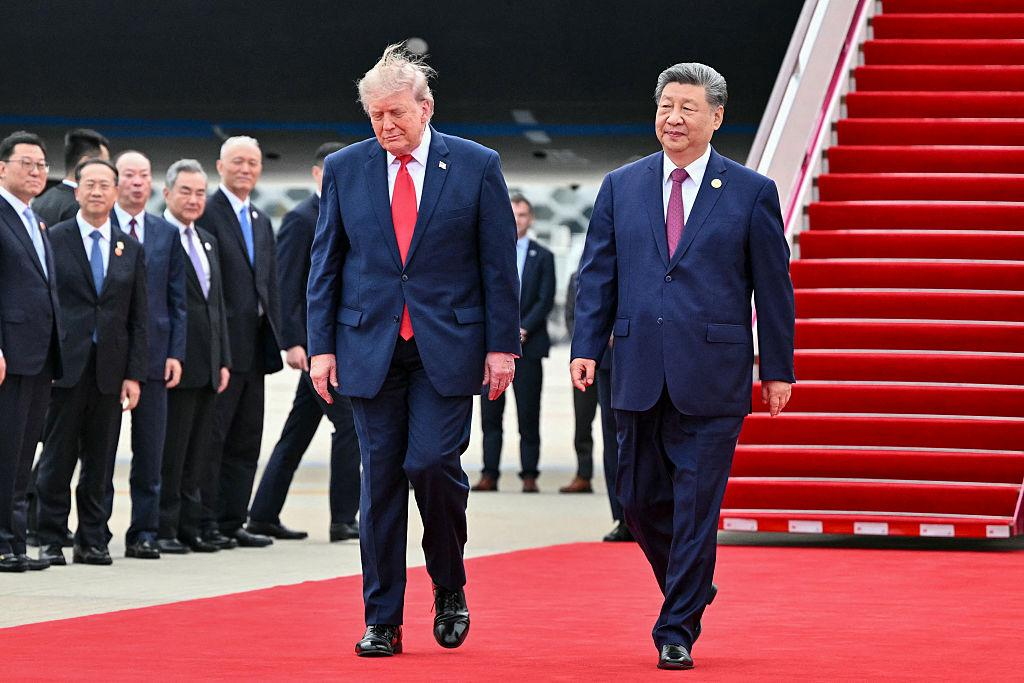
The United States and Russia possess the world's largest nuclear arsenals.
China has a smaller but expanding stockpile.
Trump has expressed interest in negotiating reductions involving all three countries.
Such an arrangement would be difficult because their arsenals differ substantially in size and composition.
Each government would need assurances that an agreement would not undermine its security.
Verification would present additional challenges.
Negotiators would have to determine which weapons were covered, how compliance would be assessed and what would happen if a party failed to meet its commitments.
These technical and political obstacles cannot be resolved through personal rapport alone.
They require sustained negotiations and detailed agreements.
The nuclear discussions took place after the expiration of the New START treaty in February 2026.
The agreement had placed limits on deployed strategic nuclear weapons held by the United States and Russia.
It also established procedures for exchanging information and verifying compliance.
Its expiration removed an important part of the bilateral arms-control framework.
That development increased uncertainty about future nuclear deployments.
Without binding treaty limits, the two countries face fewer formal restrictions on certain strategic forces.
The absence of a replacement agreement also complicates efforts to maintain transparency.
Trump's interest in a broader arrangement involving China reflects the changing strategic environment.
But a three-country agreement would be more complicated than the previous bilateral treaty.
The summit provided an opportunity to discuss that challenge, not an immediate solution.
China has argued that its nuclear arsenal remains much smaller than those of the United States and Russia.
That difference is central to Beijing's position on arms control.
Chinese officials have questioned whether their country should accept comparable restrictions while the other two powers retain substantially larger stockpiles.
Washington, meanwhile, is concerned about China's military modernization and potential future expansion.
Moscow has its own strategic calculations.
These positions create a difficult negotiating environment.
An agreement acceptable to Washington might be viewed as unbalanced by Beijing.
A framework satisfying China might not address American concerns about future capabilities.
The challenge is therefore to develop terms that reflect different starting positions while still reducing strategic risks.
Trump's public comments about nuclear reductions addressed that broader problem.
Xi hosted the leaders while seeking to protect China's economic and strategic interests.
Beijing maintains a close relationship with Moscow.
At the same time, China has strong commercial ties with the United States.
Those relationships create opportunities for diplomacy but also place competing pressures on Chinese policymakers.
Xi's government has emphasized the importance of economic stability and managing disagreements among major powers.
During APEC, he called for open trade and cooperation on technology.
China also faces American restrictions on advanced semiconductor technology and other strategic industries.
Those disputes affect the broader relationship between Washington and Beijing.
The trilateral meeting therefore involved more than Russia and Ukraine.
It also provided a setting for China to demonstrate its role as a major diplomatic actor.
The APEC summit was originally designed around economic cooperation.
Yet trade disputes among major powers continued to dominate discussions.
Washington and Beijing have disagreed over tariffs, agricultural purchases, rare-earth exports and advanced technology.
American restrictions on certain semiconductor technologies have been a particular source of tension.
China has also sought to protect its position in critical-mineral supply chains.
Trump discussed the importance of trade arrangements and American economic interests during the summit.
Xi emphasized cooperation and the need to avoid protectionist measures.
Their positions reflected competing economic priorities.
The summit created opportunities for dialogue, but those disputes remained separate from the Trump-Putin joke.
They also influenced the broader diplomatic atmosphere in which the three leaders met.
APEC brings together 21 member economies across the Asia-Pacific region.
Its work includes trade facilitation, investment, economic integration and technological cooperation.
The Shenzhen gathering took place amid concerns about energy prices and international economic uncertainty.
International Monetary Fund Managing Director Kristalina Georgieva highlighted the role of artificial intelligence investment in supporting economic activity.
According to Associated Press, she cited annual growth of 3.4% across APEC economies and global trade growth of 4.6%.
Those figures helped place the geopolitical discussions in an economic context.
The countries involved have substantial commercial relationships despite their political disagreements.
That creates incentives to maintain communication.
However, economic interdependence does not eliminate security disputes.
The summit illustrated both realities: governments seeking cooperation while remaining divided over military and strategic questions.
The war involving Iran was another major issue on the agenda.
The conflict has affected international energy markets and contributed to concerns about regional stability.
The United States, Russia and China have different relationships with Tehran.
Those differences influence their diplomatic positions.
Trump has sought discussions about ending the conflict.
Moscow and Beijing have maintained their own approaches to the war and regional security.
Any coordinated initiative would require addressing those competing interests.
The Iran issue also connects to energy prices and global trade.
Disruptions to important shipping routes can affect countries far beyond the Middle East.
That made the conflict relevant to the wider APEC agenda.
The leaders faced multiple international problems that could not be resolved by a single personal exchange.
Trump has frequently emphasized the value of direct relationships with foreign leaders.
His friendly remarks toward Putin fit that approach.
Personal rapport may make it easier for leaders to communicate and explore possible compromises.
However, international agreements require decisions extending beyond personal relationships.
Governments must consider military capabilities, economic interests, domestic law and commitments to other countries.
In the case of Ukraine, the positions of Kyiv and European governments are particularly important.
In nuclear arms control, technical verification is essential.
In trade, agreements must address commercial rules and implementation.
A positive opening to a meeting can create a constructive atmosphere.
It cannot substitute for agreement on these underlying questions.
The footage supports describing Trump's opening remark as a joke.
It does not clearly support describing it as a hostile insult.
Trump smiled, laughed and immediately referred to Putin as a friend.
He then praised their longstanding relationship.
Putin participated in the meeting, and Russian officials subsequently described the discussion positively.
Those observations provide a stronger basis for interpreting the exchange as lighthearted than as a public confrontation.
The political context remains important.
A friendly joke between leaders can occur even when their governments disagree profoundly.
The presence of serious disputes does not transform every informal remark into a threat.
The public evidence shows a cordial opening followed by private talks about difficult issues.
The Kremlin's account of Putin's mood was one of the most direct indications of how Moscow wanted the encounter understood.
Russian officials said he left the meeting in excellent spirits.
TASS reported that Ukraine was the main subject of discussion.
That combination suggests Moscow considered the conversation constructive enough to present positively.
But official descriptions of diplomatic meetings are not neutral assessments of their outcomes.
Governments may emphasize favorable aspects while withholding sensitive details.
The Kremlin's statement therefore provides evidence of Russia's public reaction, not proof that the meeting achieved Moscow's objectives.
The available footage also does not show Putin becoming angry at Trump's joke.
The documented response was calm and diplomatic.
One of the most consequential concerns surrounding the summit involved countries not represented in the trilateral discussions.
Ukraine was not a participant in the Trump-Xi-Putin meeting.
European governments also lacked a direct seat at that gathering.
Yet decisions concerning the war could have substantial consequences for Ukrainian sovereignty and European security.
Commentators and officials raised concerns about major powers discussing arrangements that affect other countries.
Those concerns do not establish that the three leaders reached a secret agreement.
They highlight the importance of participation and consent in any eventual settlement.
The presence of Trump, Putin and Xi created a powerful diplomatic image.
But the interests of other governments remained essential to determining what any negotiations could achieve.
The summit illustrated the tension between diplomatic ceremony and unresolved international disputes.
Trump and Putin exchanged a friendly greeting.
Xi hosted meetings intended to support dialogue.
The three governments nevertheless remained divided over security, trade and the future of international agreements.
The symbolism of the gathering was substantial.
Russia gained an opportunity for high-profile engagement.
China demonstrated its role as a diplomatic host.
The United States pursued discussions about nuclear arms control and international conflicts.
But the public record did not establish that the leaders had overcome their central disagreements.
The outcome of the talks would depend on subsequent negotiations, policy decisions and developments in the conflicts under discussion.
The most consequential meaning behind Trump's remarks lay in his broader diplomatic agenda.
He wanted discussions that could produce progress on Ukraine and nuclear arms reductions.
He also sought to maintain working relationships with Putin and Xi despite significant disagreements.
His public comments suggested optimism that talks could begin producing results.
They did not establish that he had issued a concealed ultimatum during the opening exchange.
The distinction matters because a diplomatic warning requires evidence of a demand, a consequence or a specific statement.
The recorded joke contained none of those elements.
The serious issues that followed were substantial enough without attributing additional threats to the American president.
The next stage depends on whether the governments can translate their discussions into concrete negotiations.
For Ukraine, that would require addressing the positions of the parties directly involved in the conflict.
For nuclear arms control, it would require developing a framework acceptable to countries with very different arsenals.
For U.S.-China relations, unresolved trade and technology disputes remain significant.
None of these problems can be settled through a single meeting.
The Shenzhen summit provided an opportunity for direct communication among three powerful leaders.
The immediate public reaction from Moscow was positive.
But a favorable diplomatic atmosphere is different from a verified policy breakthrough.
Trump's joke was straightforward: he playfully questioned Putin's identity before calling him a friend.
Putin greeted him and took part in the talks.
The Kremlin later described the Russian president as leaving in an excellent mood.
The serious message came from the issues awaiting the leaders, not from a verified personal threat.
Ukraine remained at war. Nuclear arms-control arrangements faced an uncertain future. Washington, Moscow and Beijing continued to disagree over major security questions.
Comments (0)
Loading comments...
May You Like

PACIFICA PIER IN CALIFORNIA COLLAPSE REVEALS MASSIVE CRACK BENEATH THE OCEANs!

PENTAGON'S DECLASSIFIED UFO FILES — THE MYSTERY OF AN UNDERGROUND STORAGE PROJECT!

BANGCHAK REFINERY IN THAILAND SHUT DOWN, U.S. OIL PRICES JUMP 10%!








Popular Posts




