
Trump, Obama, and the ‘Cheesecake Factory’ Fight: A Rally Joke Becomes a Midterm Flashpoint
Trump, Obama, and the ‘Cheesecake Factory’ Fight: A Rally Joke Becomes a Midterm Flashpoint
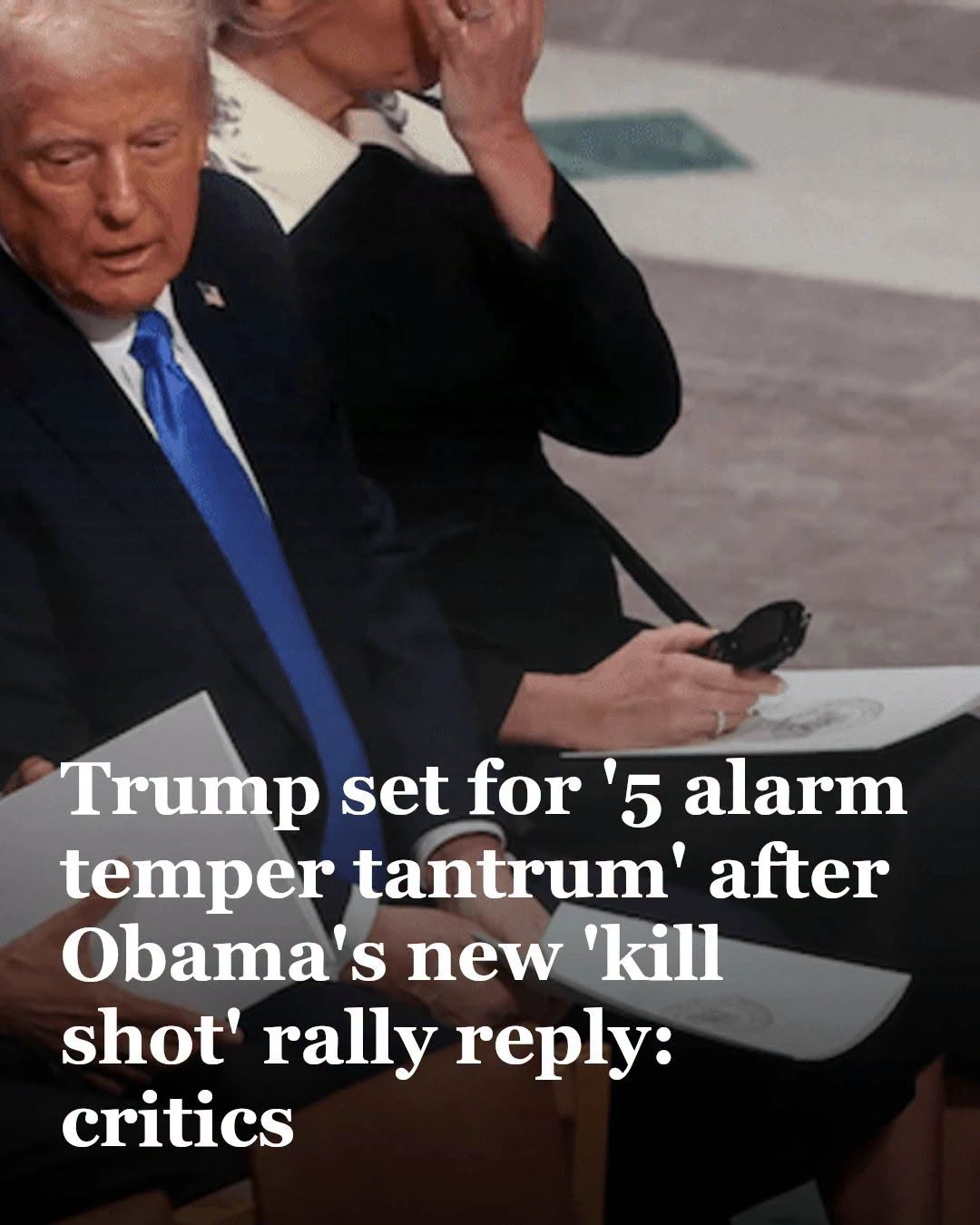


A viral headline says Donald Trump is headed for a ‘five-alarm temper tantrum’ after Barack Obama delivered a new ‘kill shot’ at a rally. The language is deliberately dramatic: it reflects critics’ interpretation of a political exchange, not a verified prediction about Trump’s emotions. The underlying story is real, however. Obama has revived a joke about Trump’s White House renovations, and Trump and his allies have publicly pushed back.
The dispute began at a Democratic rally in Cleveland on October 24, 2026, when Obama mocked the president’s focus on renovations to the White House. Obama joked that Trump should host a home-improvement television show and compared the gold-heavy decor to a Cheesecake Factory opened by Iraqi dictator Saddam Hussein. The line was designed as a sharp political punchline, tying the building’s appearance to a larger argument about presidential priorities.
Obama’s criticism was not limited to interior decoration. He pointed to the planned ballroom, changes to the Rose Garden, a new helipad, and the extensive use of gold-colored ornamentation. His broader claim was that Trump seemed preoccupied with the White House’s appearance while Americans were worried about living costs and the administration was managing major policy challenges.
The remark quickly became a campaign story of its own. Trump responded at a rally in Mississippi, defending the renovations and describing them as improvements to a building that needed work. He also attacked Obama personally. News coverage reported that Trump spent several minutes addressing the joke and the projects, giving the dispute more airtime than a one-line exchange might otherwise have received.
Obama returned to the subject at a rally near Atlanta on October 28, where he said the president had not seemed particularly bothered by the Saddam Hussein comparison but had taken offense at the Cheesecake Factory reference. Obama also joked about his own family’s familiarity with the restaurant chain and argued that the administration’s response was more energetic than its response to rising prices.
The ‘five-alarm temper tantrum’ phrase in the viral headline comes from the critical framing of Trump’s likely reaction. It is not an official description, medical assessment, or independently measurable fact. Headlines often turn political conflict into a personality story, but readers should distinguish commentary about a politician’s temperament from what can be confirmed through public statements and recorded events.
There is a substantive political argument underneath the joke. White House renovations are visible and easy to personalize, while inflation, wages, energy costs, and foreign policy are complex issues that require more explanation. Obama’s attack sought to suggest that Trump’s attention was misplaced. Trump’s counterargument was that maintaining and improving the presidential residence is a legitimate responsibility and that critics were ridiculing successful enterprise and ordinary Americans’ tastes.
The restaurant reference also created an opening for Trump allies to argue that Obama was being elitist. Some conservative commentators framed the joke as an insult to a popular American chain and its customers. That interpretation shifted attention away from Obama’s original target—the lavish aesthetic of the renovations—and toward whether the restaurant itself was being unfairly mocked.
Those are two different questions. A joke about a restaurant’s visual style or brand does not automatically insult every person who eats there. At the same time, political humor can land differently with audiences depending on class, geography, and cultural identity. The backlash became a debate not only about Trump’s decorating choices but also about who gets to define what is ‘ordinary’ or authentically American.
The controversy expanded when administration officials and political allies responded publicly. News reports described Treasury Secretary Scott Bessent visiting a Cheesecake Factory as part of the political back-and-forth, and the chain itself became a prop in a wider messaging fight. The episode showed how a joke can be transformed into an organized communications opportunity when political figures decide to amplify it.
Obama’s use of the joke also serves a campaign purpose. He has been appearing at events for Democratic candidates ahead of the November 3, 2026 midterm elections, including Senate and gubernatorial contests in competitive states. His role is to attract attention, energize Democratic voters, and frame the election as a judgment on the current administration’s priorities and conduct.
Trump, meanwhile, has been holding rallies and making appeals for Republican candidates. In the final days before a midterm election, both parties want their messages to dominate news coverage. Personal exchanges between former and current presidents can crowd out local policy debates, but they can also help campaigns reach voters who may not otherwise follow a particular race closely.
Whether the exchange changes votes is much harder to establish. A memorable line can travel widely on social media and appear in news clips, but visibility is not the same as persuasion. Some voters may see Obama’s joke as an effective critique of misplaced priorities; others may view it as petty or elitist. Still others may barely notice it, focusing instead on the economy, health care, immigration, or national security.
The polling context matters more than any single insult. Surveys conducted before the midterms have shown affordability and economic concerns remain central for many voters, while the White House renovations have also attracted criticism. A Washington Post-ABC News-Ipsos poll reported that a majority of respondents thought Trump was spending too much time on renovation projects. Such findings can help explain why the issue resonates, though they do not prove that the joke itself will affect election results.
The phrase ‘kill shot’ is also metaphorical. It suggests a devastating political attack, but no single rally joke can settle a national argument or determine an election by itself. Campaigns are shaped by candidate quality, local conditions, turnout, fundraising, party identification, and events that may have little connection to a viral exchange.
There is a broader institutional dimension to the dispute. The White House is both a working government complex and a symbolic residence representing the country. Renovation decisions can be defended as maintenance or criticized as extravagant, depending on their costs, scale, timing, and public value. Clear information about budgets, approvals, and project details is more useful than relying solely on photographs or partisan characterizations.
Political communication increasingly rewards spectacle. A sharp insult is easier to share than a detailed policy explanation, and an argument about decor can be reduced to a meme within minutes. That does not mean the issue is meaningless; symbolism matters in politics. But it does mean that the loudest online reaction may not accurately represent public opinion as a whole.
The photograph attached to the viral graphic shows Trump seated beside a woman holding a device and papers. The image by itself does not establish the moment or setting of Obama’s remarks, nor does it prove Trump’s emotional state after hearing them. Unless a reliable caption or original photo credit confirms its context, it should be treated as an illustrative image rather than evidence of the specific rally exchange.
The best-supported account is straightforward: Obama mocked Trump’s renovation choices at a rally, Trump defended the projects and criticized Obama, and Obama later repeated the joke while arguing that the administration was more focused on the insult than on prices. The language about a coming ‘temper tantrum’ is opinionated headline framing, not a confirmed forecast of what Trump will do next.
As the midterms approach, the dispute may continue to supply campaign clips and partisan commentary. Its lasting significance will depend less on who delivered the sharper punchline than on whether voters believe the candidates are addressing their concerns. For now, the Cheesecake Factory row is a vivid example of how presidential rivalry, symbolic imagery, and economic anxiety can collide in a campaign—without any one joke proving the broader political case on its own.
Comments (0)
Loading comments...
May You Like

STAR DIED AT 38, $10M LIFE INSURANCE INCREASED JUST 30 DAYS BEFORE WWE BRONSON REED'S DEATH!

WWE BRONSON REED—INSPIRED—SUDDEN COLLAPSE, MYSTERIOUS STIMULANTS, DEAD AT 38!

MINNESOTA NIGHTMARE—UNDERGROUND GAS LEAK, HUNDREDS OF HOMES AT RISK, $300M DAMAGE!









Popular Posts



