Trump Orders U.S. Navy to Target Boats Laying Mines in Strait of Hormuz
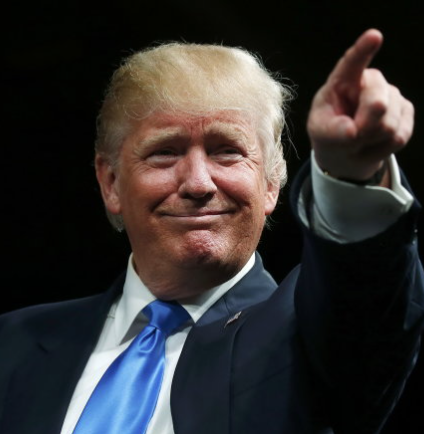
A dramatic image circulating online shows Donald Trump beside a map of the Strait of Hormuz with the words “Trump’s early morning announcement” and the phrase, “I have ordered…” The graphic refers to a real statement Trump made in April 2026, but it is being presented without the context surrounding the order.
On April 23, Trump said he had ordered the U.S. Navy to “shoot and kill” boats that were laying mines in the Strait of Hormuz. He also said American minesweepers were already operating in the waterway and ordered the mine-clearing effort to be increased.


The statement came during an intense confrontation between Washington and Tehran over control of the strategic waterway. The Strait of Hormuz is one of the world's most important routes for energy shipments, with a large share of globally traded oil and natural gas normally passing through it.
Trump's statement was unusually direct. He said there should be “no hesitation” if small vessels were found placing mines in the strait. He also claimed that Iran's larger naval vessels had already been destroyed, although that characterization was Trump's own description of the military situation.
The order was not an announcement that the United States had decided to attack every Iranian vessel in the waterway. It was specifically directed at boats involved in laying naval mines, according to Trump's statement.
That distinction matters because naval mines can pose a serious danger to commercial shipping even when no direct attack is taking place. A vessel striking a mine can be damaged or sunk without being directly targeted by missiles or gunfire.


The order also followed a series of incidents involving commercial shipping. AP reported that Iran's Revolutionary Guard had attacked three cargo ships in the strait and captured two of them shortly before Trump's announcement.
At the same time, U.S. forces had seized the tanker Majestic X, a vessel Washington associated with the smuggling of Iranian oil. The incident added another layer to an already tense confrontation over sanctions, shipping and control of the waterway.
The United States had already begun mine-clearing operations before Trump's April 23 statement. His announcement therefore represented an escalation of the existing operation rather than the creation of an entirely new mission.
Trump said the minesweeping effort would continue at a “tripled up” level. International reporting subsequently focused on how long it could take to make the waterway sufficiently safe for normal commercial traffic.


The confrontation also had a major economic dimension. The Strait of Hormuz connects the Persian Gulf with the Gulf of Oman and Arabian Sea, making it particularly important for oil-producing states such as Saudi Arabia, Iraq, Kuwait, Qatar and the United Arab Emirates.
Any prolonged disruption therefore has consequences well beyond the United States and Iran. Reduced tanker traffic can raise transportation costs, increase insurance premiums and put upward pressure on international energy prices.
Earlier in March, Trump had announced that the United States would provide political-risk insurance for maritime trade and said the U.S. Navy could escort tankers through the strait if necessary. The stated goal was to maintain the flow of energy to international markets.
That earlier announcement demonstrates that Trump's strategy involved more than military action. Washington was simultaneously discussing shipping protection, insurance, mine clearance and negotiations with Tehran.


The timing of the April order was also significant because Washington and Tehran were still operating under a fragile ceasefire arrangement. Trump had said the ceasefire would continue while Iran prepared a unified proposal for negotiations.
That meant the military order did not necessarily represent the abandonment of diplomacy. Instead, the administration was applying military pressure while continuing to discuss the possibility of a broader agreement with Iran.
Iran's position was substantially different. Tehran had disputed some of Trump's descriptions of negotiations and the situation surrounding the strait, creating uncertainty over whether diplomatic discussions could produce a durable settlement.
The episode illustrates how quickly an apparently narrow maritime dispute can become a much larger international crisis. The strait is simultaneously a military chokepoint, a commercial shipping route and a critical component of the global energy system.


It is also important to distinguish the viral image's presentation from the documented event. The graphic makes the announcement appear like a new breaking-news development, but the statement it references dates to April 23, 2026.
The wording “I have ordered” is genuine and comes from Trump's own public statement. What the graphic leaves out is that the order concerned boats laying mines and was accompanied by a directive to intensify mine-clearing operations.
There is also no evidence in the reporting cited here that Trump ordered the Navy to attack ordinary commercial tankers simply because they were Iranian or because they were traveling through the strait.
The broader confrontation has nevertheless demonstrated the risks facing international shipping in the region. Any escalation involving mines, naval vessels or tanker seizures could affect energy markets far beyond the Middle East.
Comments (0)
Loading comments...
May You Like
OBAMA STUNS ON INSTAGRAM: MESSAGE MARKING 34-YEAR MILESTONE SPARKS A BUZZ