Trump Promised $5,000 to Every Adult if Republicans Keep Congress — One Detail Could Decide Whether Anyone Gets Paid
The president tied a nationwide “Trump dividend” to the 2026 midterm result, but the promise immediately raised a much bigger question: who actually has the power to authorize the money?
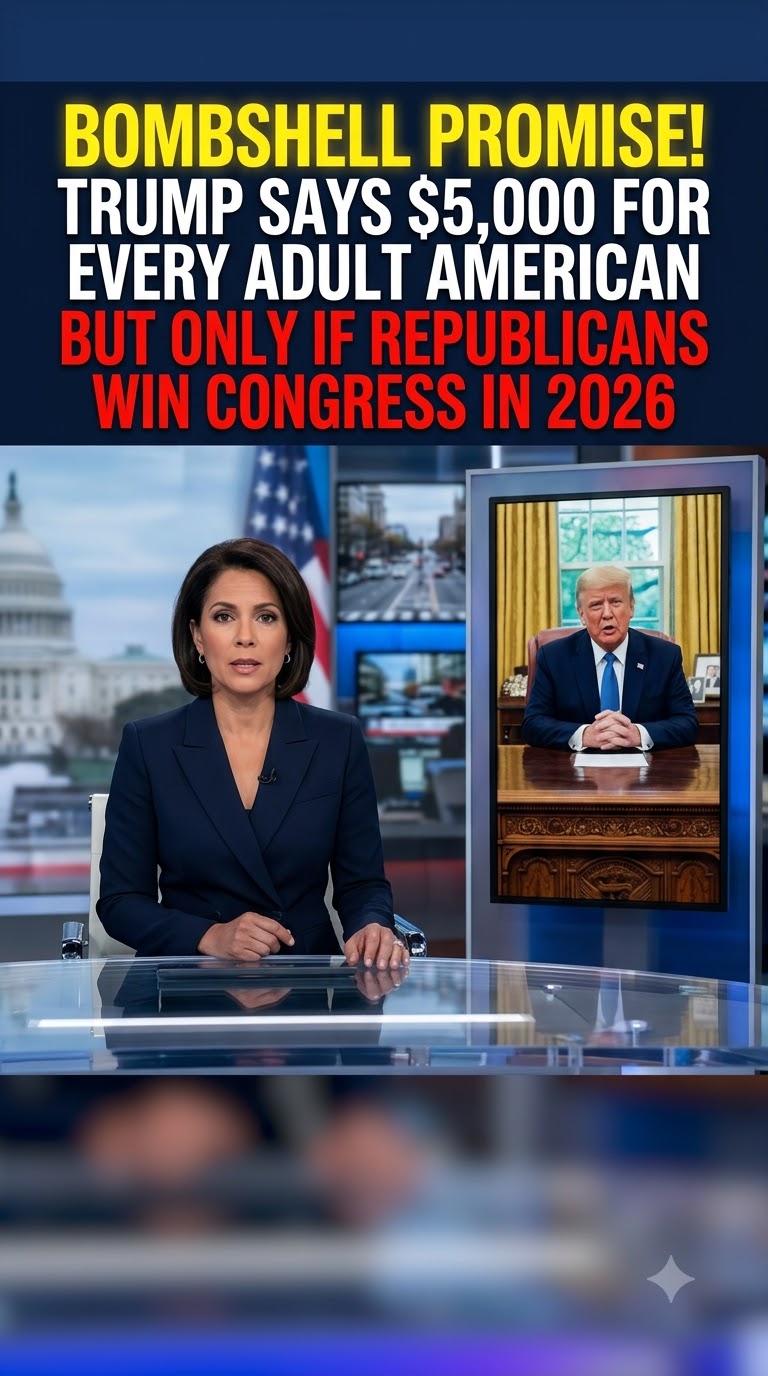
Donald Trump made one of the most attention-grabbing promises of the 2026 midterm campaign when he said every adult American citizen would receive $5,000 if Republicans kept control of Congress.
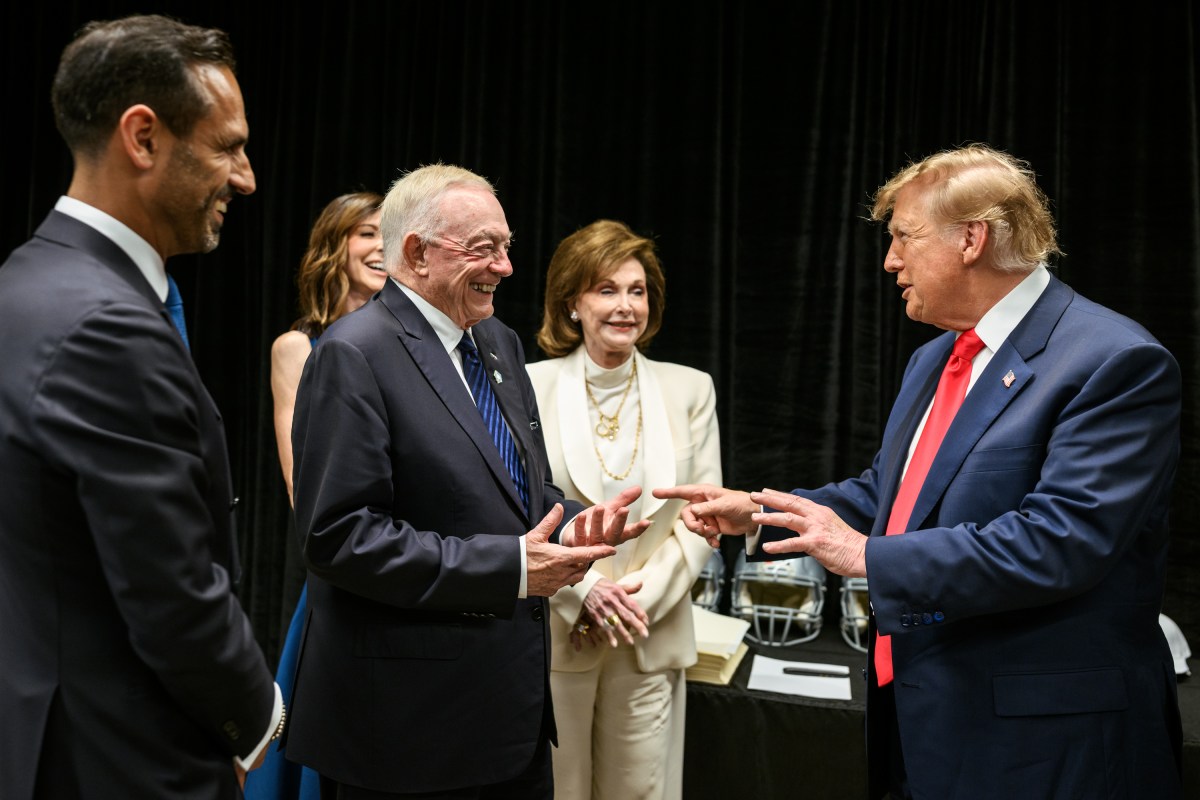
The pledge came during the Republican Party’s midterm convention in Dallas, where Trump framed the November election as a direct choice between keeping his agenda alive and handing power to Democrats.
He gave the proposed payment a name — the “Trump dividend” — and told supporters that a Republican victory in both the House and Senate would unlock the promised cash.
Trump also said the money would have to be spent inside the United States, but he offered few details about timing, eligibility rules, funding mechanics or how the program would actually operate.

That missing information quickly became the most important part of the story because sending $5,000 to every adult citizen would require an extraordinary amount of federal money.
Estimates based on the adult U.S. population put the potential cost above $1 trillion, making the idea far larger than a normal tax rebate or narrowly targeted benefit.
The president argued that the country could afford the payments because the economy was performing strongly and government revenues were rising, though he did not present a detailed financing plan.
The central legal question emerged almost immediately: could a president simply order payments of that size, or would Congress first have to pass legislation authorizing the spending?

House Speaker Mike Johnson publicly said congressional approval would be required, creating a notable contrast with Trump’s suggestion that lawmakers might not need to authorize the checks.
Johnson nevertheless said Republicans would try to work through the proposal, describing Trump as a president willing to advance large ideas even when the legislative path remained uncertain.
Trump later doubled down, telling reporters that the $5,000 payments were going to happen and expressing confidence that the government could manage the cost if Republicans retained power.
The promise also revived memories of earlier proposals for direct payments, including the never-enacted $5,000 “DOGE dividend” and Trump’s separate calls for tariff-funded rebate checks.
Those earlier ideas matter because none became a universal $5,000 payment to every adult, showing how a headline-grabbing proposal can remain far from an actual check arriving in households.
The newest pledge is different because Trump explicitly attached it to an election result, saying the money would come only if Republicans maintained control of both chambers of Congress.
That condition instantly turned the proposal into a major campaign issue, with supporters calling it a tangible economic benefit and critics questioning its cost, legality and political implications.
Republicans are entering the midterms under pressure from voter concerns about inflation, borrowing costs and household expenses, giving any promise of direct cash unusual political power.
At the same time, economists and budget analysts have warned that adding more than $1 trillion in federal spending could create new concerns about deficits, debt and inflation.
No legislation authorizing a nationwide $5,000 dividend had been enacted when Trump made the promise, meaning the pledge remained a campaign proposal rather than an approved government payment.
That distinction is crucial for Americans seeing viral posts about the checks: Trump really did make the promise, but the money is not currently guaranteed or automatically scheduled.
The biggest unanswered question is therefore not whether Trump said it. He did. The real question is whether a Republican Congress could turn the dramatic $5,000 pledge into law.
Comments (0)
Loading comments...
May You Like
OBAMA STEPS BACK INTO THE POLITICAL SPOTLIGHT

South Korea–Ukraine Rift Deepens Over North Korean POW Transfer as PURL Draws New Scrutiny

South Korea–Ukraine Rift Deepens Over North Korean POW Transfer as PURL Draws New Scrutiny