Trump Promises 5,000 Dollar 'Dividend' — Vote Republican, Get Paid
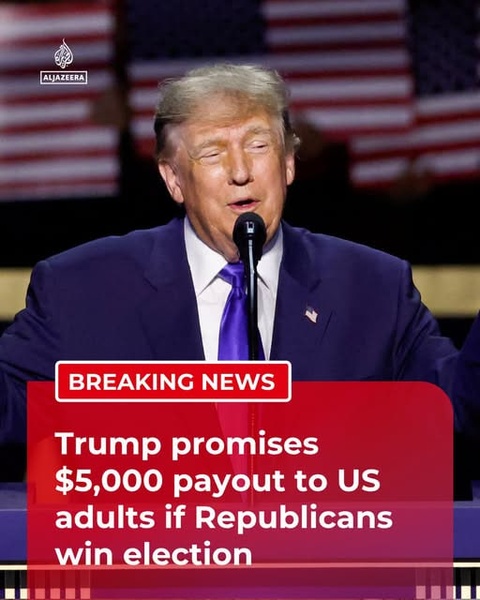
DALLAS — President Donald Trump has made one of his most dramatic economic promises of the 2026 election campaign, pledging to give $5,000 to every adult U.S. citizen if Republicans retain control of both chambers of Congress in November.
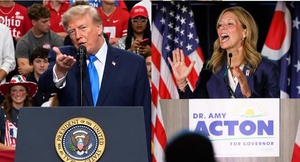
Trump announced the proposal Wednesday at the Republican Party’s first-ever midterm convention in Dallas, presenting the payment as a reward tied to what he described as the country’s economic strength and success.
“If the Republicans win the House of Representatives and the United States Senate, both of them ... I will issue a dividend to every adult citizen in the United States of America for $5,000,” Trump said.
He added one condition: the money would have to be spent inside the United States.
But the announcement immediately raised major questions. Trump provided no detailed funding mechanism, implementation plan or explanation of how Congress would authorize the payments.
Trump Calls It the “Trump Dividend”
Trump framed the proposal as a direct economic benefit for Americans if Republicans maintain control of Congress after the Nov. 3 midterm elections.
He said the payment would be a “dividend,” rather than describing it as another round of conventional government stimulus checks.
The president did not explain whether every adult citizen would qualify regardless of income, whether children would be excluded, or how the government would distribute the money.
Reuters reported that no additional details were immediately available following Trump's announcement.
The White House and Republican leaders now face pressure to explain how such a massive program could actually work.
The Price Tag Could Exceed $1 Trillion
The biggest immediate question is the cost.
The United States has roughly 240 million adults. A $5,000 payment to every adult would therefore amount to well over $1 trillion before accounting for administrative costs or any eligibility restrictions.
The Associated Press reported that the proposal could cost more than $1 trillion and would require congressional approval.
That price tag would make the proposed dividend substantially larger than many of the federal government's recent one-time payment programs.
It also comes as the U.S. government continues to run large annual budget deficits and carry a national debt measured in the tens of trillions of dollars.
Critics have therefore questioned whether the proposal would increase borrowing, worsen inflationary pressures or require significant cuts elsewhere in the federal budget.
Trump Has Not Explained Where the Money Would Come From
Trump's announcement was notably short on financial details.
He said the dividend would be possible because of America's “tremendous strength and success economically,” but he did not identify a specific source of funding during the speech.
Vice President JD Vance later suggested that wealthy Americans could potentially be excluded and indicated that tariff revenues might play a role in financing the payments. But that would still leave a significant gap between potential tariff revenue and the enormous cost of the proposed checks.
That distinction is crucial.
A tariff is ultimately a tax collected on imports. Although the Trump administration has promoted tariffs as a source of government revenue, the amount collected would need to be extraordinarily large to finance $1 trillion or more in direct payments.
Trump Has Made Similar “Dividend” Promises Before
The proposal also recalls another Trump economic idea that never became reality.
In 2025, Trump floated the idea of a $2,000 tariff dividend that would send money to Americans using revenue generated by his tariff policies.
That proposal was never implemented.
Trump also previously promoted a “DOGE dividend,” suggesting that money saved through government spending cuts could eventually be distributed to Americans. That proposal likewise did not result in nationwide checks.
The history of those proposals means the latest announcement should be understood as a campaign promise, rather than an approved federal benefit.
Trump Cannot Simply Order the Checks Himself
Another important issue is presidential authority.
Despite Trump's wording, a president does not have unilateral authority to create a new nationwide $5,000 payment program simply by announcing it at a political convention.
Congress would generally need to authorize the expenditure and provide the necessary funding.
The Associated Press reported that Trump's proposed payment would require congressional approval, while legal questions could also arise from conditioning the promise on Republicans winning the election.
That means the proposal's fate would depend heavily on what happens in November.
If Republicans retain both the House and Senate, the administration would have a much clearer path to asking Congress to enact the program. If Democrats take control of either chamber, the proposal could face a major legislative roadblock.
A Powerful Message to Voters
Politically, however, the proposal does not require immediate implementation to have an impact.
Trump is attempting to make the 2026 midterm election feel personal to voters.
His message is essentially straightforward: vote Republican, keep control of Congress, and Americans could receive thousands of dollars.
That strategy fits Trump's broader approach to the midterms, in which he has repeatedly urged voters to treat the election as a referendum on his presidency.
At the Dallas convention, Trump even told supporters to imagine that he himself was on the ballot, arguing that his voters are more likely to turn out when his name appears directly on the ballot.
The Economy Could Determine Whether the Promise Resonates
The announcement comes at a difficult political moment for the Trump administration.
Inflation, gasoline prices and the economic effects of the ongoing conflict with Iran have become major concerns for voters.
Oil prices have recently moved above $100 a barrel, putting additional pressure on household budgets. Trump has argued that his economic policies will ultimately produce greater prosperity, while Democrats have blamed his policies for worsening affordability.
That makes a $5,000 payment particularly powerful as a political message.
For households struggling with rising costs, the idea of receiving thousands of dollars could be far more tangible than promises about long-term economic growth.
But economists and fiscal-policy analysts have warned that putting more than $1 trillion into the economy could also have significant consequences depending on how it is financed.
Democrats Are Likely to Attack the Proposal as Election-Year Politics
Democrats are expected to argue that the proposal resembles a campaign incentive rather than a fully developed economic program.
The timing is particularly striking: Trump announced the payment at a partisan convention less than two months before the midterm elections.
Republicans, however, are likely to present the proposal as evidence that the administration's economic policies are generating enough revenue and growth to return money directly to Americans.
That argument will face a simple question from voters and lawmakers alike:
Where exactly will the $1 trillion-plus come from?
Until the administration provides a detailed answer, the proposal remains largely aspirational.
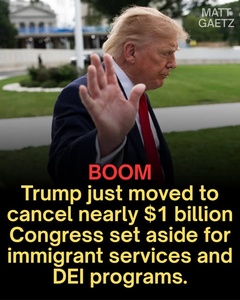
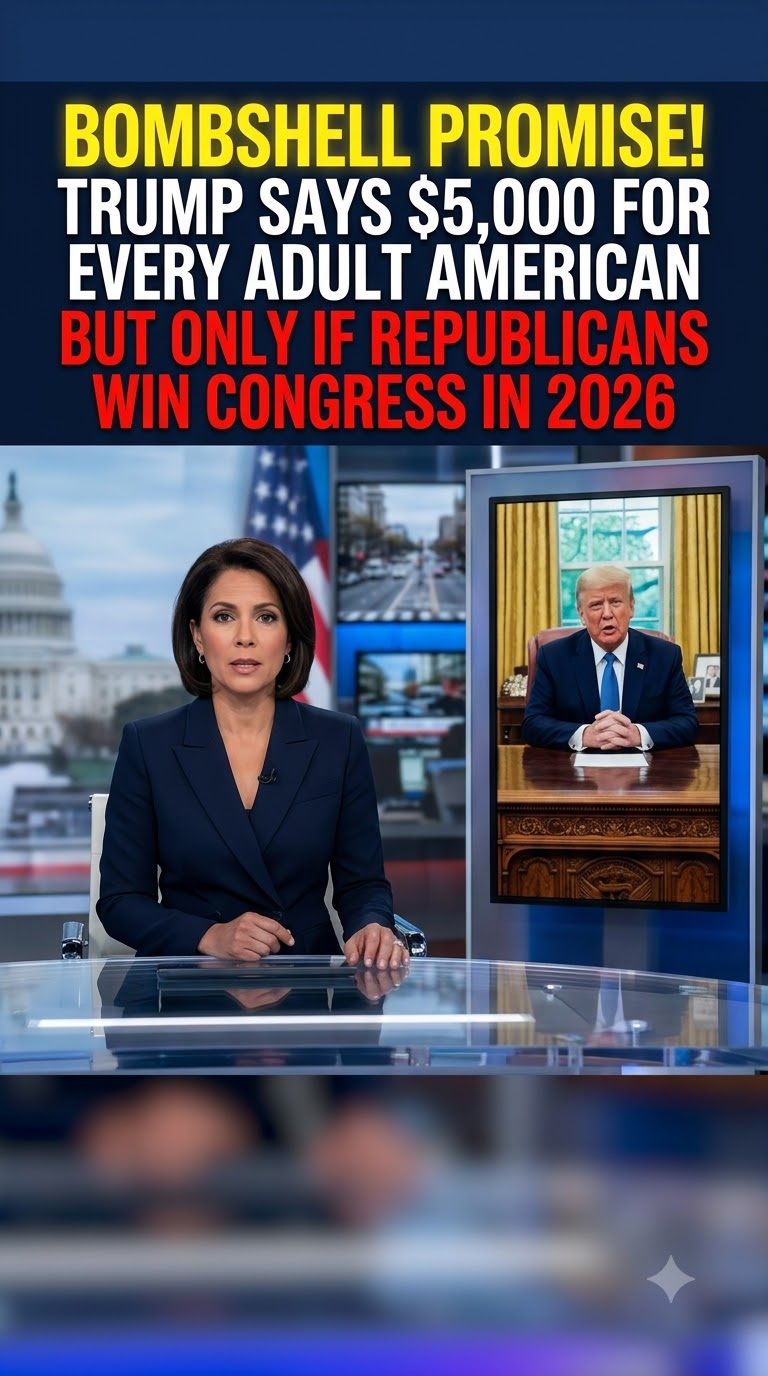
What the Viral Graphic Gets Right — and What It Leaves Out
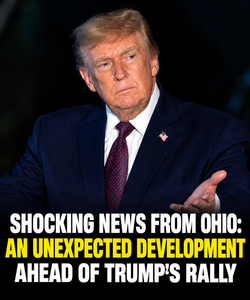
The graphic accompanying the story is based on a real statement by Trump.
Unlike many misleading political memes, the central claim is not fabricated. Trump did publicly promise a $5,000 “dividend” to every adult citizen if Republicans win both the House and Senate in November. Reuters, AP and NPR all reported the announcement.
However, the graphic makes the proposal look more settled than it actually is.
There is no $5,000 payment program currently in place.
Trump has not yet provided a complete funding plan, Congress has not approved the payments, and the government has not established eligibility or a distribution system.
The promise is therefore best described as a campaign pledge, not guaranteed money for American adults.
A High-Stakes Gamble Ahead of November
Trump's $5,000 dividend proposal represents a significant escalation in his effort to personally tie his political movement to voters' wallets.
The president is betting that the prospect of a large direct payment will motivate Americans to support Republican candidates and preserve GOP control of Congress.
But the proposal also creates a difficult fiscal and political challenge.
If Republicans win, Trump will face pressure to turn the headline-making promise into an actual legislative program.
If Republicans lose either chamber, the proposal could effectively die in Congress.
For now, one thing is certain: Trump has put a $5,000 promise at the center of the 2026 midterm conversation — but Americans have yet to see the plan that would actually deliver it.
Comments (0)
Loading comments...
May You Like
OBAMA STUNS ON INSTAGRAM: MESSAGE MARKING 34-YEAR MILESTONE SPARKS A BUZZ
OBAMA STEPS BACK INTO THE POLITICAL SPOTLIGHT
South Korea–Ukraine Rift Deepens Over North Korean POW Transfer as PURL Draws New Scrutiny