
Trump Refers to Iran’s Leadership as “Level Three” as Ceasefire Collapses and U.S. Strikes Resume
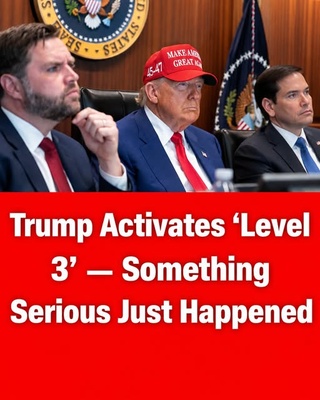
WASHINGTON — President Donald Trump used the phrase “Level Three” to describe Iran’s current leadership during a tense July 8 news conference, as fighting between Washington and Tehran intensified.
Trump made the remarks in Ankara, Turkey, following a NATO summit, while responding to questions about his sharply changing assessment of Iran’s leaders.
The president had previously described Iranian officials as rational, strong and intelligent, but his language became considerably more confrontational as the ceasefire deteriorated.
Asked what had changed, Trump said he had gotten to know Iran’s leadership and argued that the current officials were different from those previously removed during the conflict.
Trump then said, “Level one is gone. Level two is gone. This is level three,” referring to successive layers of Iranian leadership.
The statement quickly attracted attention online because the phrase “Level Three” sounded like a formal military alert or escalation category.
There is no evidence in the cited presidential remarks, however, that Trump was announcing a new U.S. military alert system called “Level 3.”
Instead, his comments referred specifically to what he described as successive levels of Iranian leadership during the conflict.
The remarks came as a fragile U.S.-Iran ceasefire was breaking down following renewed violence involving commercial shipping around the strategically important Strait of Hormuz.
Trump said the United States had responded to attacks on commercial vessels and indicated that American forces could conduct additional military operations against Iranian targets.
At the same news conference, Trump said he was no longer certain that he wanted to negotiate another agreement with Tehran, adding that the United States could instead “finish the job.”
His comments represented a significant hardening of rhetoric compared with earlier statements in which he had suggested that negotiations could still produce an agreement.
The president also said the United States would not allow Iran to obtain a nuclear weapon, describing that objective as more important than short-term fluctuations in oil prices.
Meanwhile, U.S. Central Command announced additional strikes against Iranian targets, saying the operations were intended to respond to what Washington described as aggression against commercial shipping and civilian crews.
UPI reported that the United States also resumed its naval blockade of Iran as military operations expanded following the breakdown of the ceasefire.
The developments immediately raised questions about whether the fighting represented a temporary escalation or the beginning of a broader return to sustained military operations.
Trump attempted to downplay the possibility of a prolonged conflict, telling reporters that he expected developments to move quickly and saying the United States was not seeking a long-term war.
Oil markets nevertheless reacted to the renewed fighting, with crude prices rising as traders assessed the potential impact of disruptions around the Strait of Hormuz.
The waterway is one of the world’s most important energy corridors, making any prolonged disruption potentially significant for global oil supplies and transportation costs.
The diplomatic situation also became more complicated as Trump questioned whether negotiations with Tehran remained worthwhile while simultaneously leaving open the possibility of future discussions.
Iran, meanwhile, continued to reject American pressure and maintained its own position regarding the conflict, the ceasefire and control over regional security issues.
Trump’s “Level Three” description therefore needs to be understood in the context of his comments about Iran’s leadership rather than as an official U.S. military readiness designation.
The wording has nevertheless become a prominent part of coverage because it illustrated how dramatically Trump’s public language toward Tehran had changed during the renewed confrontation.
The July 8 remarks also came at a moment when Washington faced difficult decisions over military operations, diplomatic negotiations, shipping security and the possibility of further regional escalation.
For policymakers and markets, the more consequential question was not the phrase “Level Three” itself, but whether the collapse of the ceasefire would lead to sustained military action or renewed diplomacy.
The subsequent developments showed that the situation remained fluid, with additional U.S. strikes reported and Iran responding militarily as both sides entered another dangerous phase of confrontation.
Comments (0)
Loading comments...
May You Like

South Korea–Ukraine Rift Deepens Over North Korean POW Transfer as PURL Draws New Scrutiny

Jack Smith Defends His Integrity as Trump Investigations Face Renewed Political Firestorm

Russian Drone Strikes Kyiv Bridge as German Chancellor Arrives in Ukraine













