Trump Refuses to Rule Out Emergency Declaration Before Midterms, Raising Questions About Presidential Power

1. The Interview That Put Emergency Powers Back in the Spotlight
The controversy followed a wide-ranging interview with TIME in which Trump discussed the economy, the war with Iran, his approval ratings, and the upcoming congressional elections. When asked whether he would rule out declaring a state of emergency before the midterms, the president declined to make that commitment. His answer quickly became a focus of political debate because it left open the possibility of an extraordinary presidential action during a period when control of Congress will be decided by voters. The interview did not establish that an emergency declaration was imminent, but it raised questions about the administration’s intentions. <Cite refs={["turn824285search1","turn824285search9"]}/>
2. Trump Also Discussed the Insurrection Act
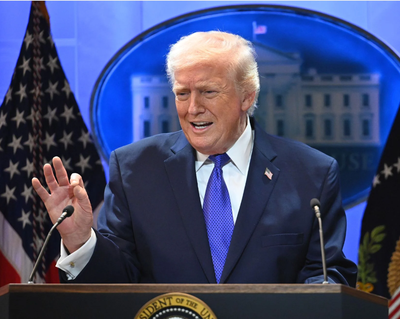
<AsyncImage query="Donald Trump speaking at White House press conference presidential podium official photograph" aspectRatio="16:9" width="100%" radius="lg"/>
During the same interview, Trump discussed the Insurrection Act, a federal law that can permit the president to deploy military forces domestically in certain circumstances involving insurrection or serious civil disorder. Asked about the possibility of using the law, he said he had never invoked it but could do so, adding that some people believed he should use it at times. The comments attracted attention because the law carries significant implications for the relationship between civilian government, military power, and public order. Nevertheless, discussing the possibility of using the act is not the same as formally invoking it. <Cite refs={["turn824285search1","turn824285search3","turn824285search5"]}/>
3. Why the Midterm Elections Matter
The November 3 elections will determine which party controls the House of Representatives and the Senate for the next congressional session. A change in control could significantly affect Trump’s legislative agenda, congressional investigations, government spending, and oversight of the executive branch. Trump has repeatedly urged Republicans to turn out and protect their congressional majorities. In October, he acknowledged that Republicans were concerned about several competitive races, including contests in Texas and Michigan. The political stakes help explain why his remarks about emergency powers have attracted such intense attention. <Cite refs={["turn824285search0","turn824285search4"]}/>
4. Critics Warn Against Federal Interference in Elections
<AsyncImage query="American voters waiting in line polling station election day United States AP photograph" aspectRatio="16:9" width="100%" radius="lg"/>
Civil liberties advocates and election experts have warned that invoking emergency powers around an election could create uncertainty about the limits of federal authority. Some proposals circulated by Trump allies have suggested using a national emergency to justify extraordinary changes to election procedures. Researchers at Open Measures reported on October 20 that calls for such a declaration had gained attention in some online political communities, although the idea had not become a dominant issue across those communities. These proposals are distinct from an official administration decision, and their existence does not establish that Trump has adopted them. <Cite refs={["turn824285search7","turn824285search6"]}/>
5. The Legal Limits of Presidential Emergency Powers
A declaration of national emergency does not automatically give a president unlimited authority over elections. Federal law establishes procedures for emergency declarations, while the Constitution assigns significant responsibilities for administering elections to states and Congress. The Insurrection Act is a separate legal mechanism with its own conditions and historical context. Any attempted federal intervention in election administration would face questions about statutory authority, constitutional limits, and potential judicial review. Legal experts have therefore emphasized the importance of examining the precise action proposed rather than assuming that a general emergency declaration would authorize every measure its supporters might seek.
6. The White House Faces Questions About Its Intentions
The administration’s position remains a central issue in the debate. Trump’s refusal to rule out an emergency declaration has prompted questions about whether officials have considered specific measures and what circumstances might justify them. On October 25, Reuters reported that Attorney General Todd Blanche rejected the suggestion that Trump was seeking to take control of state elections, defending the administration’s approach to election-related legal disputes. The report underscores the divide between the administration’s stated position and critics’ concerns about the potential reach of federal intervention. Neither the president’s interview nor the attorney general’s response establishes that a nationwide emergency declaration has been ordered. <Cite refs={["turn824285news27","turn824285search1"]}/>
7. Election Integrity and Public Confidence
<AsyncImage query="Election officials counting ballots at election center United States midterm election Reuters photograph" aspectRatio="16:9" width="100%" radius="lg"/>
The controversy comes amid continuing disputes over voting rules, voter identification, mail ballots, and allegations of election fraud. Trump has repeatedly argued for stronger election safeguards, while opponents contend that some proposed federal measures could restrict voting access or undermine state authority. For voters, the central issue is whether election procedures will remain transparent, consistent, and governed by applicable law. Election officials across the country will be responsible for administering the November vote under the relevant state and federal rules, regardless of the political rhetoric surrounding the campaign.
8. What Could Happen If an Emergency Is Declared?
If Trump were to announce an emergency declaration before the midterms, its legal significance would depend on the stated emergency, the authorities invoked, and the actions taken under it. A declaration alone would not automatically cancel the elections or transfer control of state voting systems to the federal government. Specific measures could be challenged in court, and state officials, lawmakers, and civil society organizations could seek clarification of their legal boundaries. For now, the possibility remains a subject of political debate rather than a confirmed operational plan. <Cite refs={["turn824285search6","turn824285search7"]}/>
9. The Road to November 3
With Election Day approaching, Trump’s remarks have placed emergency powers among the issues being scrutinized by journalists, lawmakers, election administrators, and voters. Republicans are fighting to retain congressional control, while Democrats are seeking gains that would give them greater influence over legislation and oversight. The outcome will shape the political environment for the remainder of Trump’s term. The most important distinction is that the president has declined to rule out an emergency declaration, but has not announced that he will make one. Whether the issue develops further will depend on future statements, official actions, and the legal circumstances surrounding the elections.
The bottom line: Trump’s comments are documented, and the debate over emergency powers is real. But the claim that he has decided to declare a state of emergency before the midterms goes beyond the available evidence. Readers should distinguish his refusal to rule out an option from an actual presidential order.
Comments (0)
Loading comments...
May You Like
Latest Posts










Popular Posts