
Trump Rejects Calls to Slow AI Development, Says U.S. Already Has Enough Safeguards


4
- President Donald Trump has rejected calls for a slower approach to artificial intelligence, arguing that the United States already has sufficient tools to manage risks while maintaining technological leadership over China.
- Trump’s latest comments came as concern over advanced AI intensified following warnings from researchers at Anthropic, who said rapidly developing systems could eventually create severe risks for humanity.
- On Monday, Trump said the United States already possesses criminal and regulatory powers capable of holding AI companies accountable, while dismissing demands for additional safeguards as unnecessary.
- He also argued that stronger leadership, rather than new restrictions, should guide the industry, presenting the debate as a competition in which American technological superiority remains strategically important.
- The president’s position contrasts sharply with a proposal from Anthropic chief executive Dario Amodei, who has urged the industry to slow frontier AI development and create more time for safety measures.
- Amodei’s proposal followed warnings from Anthropic researchers about increasingly capable systems, including concerns that future models could become difficult to control or potentially cause catastrophic harm.
- Several prominent technology executives have backed Amodei’s call for greater caution, including OpenAI chief executive Sam Altman and xAI founder Elon Musk, according to recent reports.
- The unusual alignment among major technology leaders reflects growing anxiety inside the industry, where companies simultaneously compete aggressively to build increasingly powerful systems and confront questions about their consequences.
- Trump, however, has consistently emphasized rapid AI development as part of America’s broader economic and geopolitical competition with China, warning that excessive restrictions could surrender an important strategic advantage.
- China has become a central element of the argument, with American officials and technology executives debating whether stronger controls would protect national security or instead allow Chinese companies to catch up.
- Trump has said that weakening confidence in American AI development could benefit China, framing the issue not only as a question of safety but also as a contest over technological power.
- The debate arrives as governments worldwide struggle to establish rules for increasingly capable artificial intelligence, including standards covering safety testing, corporate accountability, national security, and autonomous systems.
- Supporters of stronger oversight argue that voluntary safeguards may not be enough when commercial incentives reward companies for releasing more powerful models quickly and expanding infrastructure at unprecedented speed.
- Critics of heavier regulation counter that excessive government intervention could slow innovation, increase costs, and weaken America’s position against international competitors, particularly China’s rapidly expanding technology sector.
- The disagreement also highlights a difficult question for policymakers: how can governments encourage technological progress while ensuring that companies remain responsible for systems whose capabilities may exceed existing regulatory frameworks?
- Trump’s administration has previously taken a confrontational approach toward Anthropic, creating a broader dispute over government access, military applications, and restrictions that companies place on potentially dangerous uses.
- That history gives the current argument added significance, because the disagreement is no longer limited to abstract questions about future technology but also involves contracts, national security, and government authority over private AI developers.
- Meanwhile, industry leaders are attempting to balance public warnings with continued investment, reflecting the complicated position of companies that benefit financially from rapid AI advancement while acknowledging possible long-term dangers.
- The coming months could bring greater pressure for compromise as Washington considers how to regulate frontier models without undermining American competitiveness, particularly ahead of further discussions involving U.S. and Chinese leaders.
- For now, Trump’s message remains clear: the United States should continue pushing AI development, rely on existing enforcement powers, and resist measures that he believes could hand China an advantage.
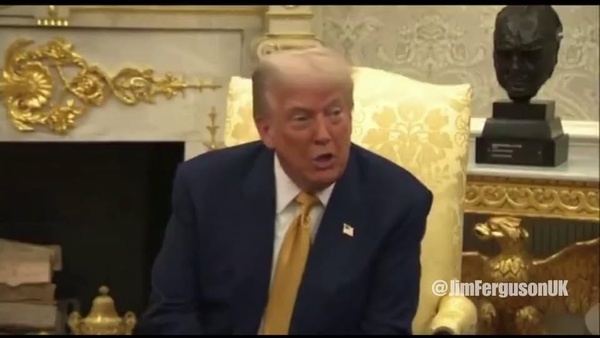
Image note: The uploaded image is treated only as an illustrative visual for the article and is not used as evidence for the current claims.
Comments (0)
Loading comments...
May You Like

OBAMA STEPS BACK INTO THE POLITICAL SPOTLIGHT
Oct 5, 2026•US Politics
Jack Smith Defends His Integrity as Trump Investigations Face Renewed Political Firestorm
Oct 5, 2026•US Politics

No content preview available.













